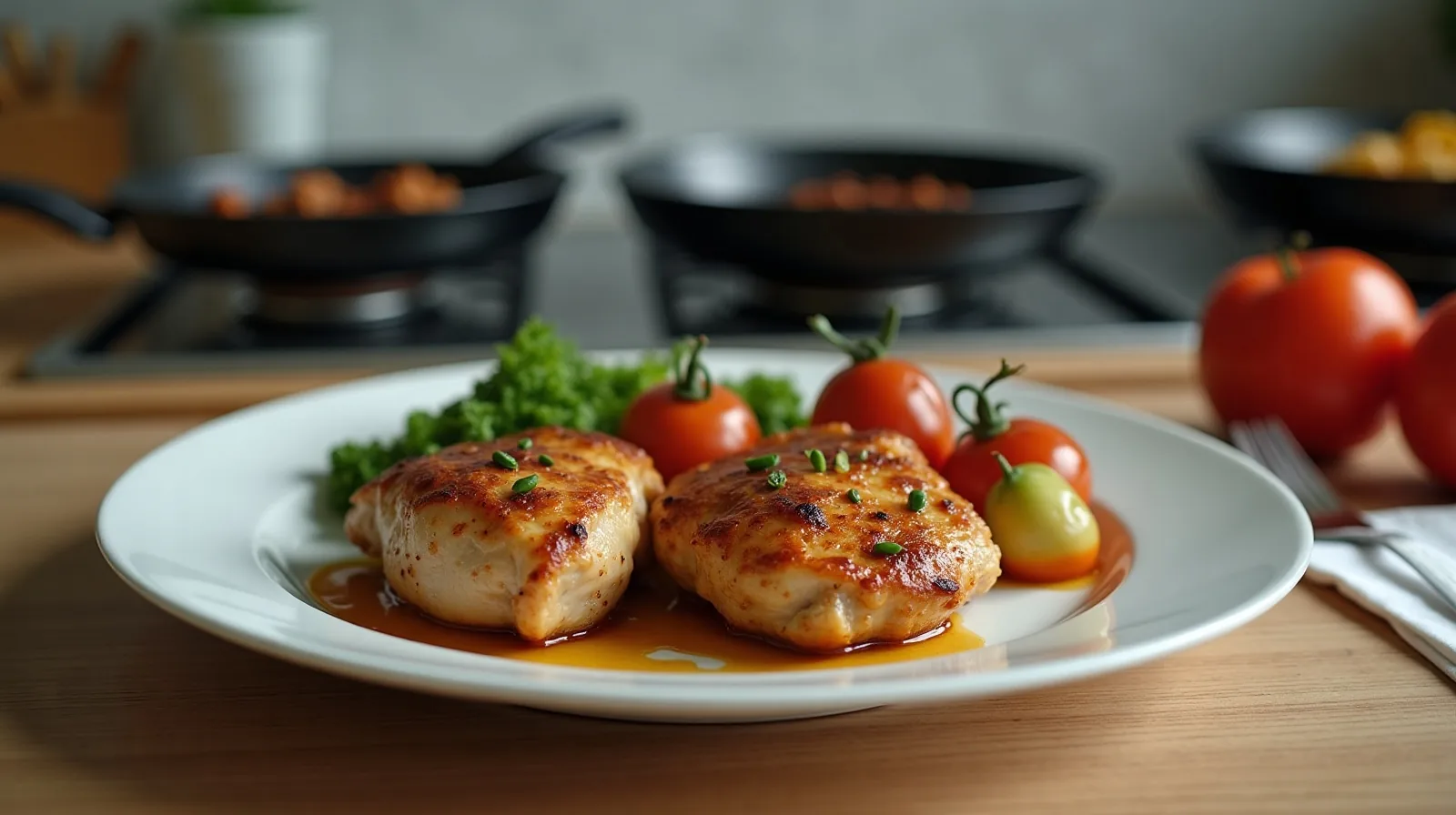
When a weeknight dinner comes out gray, soggy, or vaguely disappointing, the recipe usually takes the blame — too bland, too fussy, never making it into the rotation again. But most weeknight failures aren’t recipe failures. They’re technique failures, and a short list of them accounts for nearly all the damage: a pan carrying twice the food it should, a burner kept timid out of caution, and a timeline that was doomed before the stove clicked on. Fix those, and the same recipes you’ve been shrugging at start tasting like someone else cooked them.
The Overcrowded Pan
This is the big one. Pile chicken thighs or a heap of vegetables into one pan and the temperature plummets, moisture pours out with nowhere to go, and everything steams in its own juices instead of browning — that’s where gray meat and squeaky, pale zucchini come from. Browning is flavor; steam is its enemy. The fix costs nothing: leave visible space between pieces, and when there’s too much food for that, cook in two batches or split across two pans. Two fast batches with real browning beat one slow batch without it, every single time.
Timid Heat and a Cold Pan
The second habit is treating medium-high heat as a hazard. Food dropped into a pan that isn’t fully heated sticks, stews, and turns pale; a properly preheated pan — give it a couple of minutes, until the oil shimmers — releases food naturally and builds the crust that makes dinner taste like dinner. The same timidity shows up as constant fiddling: flipping, stirring, and shuffling food around the pan every twenty seconds, which interrupts browning just as it starts. Get things into a hot pan, then leave them alone until they release and show real color before you turn them.
Timelines That Never Had a Chance
Plenty of ruined dinners were lost before any heat was involved — a recipe read one line at a time while something burns, a marinade discovered mid-recipe that “needs 30 minutes,” rice started after the stir-fry it was meant to accompany. A few small prep habits fix nearly all of it:
- Read the recipe start to finish first. Ninety seconds of reading finds the surprise steps before they find you.
- Prep before heat. Chop, measure, and line everything up before the burner goes on — the stove is a terrible place to do knife work under pressure.
- Start the longest item first. Work backward from what takes longest — usually the rice, potatoes, or oven item, not the thing in the pan.
- Take the chill off proteins. Meat straight from the fridge cooks unevenly; even 15–20 minutes on the counter while you prep helps.
- Let meat rest. A few minutes off the heat keeps the juices in the food instead of on the cutting board.
Small Fixes That Compound
Seasoning gets the spotlight in most cooking advice, and yes — salting as you go rather than only at the end matters. But it’s the supporting act. A properly browned, well-timed dinner needs surprisingly little help, while no amount of seasoning rescues steamed-gray chicken from a crowded, lukewarm pan. The encouraging part is how quickly this compounds: space in the pan, a real preheat, patience before flipping, and a timeline that starts with the slowest dish are each five-second decisions. Make them for a week and your regular rotation quietly improves — same recipes, same groceries, noticeably better dinners.