Long car rides with kids have a predictable arc: an optimistic start, a stretch of peace, and then the hour when nothing on any screen is interesting anymore and the backseat turns feral. This isn’t an argument against screens on road trips — they’ve rescued plenty of drives. It’s an argument for not depending on them, because batteries die, winding roads make watching queasy, and even the best show loses its grip by hour four. A small kit of screen-free options doesn’t just fill time; it changes the whole rhythm of the ride — and most of it fits on one clipboard.
Pack an Activity Kit, Not a Toy Bag
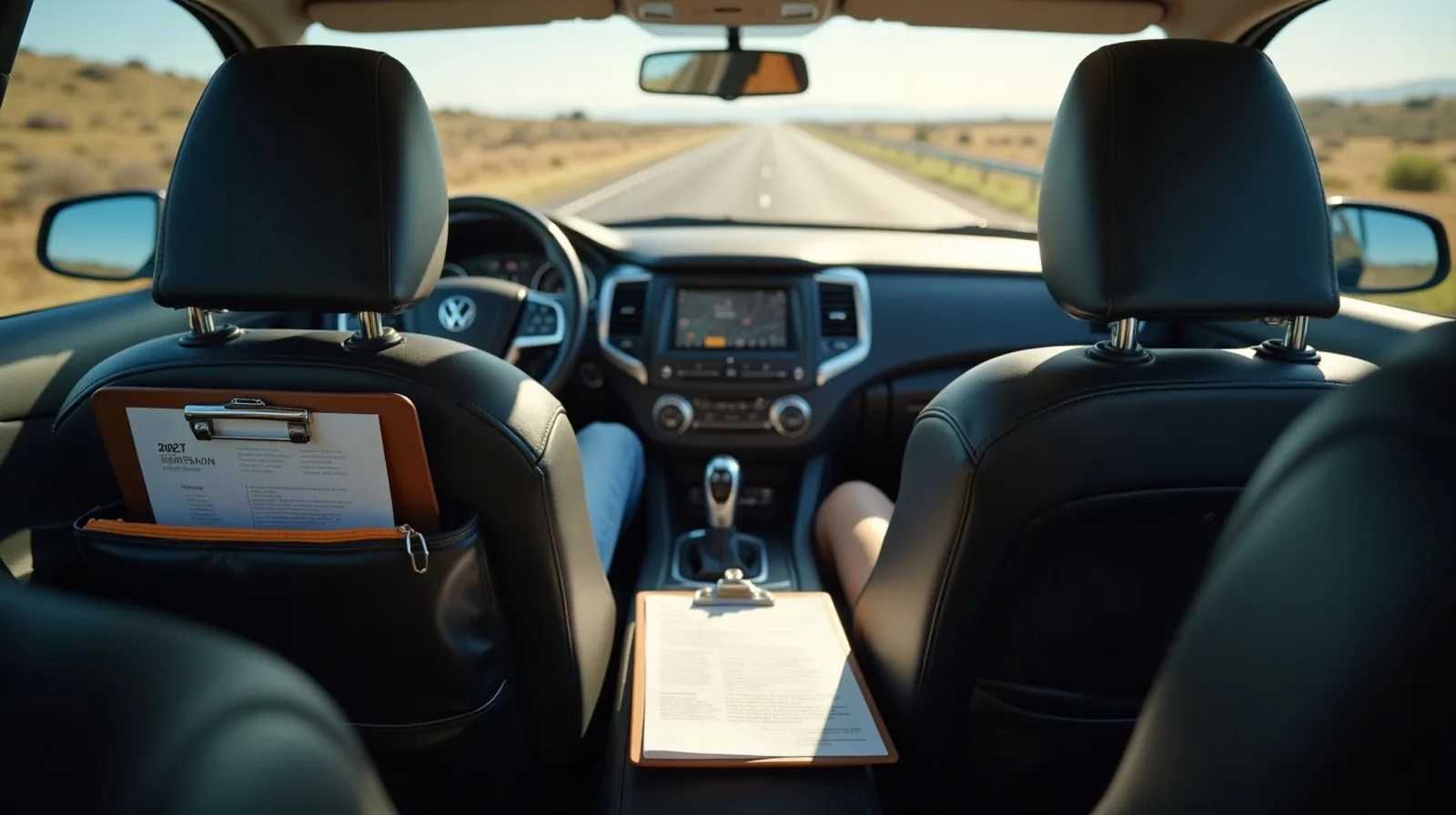
Dumping familiar toys into a bag rarely works — kids ignore in the car whatever they already ignore at home. What works is a small kit of things that feel specific to the trip: a clipboard with paper, a zipped pouch of colored pencils, fresh sticker sheets, a pad of mazes or dot-to-dots, a roll of painter’s tape (endlessly entertaining, harmlessly removable). Keep the kit up front with a co-pilot and hand items back one at a time — novelty is the fuel, and a kit dumped into the backseat at mile one burns all of it by mile twenty. Cheap, new-to-them, and doled out slowly beats expensive and familiar every time.
The Backseat Rotation
Variety matters more than any single brilliant activity, so rotate through modes:
- Audio first. Audiobooks and story podcasts are the closest thing to a road-trip cheat code — whole hours disappear, and the family ends up inside the same story together.
- Classic car games. I-spy, twenty questions, the license-plate hunt, the alphabet game — zero equipment, and they work because everyone plays.
- Road-trip bingo. A homemade grid on the clipboard — water tower, horse, yellow truck, tunnel — turns the window back into entertainment.
- Sticker scenes and drawing prompts. “Draw the weirdest car you’ve seen today” goes much further than a blank page.
- Surprise envelopes. A small sealed something — new stickers, a riddle, a snack voucher — opened each hour gives the drive a plot.
Pace the Drive in Kid-Sized Chunks
Adults think of a drive as one distance; kids experience it as an eternity with seatbelts. Break it into chapters: sixty to ninety minutes of driving, then a real stop — not just fuel, but ten minutes of actual running, a playground spotted along the route, a picnic instead of a drive-through. Announce the structure out loud (“two more chapters, then the dinosaur park”) so the trip has visible progress — “are we there yet” is usually a question about structure, not distance. Yes, the stops add time on paper. They subtract meltdowns in practice, and that trade is worth it on every trip.
Let a Little Boredom Ride Along
Don’t panic at the first “I’m bored” — it isn’t a failure of planning, and rushing to fix it teaches kids that someone else is in charge of entertaining them. Some of the best moments of a long drive come out of the unprogrammed stretches: window-staring, odd questions from the way-back, the games kids invent between themselves. Hold a quiet window on purpose, especially after lunch, when a nap might take the wheel. And keep one or two kit items in reserve for the final hour — every road-trip veteran knows the last stretch is where the real spending happens.