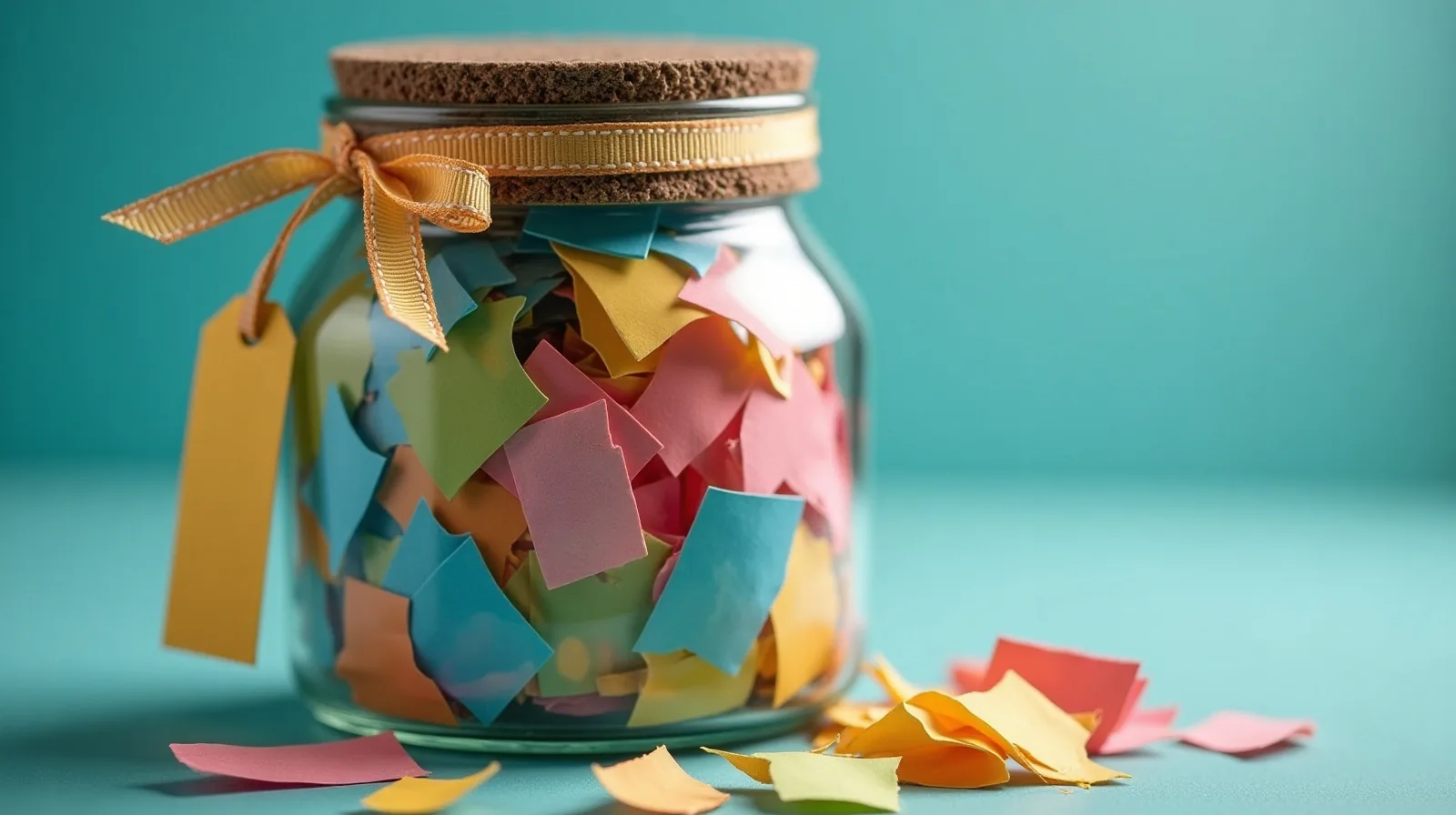
“I’m bored” is rarely a request for information. Your child knows the house contains toys, books, and a backyard; what they’re really handing you is the job of deciding — and every suggestion you offer will be swatted away, because vetoing your ideas is more entertaining than any of them. The boredom-buster jar solves the actual problem. It’s a container full of paper slips, each holding an activity, and its quiet genius is in one detail: the kids write the slips themselves. When boredom strikes, they pull one, and the decision has already been made — by a past version of themselves who was full of ideas.
Why the Jar Beats Your Suggestions
Three things make the jar work where parental brainstorming fails. First, ownership: a kid can dismiss your idea, but a slip in their own handwriting is harder to argue with — they already endorsed it. Second, timing: ideas are collected when everyone is cheerful and inventive, then spent when nobody is. Bored brains are terrible at generating options and perfectly good at following one. Third, the draw itself is a tiny event — shaking the jar, fishing out a slip, unfolding it — with just enough suspense to carry a reluctant kid over the hump between complaining and doing. The jar isn’t magic; it’s a decision made in advance, wearing a costume.
Build It in One Afternoon
Any lidded container works — a big glass jar, an oatmeal canister, a shoebox — and decorating it is the first activity it provides: stickers, ribbon, paint, a grand hand-lettered label. Then cut a pile of paper slips and hand over the pens. Younger kids can dictate or draw their ideas; older ones will surprise you with what they come up with. Your role is scribe and gentle editor, holding just two standards: every idea must be something they can start on their own without shopping, screens, or an adult’s hour, and every idea must be something they’d honestly do. Aim for twenty to thirty slips — enough that the draws stay surprising. Seed a few of your own, but sparingly; the jar’s authority comes from being theirs.
What Goes on the Slips
A good jar mixes speeds and moods. Steer the brainstorm toward a spread like this:
- Quick wins. Build the tallest possible block tower, draw your dream bedroom, make a paper airplane and test-fly it down the hall.
- Maker projects. A cardboard-box robot, a comic strip, a fort with official blanket walls, a homemade board game the family has to play later.
- Get-moving ideas. An obstacle course around the yard, a dance to one favorite song, twenty jumps rope, a backyard scavenger hunt.
- Helper jobs. A few genuinely useful slips — match the sock basket, water the plants — drawn by chance, which somehow makes them fun.
- Quiet-time picks. Read somewhere unusual, write a letter to a grandparent, listen to an audiobook chapter under a blanket.
- Wildcards. One or two slips that say things like “swap a slip with your sibling” or “invent a new idea and add it” — the jar feeds itself.
House Rules That Keep It Alive
The jar needs only a little law. Rule one: a draw is a commitment — you do the slip, or you may redraw exactly once, and then you’re doing whatever comes out. Unlimited redraws turn the jar back into the veto game it was built to replace. Rule two: the parent doesn’t police the activity; if the obstacle course lasts four minutes, fine — boredom was still broken, and the child chose what came next. Rule three: refresh the jar every month or two. Retire the duds together, add new slips as interests shift, and let the refill session be its own rainy-afternoon project. Siblings can share one jar or maintain rival jars with occasional trades — either way, the answer to “I’m bored” becomes a shrug and a point: ask the jar.