Produce gets bought on hope. A peach looks flawless in the store, sits on the counter for four days, and goes from rock hard to mealy without ever passing through good. Meanwhile a pineapple that was never going to improve gets three days of patience it cannot use. Knowing what genuinely signals ripeness — and which items keep changing after they are picked — turns the produce aisle from a gamble into something much closer to a decision.
Four Checks That Work on Almost Anything
Smell first. Most ripe fruit announces itself at the stem end, where the aroma concentrates. Melons, pineapples, strawberries, and stone fruit all smell distinctly like themselves when ready and like nothing at all when they are not. A fruit with no scent has no flavor yet either.
Then press, but press correctly. Use the flat pad of the thumb near the stem or the shoulder rather than a fingertip in the middle, which bruises whatever gets left behind for the next shopper. Ripe means it yields slightly and springs back, not that it dents. Look at the background color rather than the blush: the red streak on a peach is essentially a suntan, while the yellow underneath is the real signal. Finally, weigh it in the hand. Citrus, melons, and cucumbers that feel heavy for their size are full of juice, and the light ones have quietly dried out.
What Keeps Ripening, and What Never Will
Some fruits release ethylene gas after harvest and keep softening, developing aroma, and improving in texture on the counter. Others stop the moment they are cut from the plant. Almost every practical buying rule follows from that one split.
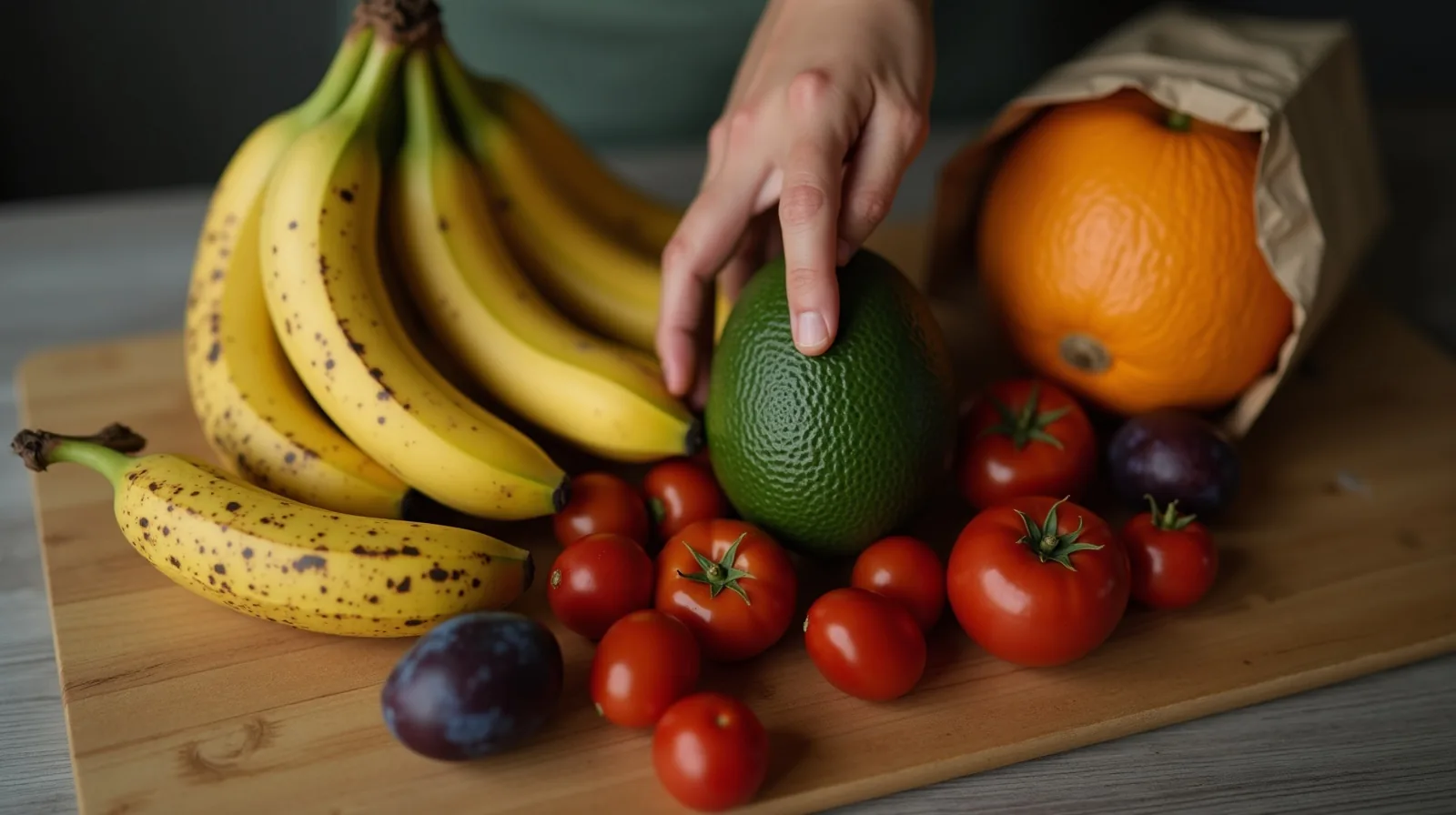
- Finishes well on the counter. Bananas, avocados, pears, peaches, plums, nectarines, mangoes, kiwi, and tomatoes all keep going after picking. Buy them slightly firm and let the kitchen do the last few days of work.
- Softens but never sweetens. Cantaloupe and honeydew grow juicier and more fragrant yet gain no sugar after harvest, so choose them by smell and by a blossom end that gives very slightly under a thumb.
- Never improves at all. Berries, cherries, grapes, citrus, pineapple, and watermelon are exactly as good as they will ever be in the cart. Spend the extra attention there and eat them soon.
- Speeding it up on purpose. A closed paper bag traps a fruit’s own ethylene, and adding a banana or an apple to the bag pushes it faster still. Check daily, because the bag works quicker than most people expect.
- Slowing it down. Once a counter fruit hits the point you want, the refrigerator holds it roughly there for several days. Banana skins turn black in the cold while the fruit inside stays perfectly fine.
Vegetables Ask a Different Question
With most vegetables the question is not ripeness but maturity, and bigger is usually worse. Zucchini and cucumbers turn seedy and watery as they grow, so the smaller ones eat better. Green beans should snap audibly rather than bend. Broccoli and cauliflower want tight, closed buds with no yellowing at the crown, and heads of cabbage, fennel, and lettuce should feel heavy and dense for their size. Asparagus tips ought to be tight and dry rather than soft. Potatoes and onions run on their own logic entirely: firm, dry, and papery is the goal, and a green tinge or a sprout on a potato means trimming deeply or leaving it behind.
Buy for the Day You Plan to Eat It
The single most useful habit is staggering. Pick up two avocados at different stages rather than two identical ones, choose a bunch of bananas with a green tip alongside a few already speckled, and buy only as much berry fruit as the next two days can honestly absorb. Keep the strong ethylene producers away from the things they will push over the edge, especially leafy greens, herbs, and anything already ripe. Then build a soft landing for the inevitable misses: fruit that got away goes into a freezer bag for smoothies, and tired vegetables go into a stock bag rather than the bin.