Feet take every step of every day and get almost none of the training attention that arms, legs and abdominals do. They are also the only part of the body that spends most of its life inside a rigid, cushioned box. A supportive shoe does part of the job the small muscles under the arch are built for, and muscles that are not asked to work get quieter. That shows up later as wobbly balance on uneven ground or an ankle that rolls on a curb.
Why Feet and Ankles Get Skipped
Nothing about foot work looks impressive, which is most of the reason it gets left out. There is no weight on a bar and no obvious progress to watch. The payoff is quieter: steadier footing, a bit more shock absorbed before it reaches the knees and hips, and calves that handle hills without complaint.
What the Small Muscles Actually Do
The arch is not a fixed structure. It is held by muscles and tendons that tension and release with every step, and a foot that does that well spreads load instead of dumping it in one spot. Research so far suggests balance and lower-leg strength work helps older adults stay steady, and the same drills serve anyone who walks on uneven ground. One caveat matters more here than in most training: if you have foot or ankle pain, old sprains that never fully settled, or numbness below the knee, get it assessed by your doctor or a physical therapist first.
Five Exercises to Start With
All of these can be done barefoot on a flat floor in the time it takes a kettle to boil. Start small; sore feet the next morning mean day one was too ambitious.
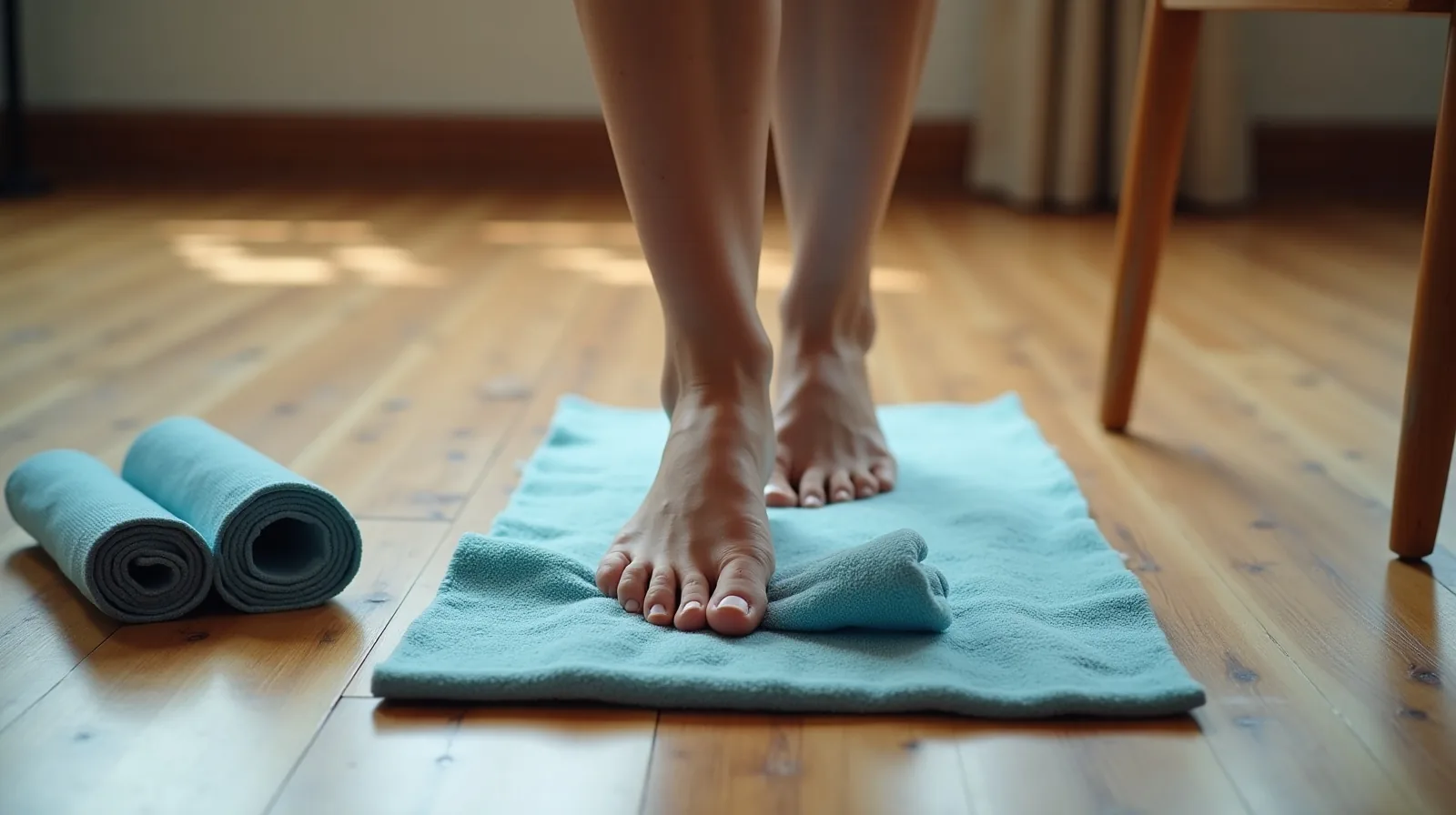
- Towel scrunches. Sit with a hand towel flat on the floor and drag it toward you using only your toes, a small grab at a time. Ten to fifteen scrunches per foot works the arch directly.
- Calf raises. Stand tall, fingertips on a wall for balance, and rise onto the balls of both feet. Pause at the top, lower slowly over three seconds. Slow lowering is where most of the benefit lives.
- Ankle circles. Lift one foot and draw slow, deliberate circles with the toes, ten each direction, moving the ankle rather than the whole leg. Good for stiffness first thing in the morning.
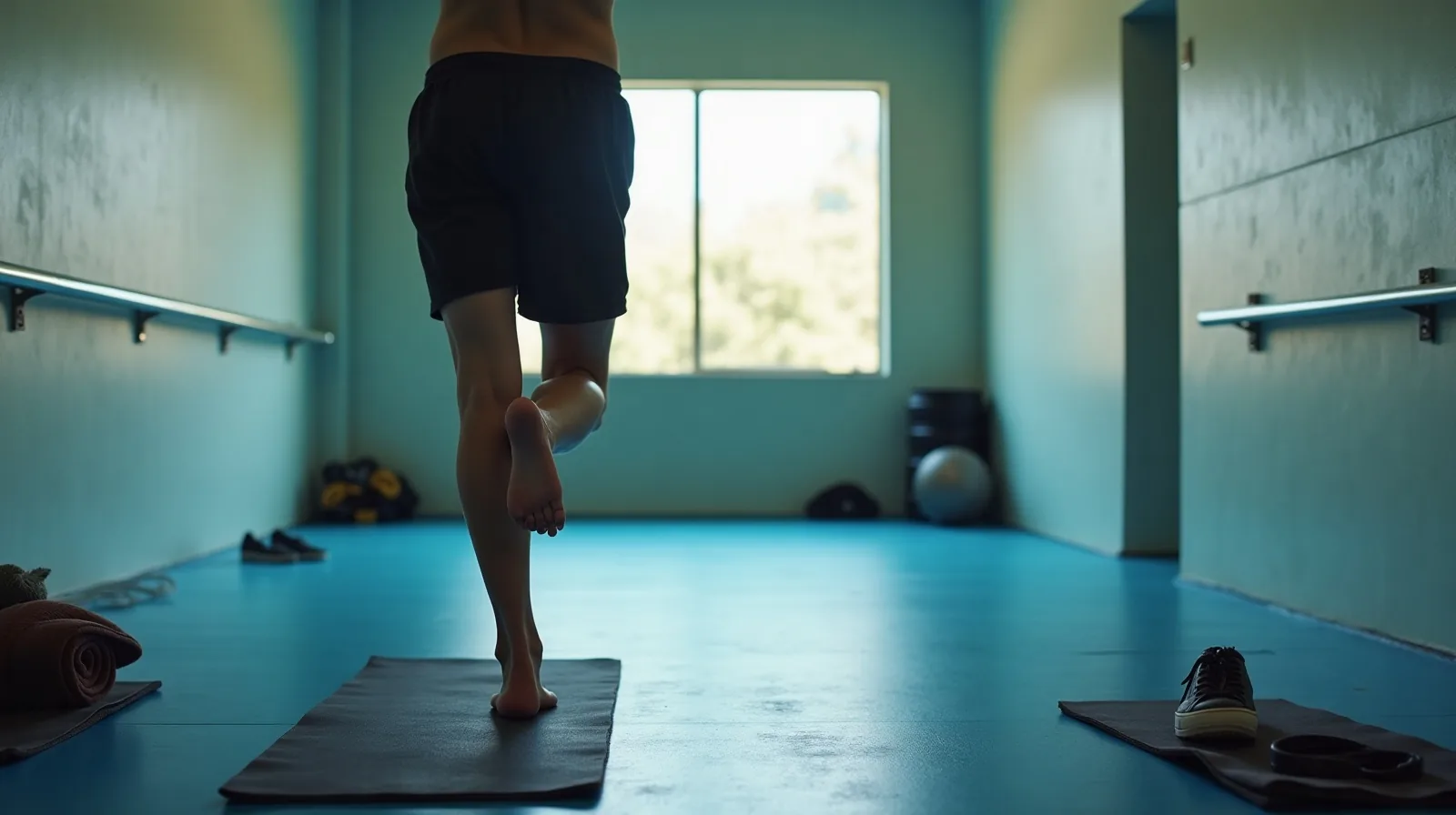
- Single-leg balance. Stand on one foot near a counter for twenty to thirty seconds. Spread the toes, keep weight even between big toe, little toe and heel, and let the ankle make small corrections.
- Arch lifts. With the foot flat and the toes relaxed, lift the arch slightly without curling the toes or rolling the ankle outward. A small, awkward movement worth learning.
Making Them Harder Over Time
Progress here comes from changing conditions rather than adding load. Calf raises move from two legs to one, then from a flat floor to the edge of a step so the heel can drop below the toes. Balance goes from a firm floor to a folded towel, then to a firm floor with eyes closed, which removes the visual cues the ankle leans on. Add one variable at a time and give each version a couple of weeks; tendons adapt more slowly than muscles, so the ambitious version of this routine is the one most likely to leave you sore and skipping it.
Fitting Them Into a Normal Week
Three sessions a week of eight to ten minutes is a reasonable target, and none of it needs to be a separate event. Ankle circles fit before getting out of bed. Single-leg balance fills the time while a kettle boils or a toothbrush runs. Calf raises work while waiting for a bus. Towel scrunches happen in front of a screen in the evening.
Walking barefoot around the house, where the floor is safe and clean, gives the same muscles practice for free. Varying the surfaces outside helps too: grass, sand and gravel ask far more of an ankle than a smooth sidewalk. Expect the change to show up as confidence on uneven ground rather than as anything you can measure.