Adhesive wall hooks have a reputation problem, and most of it is earned by how they get used. Pressed onto a textured wall, loaded past their rating, and pulled outward by a bulky coat, they let go at three in the morning and take a coin of paint with them. Used as designed, the same hooks hold for years on rented walls and leave nothing to patch. The difference is a few minutes of preparation and a clear idea of what that little foam strip is doing.
How an Adhesive Hook Actually Holds
Inside every one of these hooks sits a strip of foam coated on both faces with pressure-sensitive adhesive. Pressure is the operative word: the bond forms when the adhesive is pushed hard into a surface and given time to flow into its microscopic texture. That is why the instructions ask for thirty seconds of firm pressure and an hour of waiting before anything gets hung, and why skipping the wait is the most common reason a hook fails on day one.
The printed weight limit also assumes a particular direction of pull. These strips are strong in shear, meaning a load hanging straight down flat against the wall, and much weaker in tension, meaning a load levering away from it. A bathrobe hung close to the wall behaves. The same robe bunched into a thick bundle that pushes off the wall pries at the top edge of the strip until it peels.
Surfaces That Work, and Surfaces That Never Will
Smooth and sealed is the whole rule. Painted drywall in good condition, glazed tile, glass, finished wood, metal, and most painted trim hold well. Wipe the spot with rubbing alcohol and let it dry first — household sprays leave a slick film the adhesive cannot get through, which is why a freshly cleaned kitchen wall is often the worst place to stick something.
The failures are predictable. Textured or orange-peel walls give the strip a fraction of its intended contact area. Wallpaper, unsealed brick, raw wood, and concrete block tend to come away with the hook. Fresh paint needs several weeks to cure before it can hold anything. And in a bathroom that steams up daily, only hooks rated for damp conditions are worth the attempt.
Jobs Well Beyond Hanging a Coat
- Cable management everywhere. Small hooks along the back edge of a desk stop charging cables sliding to the floor, and one behind a nightstand holds a phone cable at pillow height.
- The inside of cabinet doors. Measuring spoons, oven mitts, pot lids, and cleaning brushes live better on a door than buried in a drawer, and that space costs nothing to claim.
- Vertical storage in tight rooms. Hooks inside a closet door carry belts, scarves, and tote bags, while hooks under the sink hang spray bottles by their triggers and free the shelf below.
- Holding things that are not coats. Clip-style versions mount a remote to the side of a couch, a hairdryer beside a mirror, or a small speaker to a shelf edge without a screw.
- Seasonal and temporary jobs. String lights, garlands, a wreath on a rented door, and a wall of holiday cards go up and come down without leaving a mark.
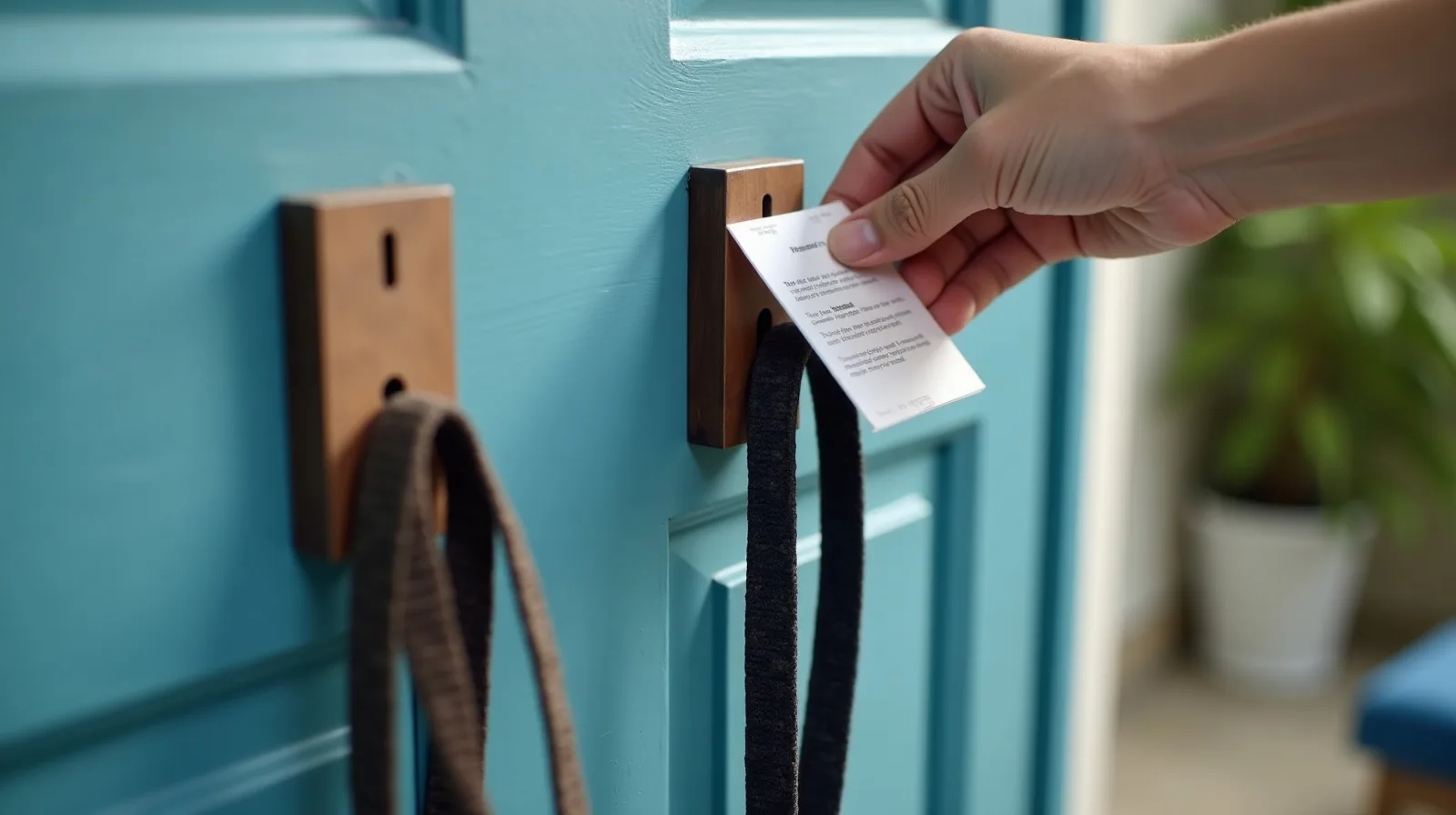
- The morning chain by the door. One hook for keys, one for a dog leash, one for a reusable bag, and one for an umbrella turns a bare hallway into a system.
Load Rules That Prevent a Midnight Crash
Two hooks beat one almost every time. Splitting a load across a pair keeps each strip inside its rating and stops a single failure from dropping everything. Stay well under the printed limit, because ratings assume a static, evenly distributed load and real life adds yanking and one more bag than planned. Anything heavy, breakable, or hanging above a bed, a crib, or a television deserves a screw driven into a stud instead.
Taking Them Off Without Taking the Paint
The removal tab is the entire design. Pull it slowly and straight down, parallel to the wall, and keep pulling as the strip stretches to several times its length; it releases cleanly when stretched rather than yanked. If the tab has torn off, slide dental floss or fishing line behind the base and saw downward, or warm the strip with a hair dryer to soften the adhesive first. Any residue left comes off with rubbing alcohol and patience, never a blade.