Laundry is rarely hard — it’s just endless, and quietly expensive. The cost isn’t only the utility bill; it’s the twenty minutes of sorting before every wash, the half-empty warm loads, the dryer running long after the clothes are dry, and the folding mountain that colonizes a couch for days. Every one of those leaks is a system problem, and system problems have satisfying fixes. None of them require new machines — just a different setup around the ones you already have.
Let the Sorting Do Itself
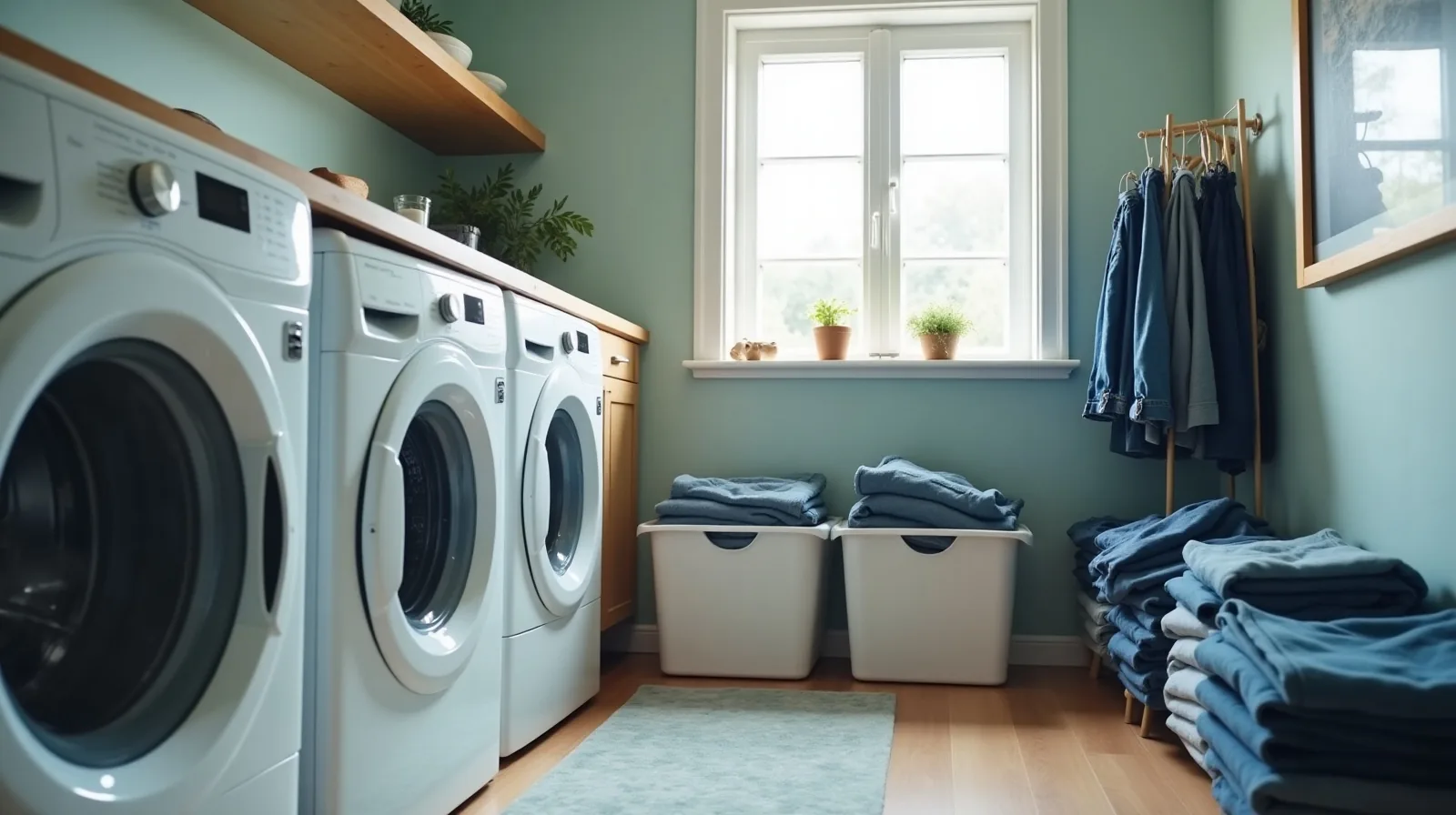
Sorting laundry on wash day is a chore; sorting it the moment clothes come off is free. Swap the single overflowing hamper for two or three — lights, darks, towels-and-bedding — and the pile arrives at the machine pre-sorted, forever. Mesh bags multiply the trick: one per family member for socks and small items means the bag goes into the wash zipped, comes out zipped, and gets handed back whole — no more matching socks across four people’s laundry. Then wash when a hamper fills instead of saving everything for one crushing laundry day; three relaxed loads spread across the week beat six resentful ones on Saturday.
Wash Cold, Wash Full, Measure the Soap
Most of the energy a warm wash uses goes into heating the water, and modern detergents are formulated to clean well in cold. For everyday loads, the cold setting gets clothes just as clean while costing noticeably less — and it fades and wears fabric slower, which is its own quiet savings, since clothes that keep their color get replaced later. (Heavily soiled loads and the occasional serious stain are the fair exception where warm still earns its keep.) Run full loads — two half loads cost nearly double the water and power of one real one — but stop short of packing the drum, because clothes need room to move to get clean. And measure the detergent: pouring by instinct usually means overdosing, which wastes money and leaves residue that traps odors and stiffens fabric.
Make the Dryer Earn Its Keep
The dryer is the most expensive machine in the room to run per hour, so its habits matter most:
- Clear the lint screen every load. A clogged screen stretches every cycle — and it’s a fire risk besides.
- Trust the sensor, not the timer. Sensor-dry stops when the clothes are dry; the timer happily bakes them for twenty extra minutes.
- Split heavy from light. Towels dried with t-shirts make the shirts ride along for the towels’ long cycle. Separate them and both finish faster.
- Add dryer balls. They lift and separate the load so hot air moves through it, trimming minutes off most cycles.
- Run loads back to back. A warm drum skips the heat-up cost of a cold start.
- Line-dry the slow stuff. Jeans, hoodies, and bedding eat dryer time; a folding rack handles them for free while the machine does the quick loads.
Fold Once, in a Batch
Folding eats more goodwill than any other laundry step, mostly because it happens in guilty micro-sessions off a couch pile — by which point everything has wrinkled and half of it needs shaking out again. Two changes fix it. First, fold straight out of the dryer while things are still warm: wrinkles haven’t set, so folding goes faster and ironing mostly disappears. Second, when a backlog does build, batch it — one sitting, everything at once, a show on in the background. Finish with per-person bins or stacks that their owners carry to their own drawers; delivery was never meant to be part of the folder’s job.