A drain that gurgles and pools around the ankles is annoying, but it is rarely a mystery. In most homes the blockage is a soft plug of hair, soap scum and grease sitting a few inches below the opening. That is good news, because a soft plug can usually be pulled or pushed out with simple tools and no harsh chemicals.
Why Drains Slow Down
Bathroom drains clog with hair bound together by soap residue. Kitchen drains clog with grease and food scraps that cool and stick to the pipe wall as a film. Over weeks the film narrows the opening, and the water slows long before it stops. Spotting the pattern early matters, because a drain that is merely slow is much easier to clear than one that is fully blocked.
It also helps to notice how widespread the problem is. If only one sink or tub is slow, the clog is local. If several fixtures back up at once, or a toilet gurgles when another fixture drains, the trouble is deeper in the main line and is a job for a professional.
The Gentle Fixes, in Order
Start with the least forceful option and move up only when it fails. Wear gloves, and keep a bucket and old towels nearby:
- Hot water flush. Pour a kettle of very hot, not boiling, water down the drain in two or three slow stages. This loosens grease. Boiling water can soften some plastic pipes and crack old porcelain, so let it cool for a minute first.
- Drain strip. A thin, barbed plastic strip costs very little. Slide it down, give it a gentle wiggle, and pull it back out. It brings up a surprising amount of hair.
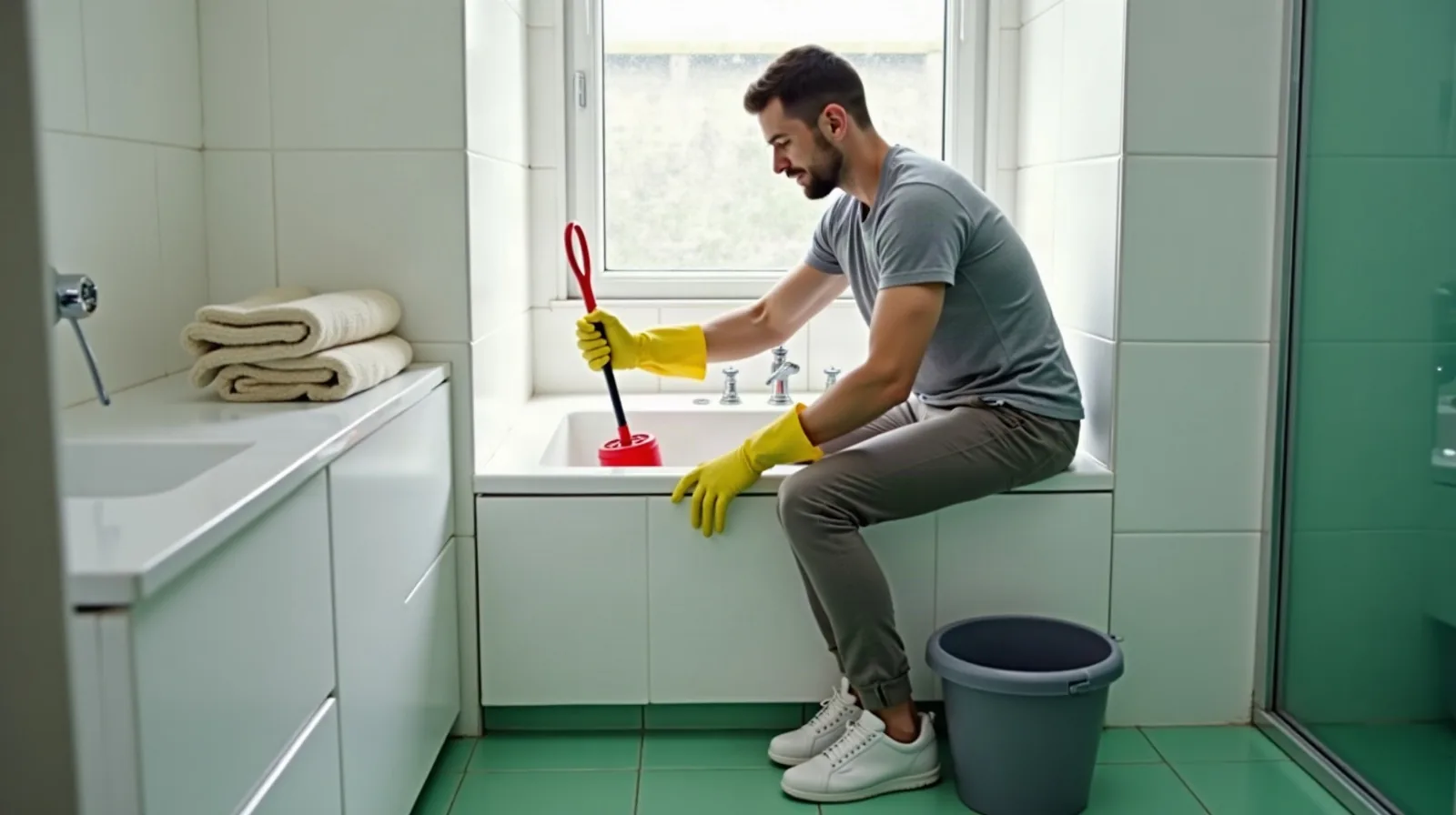
- Plunger. Block any overflow opening with a wet cloth, cover the drain with enough water to submerge the cup, and press and release firmly for about twenty seconds. A tight seal does the work, not brute force.
- Baking soda and vinegar. A half cup of baking soda followed by a half cup of vinegar fizzes for a few minutes, then a hot water rinse follows. It is gentle and fine for light film, though it is less powerful than its reputation suggests.
- Small hand snake. A hand-crank drain snake reaches past the trap. Feed it slowly, turn it as it meets resistance, and pull the clog out rather than pushing it deeper.
Why Chemical Openers Are Best Skipped
Store-bought liquid openers promise a quick fix, but they are caustic. They can irritate skin and eyes, damage some pipes and finishes, and leave standing water that is hazardous to anyone who then plunges or snakes the drain. Never mix different cleaning products, because some combinations release dangerous fumes. If a chemical opener has already been used, tell a plumber before they start work and follow the product’s safety instructions.
Know When to Stop, and Keep It From Coming Back
Call a licensed plumber when the water stays put after a snake, when several fixtures are slow together, when there is a sewage smell, or when the drain keeps clogging within weeks. Forcing a stubborn blockage can loosen a pipe joint, and a professional can inspect the line with a camera.
Prevention is far less work than rescue. Fit a small mesh catcher over every shower and tub drain and empty it into the trash. Wipe greasy pans with a paper towel before washing, and never pour cooking fat down the sink. A monthly flush with hot tap water keeps soap film from building, and a quick pull with the drain strip every few months catches hair before it knots.