Every rough school morning looks like a morning problem: the missing shoe, the unsigned form, the negotiation over cereal happening in the six minutes before the bus. But watch a calm school morning closely and you’ll notice something — almost nothing important is being decided in it. The decisions all happened the night before, when nobody was rushed, nobody was hungry, and nobody was trying to find a left sneaker under a couch. Calm mornings aren’t a personality trait. They’re a lag effect.
Why Mornings Fall Apart (It’s Not the Morning’s Fault)
Mornings concentrate everything that’s hard about family logistics into the worst possible window: a hard deadline, low blood sugar, half-awake adults, and kids whose sense of time is, generously, impressionistic. Every decision that has to happen inside that window — what to wear, what to eat, where the library book went — costs more than it would at any other hour. The goal isn’t to become a faster morning family. It’s to make the morning as close to decision-free as possible, so the only jobs left are eating, dressing, and walking out the door.
The Ten-Minute Evening Reset
The whole system is one small routine after dinner — ten minutes, same order every night, done with the kids rather than for them:
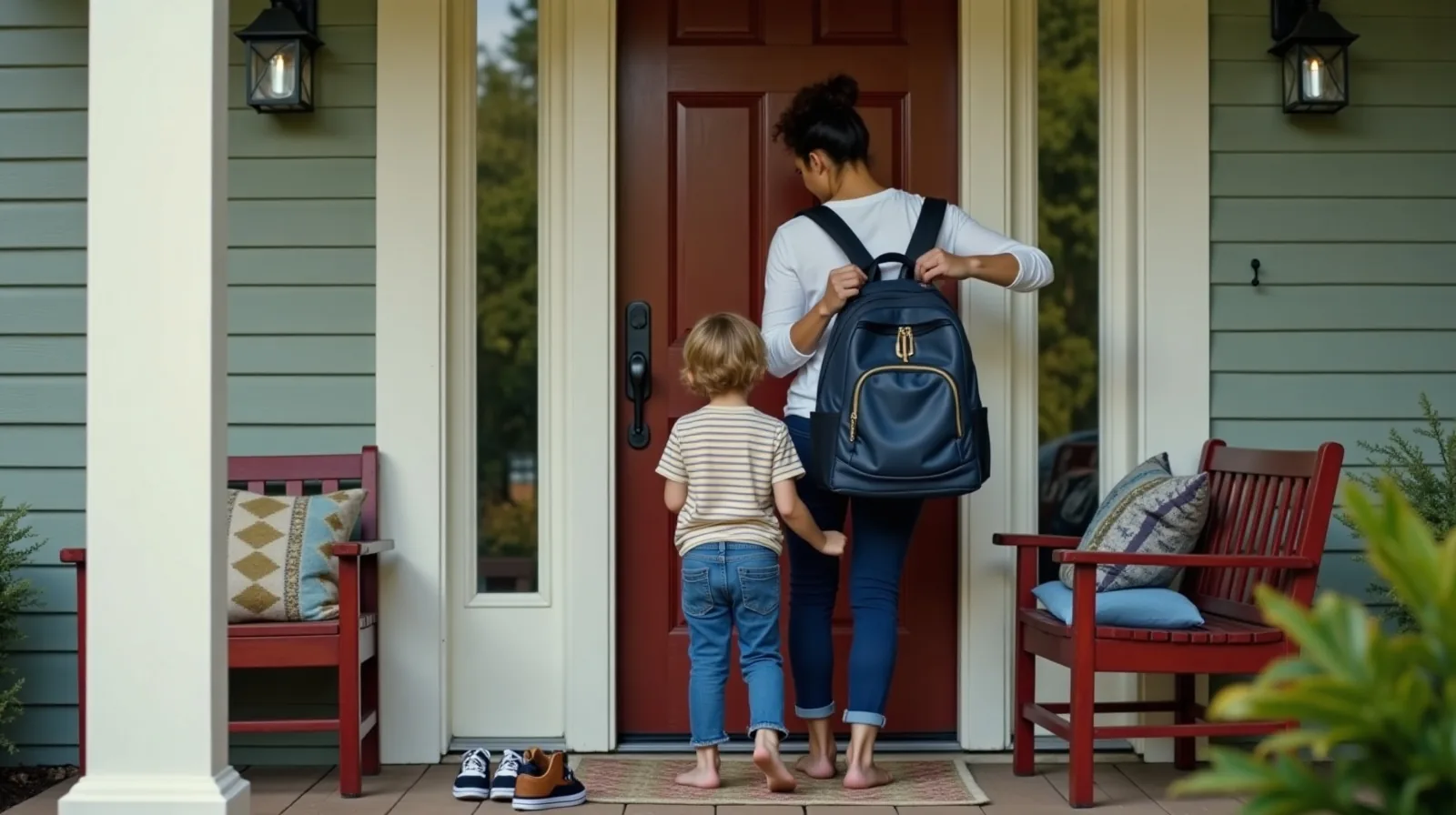
- Backpacks packed and parked. Homework, forms, library books, water bottle — everything goes in, and the bag goes to its one spot by the door. Not the kitchen counter, not the stairs: the spot.
- Tomorrow’s clothes chosen and laid out, down to socks and shoes. The outfit debate happens at 7 p.m., when losing it costs nothing.
- Lunches boxed tonight — or at minimum decided. Even “it’s a buy day” settled in advance removes a morning negotiation.
- Breakfast decided out loud. One sentence — “eggs and toast tomorrow” — deletes the longest argument of the morning.
- A five-second forms-and-money check. Permission slips, picture day, the field-trip envelope — signed now, into the backpack now.
Ten minutes is the honest cost. Most families spend more than that every morning paying interest on exactly these decisions.

Give Every Kid One Job That’s Actually Theirs
A reset run entirely by a parent becomes one more parent chore that quietly dies in a busy week. The version that lasts gives each child one age-appropriate piece they own completely — a preschooler carries their own folder to the backpack, an eight-year-old packs the snack and fills the water bottle, a middle-schooler runs their whole checklist solo while you resist the urge to inspect it. The point isn’t efficiency (young kids are slower at first, every time). It’s that ownership is the difference between a system the family runs and a performance a parent gives nightly. Expect it to be imperfect for a couple of weeks, and let the small natural consequences — the slightly squished snack, the forgotten library book — do their quiet teaching.
Keep the Morning Itself Boring
With the decisions moved to the evening, the morning can shrink to a short, boring, identical sequence: wake, dress (clothes are right there), eat (menu already settled), teeth, shoes, backpack from the spot, out. Same order every day, so momentum does the work instead of nagging. Build in one honest buffer — ten minutes of margin absorbs the spilled milk and the sock emergency that a perfectly tight schedule turns into a crisis. And keep screens out of the sequence entirely; a paused show at leaving time is the single most reliable way to detonate an otherwise smooth morning.
No system makes school mornings soft and cinematic — someone will still lose a shoe eventually. But moving the decisions to the night before turns the daily scramble into a rare event, and that’s the actual win: not a perfect morning, but an ordinary one.