Somewhere along the way, “sheet-pan dinner” turned into its own recipe genre — thirty tabs open, each promising a different magic combination. But the whole point of a sheet-pan dinner is that it isn’t really a recipe at all. It’s a formula, and once the formula clicks, you can turn most of what’s already in the fridge into a real dinner: one pan in the oven, twenty-five minutes of not watching it, and a sink that stays almost empty.
The Formula: One Protein, Two Vegetables, Fat, Salt, Heat
Every sheet-pan dinner that works is the same five decisions wearing different outfits. Pick one protein — chicken thighs, sausage, salmon, chickpeas, cubed tofu. Pick two vegetables with some contrast to them: something sturdy (potatoes, carrots, cauliflower) and something quicker (peppers, zucchini, green beans). Coat everything in fat — a few tablespoons of olive oil is plenty. Season with salt more confidently than feels polite, plus one flavor direction: smoked paprika and garlic, curry powder, lemon and dried herbs, soy and ginger. Then give it heat: a hot oven, around 425°F, where vegetables brown instead of steam.
That’s the entire skill. The recipes you see online are just this formula with the blanks filled in — and your fridge fills the blanks as well as any food blog does.
Match Cook Times, Not Recipes
The one place sheet-pan dinners genuinely fail is timing: a pan where the zucchini turns to mush while the potatoes are still bullets. The fix isn’t a better recipe — it’s cutting and staging by cook time.
Think of ingredients in two speeds. Slow movers — potatoes, carrots, winter squash, whole chicken thighs — either get cut smaller or get a head start in the oven. Fast movers — peppers, broccoli, green beans, shrimp, thin fish — go on the pan for only the last fifteen-ish minutes. The easiest version of this is the head start: start the sturdy vegetables and protein, set a timer for ten or twelve minutes, then pull the pan out, scatter the quick things into the gaps, and return it to the oven until everything finishes together.
Space Is a Seasoning: Don’t Crowd the Pan
The difference between roasted and steamed is mostly air. Pile ingredients on top of each other and they trap moisture, turning golden-brown edges into gray softness. Give every piece a little personal space — one layer, gaps visible between pieces — and the same ingredients come out browned and sweet. If dinner for the whole household doesn’t fit in one layer, use two pans and swap their rack positions halfway through rather than crowding one. And a sheet of parchment costs you a shade of browning but saves the scrubbing; most weeknights, that trade is worth it.
A Week of Dinners, No Recipe Required
To see how far the formula stretches, here are five nights that are all the same five decisions:
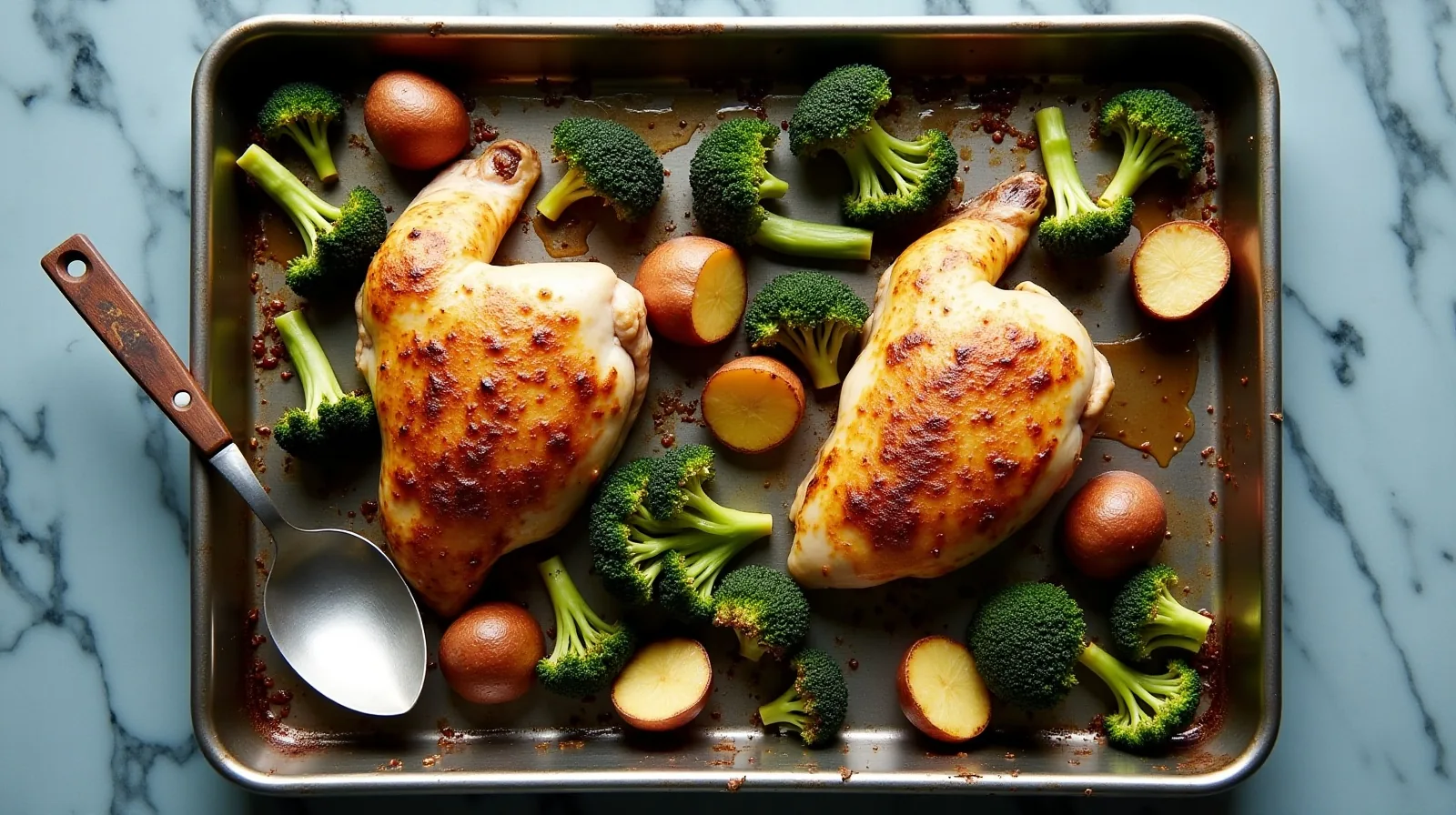
- Chicken thighs + potatoes + broccoli, smoked paprika and garlic; broccoli joins for the last fifteen minutes.
- Sausage + peppers + onions, everything sliced the same thickness so it all goes on together — the most forgiving combination there is.
- Salmon + green beans + cherry tomatoes, lemon and dried oregano; the salmon and vegetables all cook in about fifteen minutes, so the pan goes in once.
- Chickpeas + cauliflower + red onion, curry powder; the chickpeas turn crispy and the whole pan works over rice or with yogurt.
- Tofu + sweet potatoes + snap peas, soy and ginger added in the last five minutes so it glazes instead of burning.
None of those came from a recipe — they came from a fridge. That’s the real promise of the sheet pan: not a new dish to follow, but one pattern that turns whatever you already bought into dinner.