
Every stressful road trip has the same origin story: a plan that only counted the miles. The map app says eleven hours, so eleven hours becomes the plan — never mind that no human enjoys hour nine, that the interesting stops all flew past at highway speed, and that dinner became gas-station crackers eaten in a parking lot at ten p.m. A relaxing road trip isn’t a spontaneous one. It’s a lightly planned one: a handful of decisions made in advance so that the drive itself can be easy.
Plan in Hours, Not Miles
Distance lies; time doesn’t. Four to five hours of actual driving per day is the range where a road trip stays fun for most people — enough to cover real ground, short enough that you arrive with energy to enjoy wherever you’ve landed. Add roughly a third on top of whatever the map app promises: fuel, food, traffic, and the scenic overlook someone shouts about at the last second all cost time the app doesn’t count. When a day genuinely must be long, plan it deliberately — make it the first day, when everyone’s fresh, and keep the next one short.
The Two-Hour Rule
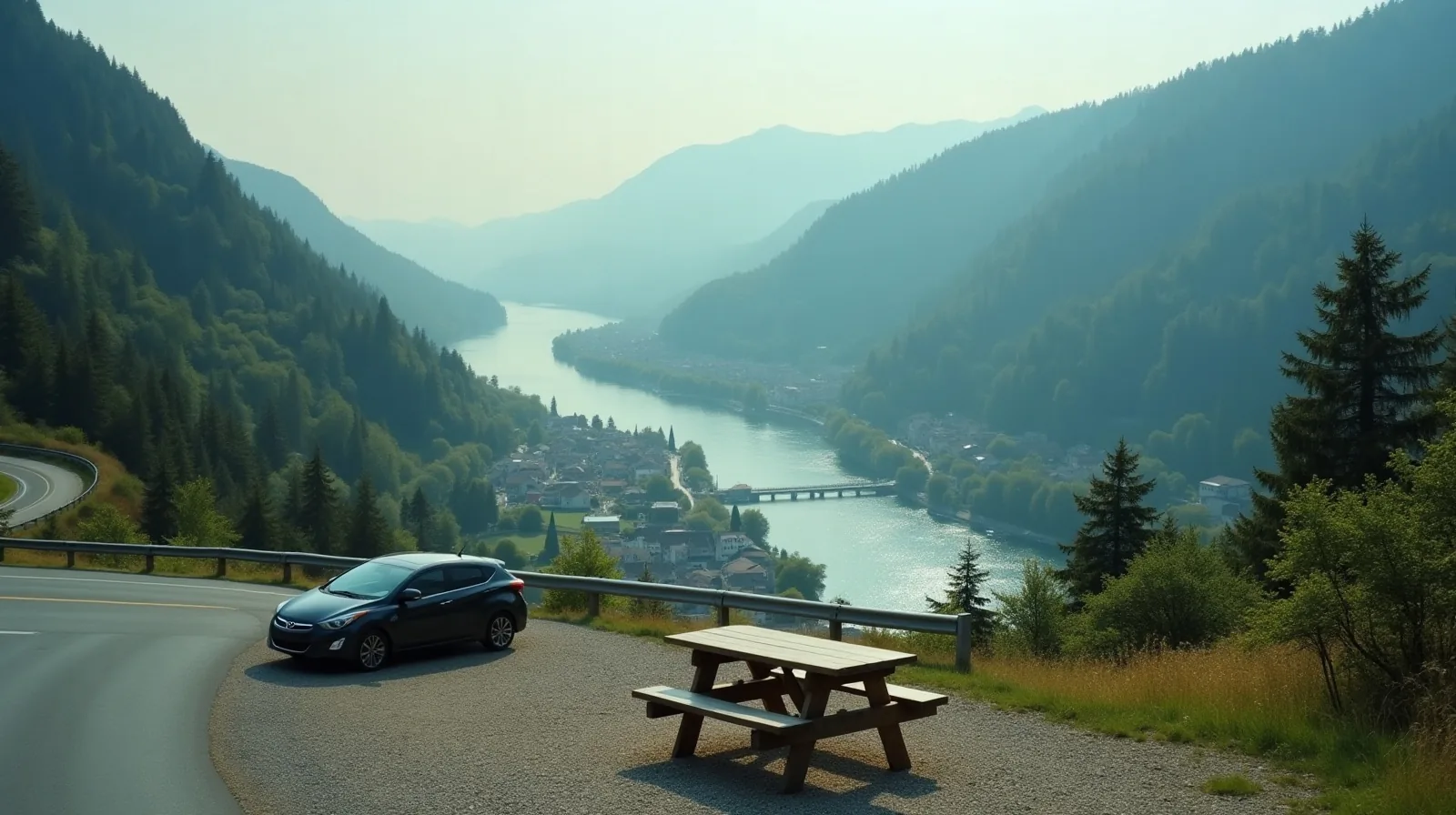
Stop roughly every two hours, whether or not anyone claims to need it. Short, regular breaks beat rare heroic ones: legs get stretched before they ache, drivers rotate before they fade, and nobody has to negotiate an emergency exit with a full bladder and an empty tank. The upgrade is making a few of those stops destinations instead of pit stops — ten minutes of scanning the route the night before usually turns up a town square, a lake, a bakery, or a ridiculous roadside attraction sitting right on your path. A stop you’re looking forward to changes the psychology of the whole day: the drive stops being an obstacle between you and the destination and becomes the trip itself.
Pack the Front Seat Like a Kitchen Drawer
Everything you’ll want while moving should be reachable without unbuckling. One small bag or bin up front covers nearly all of it:
- Water for everyone — refillable bottles, topped up at every stop.
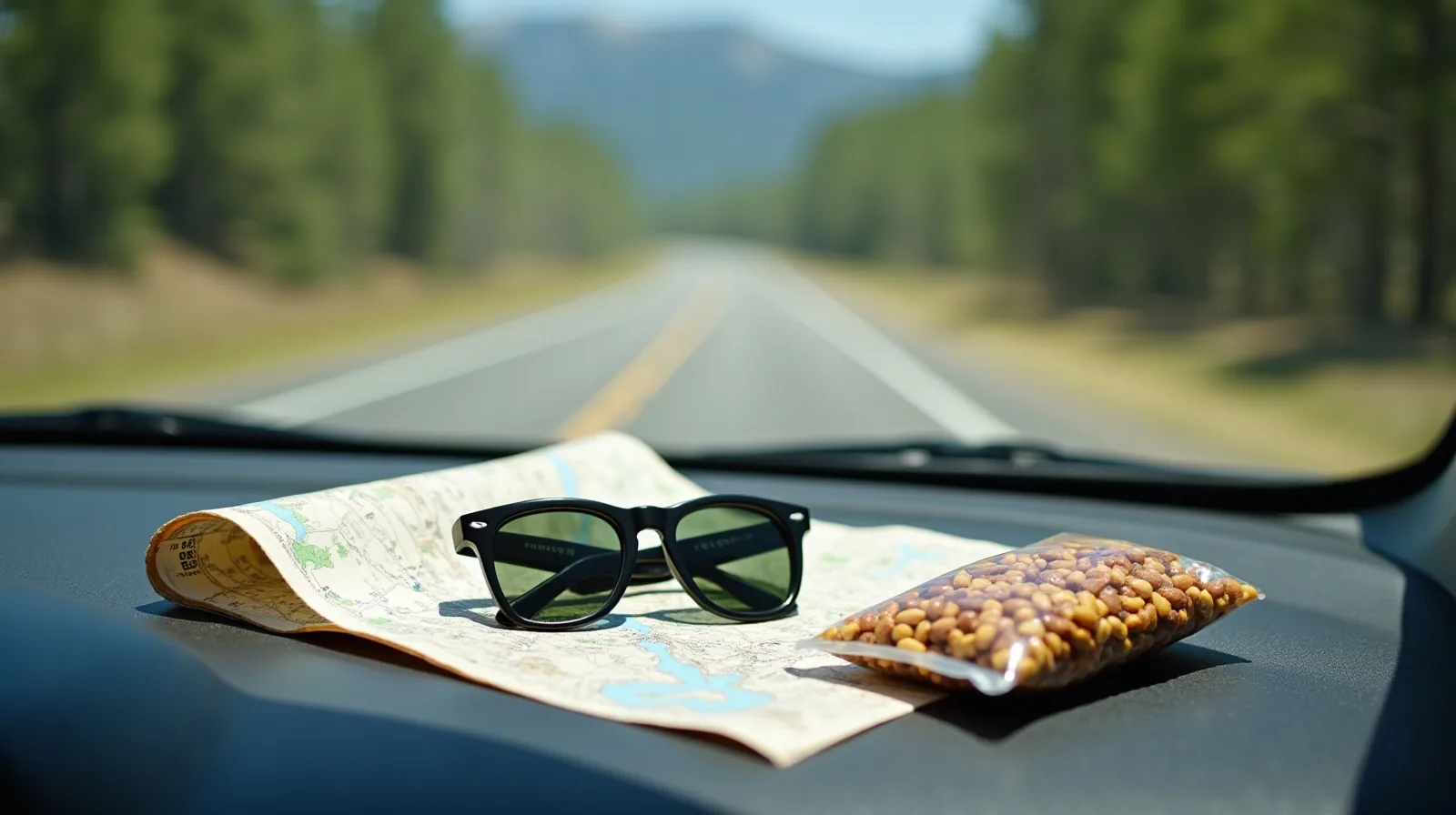
- A real snack bag — things that survive a warm car and don’t require assembly or forks.
- Chargers that reach — one cable per navigator, plus a spare.
- A paper map or printed route — dead zones exist, and they specialize in highway interchanges.
- Layers — the eternal front-seat/back-seat climate war, settled with hoodies instead of the thermostat.
- A small trash bag — emptied at every stop, so the car never crosses into archaeology.
Leave Slack in the Schedule
Book the first night — arriving somewhere guaranteed takes the pressure off day one, when you’re still finding the trip’s rhythm. After that, keep at least one afternoon genuinely unplanned. The best road-trip stories almost never come from the itinerary; they come from the detour someone spotted on a hand-painted sign. Slack in the schedule is what makes saying yes to that sign possible — a plan with no give isn’t a plan, it’s a deadline wearing sunglasses.