Most reuse advice falls apart in practice. The jar becomes a jar of nothing. The plastic tub joins forty of its friends in a cupboard that no longer closes. Six months on, all of it goes out anyway with a layer of guilt attached. The second lives that actually stick share three traits: they replace something you would otherwise buy, they take no ongoing effort, and they live where the job happens. There are more of those hiding in the recycling bin than most kitchens realize.
The Test a Second Life Has to Pass
Before keeping anything, run it past three questions. Does it stand in for a thing you would purchase? Does it stack, nest, or store flat, so it costs almost no shelf? And is the job real and recurring rather than hypothetical? An empty jar that will hold weeknight vinaigrette passes all three. Nine empty jars waiting on a canning project nobody has ever scheduled pass none. The honest cap is smaller than it feels. Keep what a normal month will genuinely use, recycle the rest without ceremony, and the whole habit stops feeling like hoarding.
Six Castoffs Worth Keeping
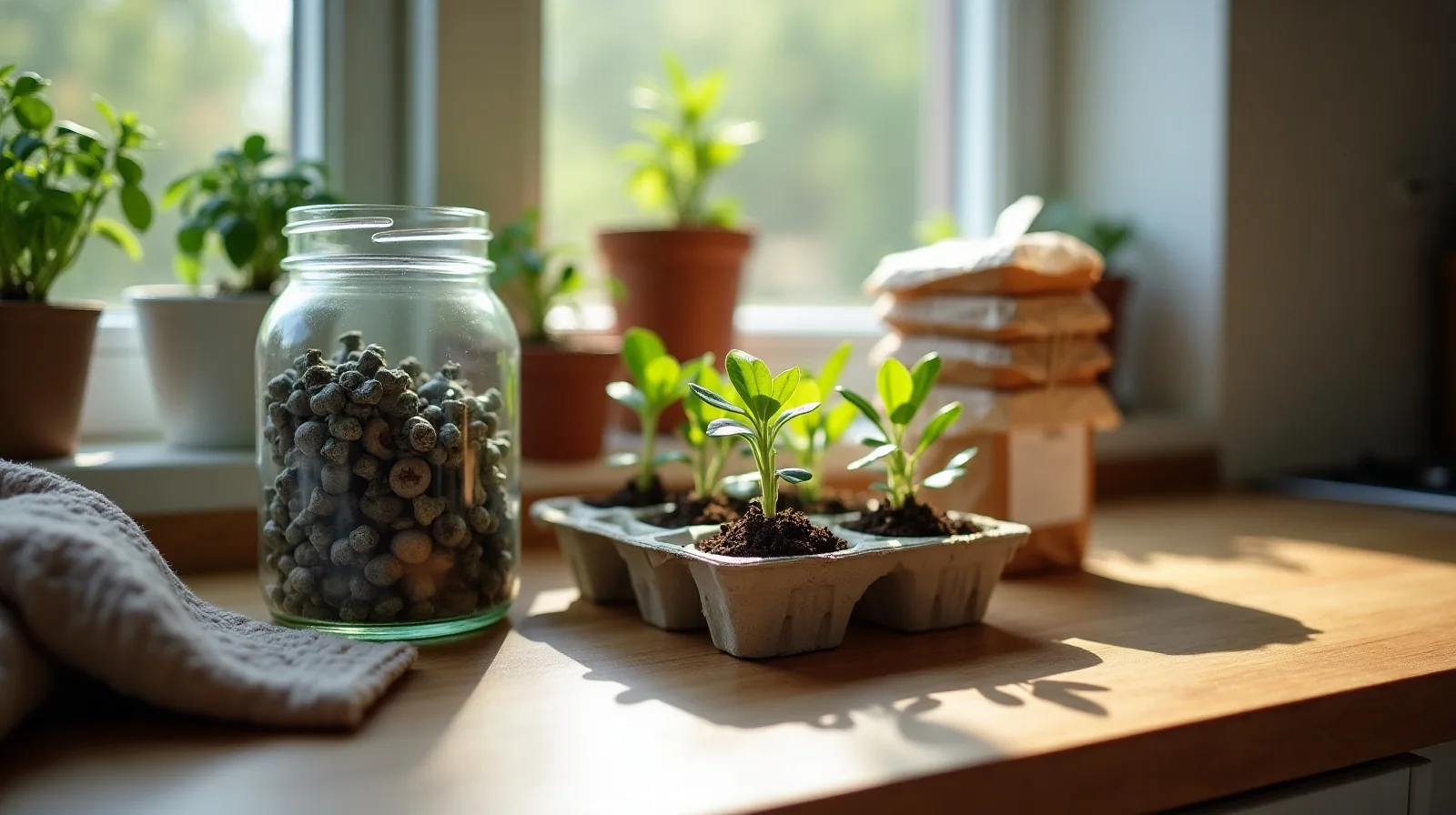
- Glass jars. Wash the label off with hot water and they become dressing shakers, leftover storage, drinking glasses, or hardware sorters in a garage. The lids hold screws and picture hooks just as well.
- Bread tags. Snap one onto each charging cable and the tangle behind the desk becomes identifiable at a glance. They also mark the end of a roll of tape, which saves a minute every single time.
- Paper egg cartons. Cut in half, they divide a drawer into compartments for earrings, batteries, or small hardware. Whole, they start seedlings that go straight into the soil, and they cushion glassware in a moving box.
- Citrus peels. Zest and freeze the peel before juicing, or steep the rinds in plain white vinegar for a couple of weeks to make a citrus-scented cleaner for sealed counters, sinks, and glass.
- Worn towels. Cut into squares with pinking shears, an old bath towel supplies a year of rags for spills, grease, paint, and floors. Fold one into a mat by the back door for muddy paws.
- Takeout containers. They freeze single portions, sort screws mid-project, catch drips under a paint tray, and carry seedlings. Keep only the ones that stack inside one another.
What the Peels and Rinds Can Actually Do
Citrus is the most underrated thing in the compost bucket. Peels dropped into a jar of white vinegar and left on a shelf for two weeks make a sharp, decent all-purpose spray once strained and cut with an equal part of water. Use it on sealed counters, sinks, tile, and glass, and keep it away from natural stone or unsealed wood, where vinegar can etch or dull the surface. Dried peel adds a bright note to a pot of simmering water on a stale-smelling afternoon, and frozen zest saves buying a lemon for a recipe that needs a teaspoon of it.
The same logic applies to herb stems, which flavor stock, and to stale bread, which becomes crumbs in thirty seconds in a food processor. The pattern is consistent: the part usually discarded is often the concentrated one.
Where the Line Sits
Not every container earns a second act, and pretending otherwise is how a cupboard fills up. Anything cracked, warped, or sticky goes out. Packaging that held raw meat is a recycling job, not a storage job. Thin plastics that flex or cloud after a wash are not worth the shelf they occupy, and lids without matching bases should leave immediately.
Set a physical limit rather than a mental one: one shoebox for jars, one drawer for containers, one bag for rags. When a category is full, the next arrival replaces something rather than joining it. That rule keeps the useful half and quietly removes the guilt from letting the other half go.