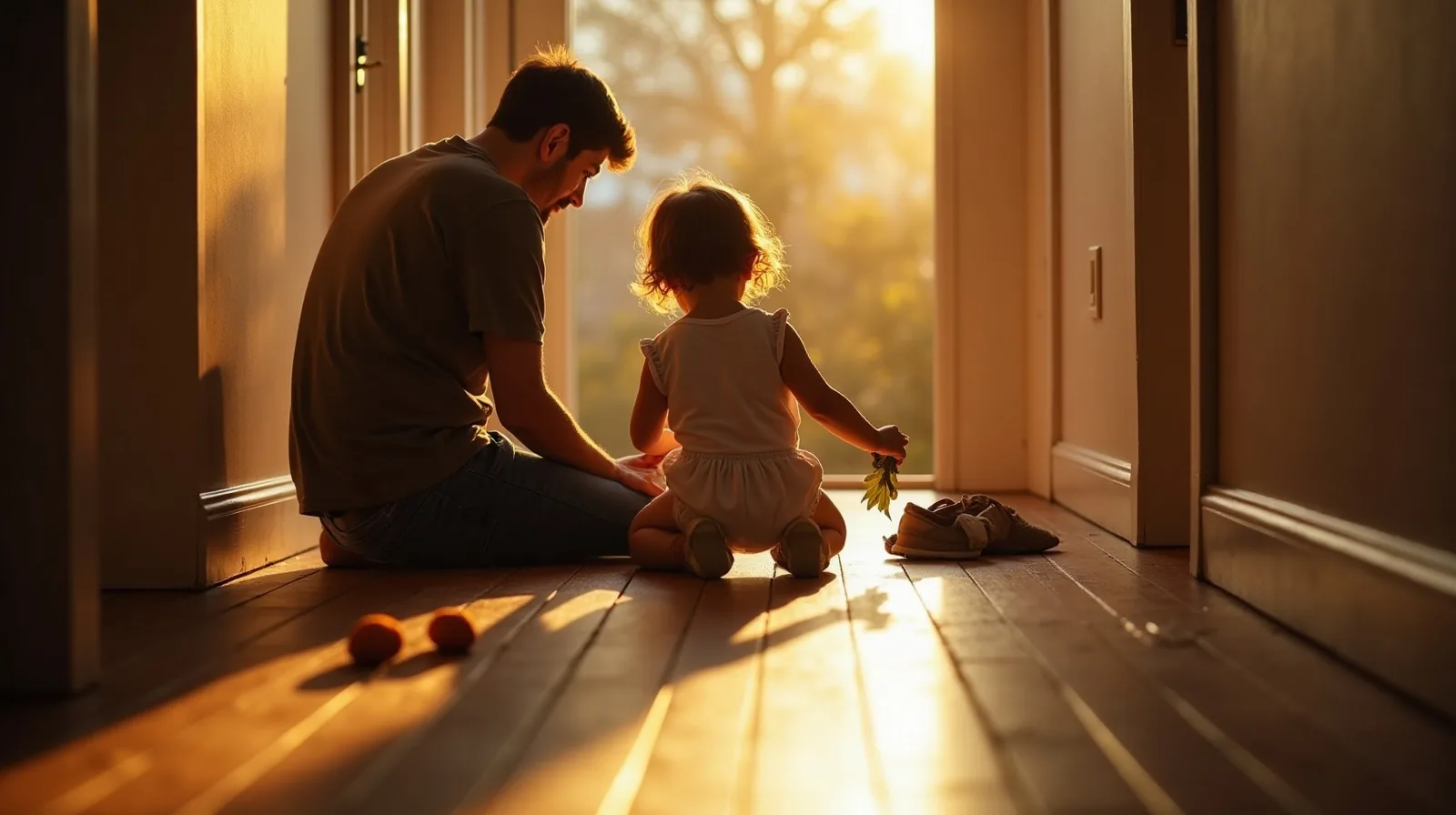
It starts somewhere around age three, usually at the worst possible moment. A simple instruction — time for shoes — turns into a chain. Why? Why do feet get cold? Why is it winter? Ten links later the shoes are still on the mat and patience is thinning fast. The questioning is not defiance, and it is not a stalling tactic invented to test you, although it can accomplish both. It is a stage with a job to do, and understanding that job makes it much easier to sit inside.
What All Those Questions Are Actually Doing
Around the third birthday, a toddler’s language finally catches up to a much bigger appetite for explanation. They have noticed that things happen for reasons, and they have just acquired the tool for asking what those reasons are. Researchers who study preschool questioning generally find that children this age are not simply making noise: handed a circular answer, they tend to re-ask or push harder, and handed a real explanation, they usually move on. That pattern points toward genuine information seeking rather than a game.
There is a social layer too. Questions keep a grown-up talking, and a talking grown-up is undivided attention. The child wants the answer, and wants the company that arrives with it.
Answering Without Running Out of Fuel
Most of the exhaustion comes from over-answering. A three-year-old asking why the sky is blue is not requesting a lesson on wavelengths, and a short, true, concrete sentence lands better and ends cleaner. Aim for one sentence, built from words the child already owns, then stop. If a follow-up comes, answer that one too. Plenty of chains die out after two or three rounds when each answer is small and satisfying.
Saying “nobody knows for sure” is allowed, and useful. Comfort with not knowing is more durable than any single fact.
- Answer short, answer true. One sentence in familiar words beats a paragraph. Accuracy matters more than completeness at this age.
- Name the feeling under the question. “That noise was loud and it surprised you” often settles a why that was never about facts.
- Narrate instead of waiting. While cooking or walking, describe what is happening out loud. Some questions were only bids for shared attention.
- Keep a wondering list. When the answer is genuinely unknown, write the question down and look it up together later. Questions can be parked without being dismissed.
- Let repetition be boring. The tenth why can get the same calm sentence as the first. Repeating without escalating ends a loop faster than inventing a new tactic.
Handing the Question Back
The most useful move in the whole phase is the return: “What do you think?” Asked warmly rather than as a dodge, it produces some remarkable answers. A four-year-old explaining why leaves fall is doing exactly the reasoning this stage exists to build, and hearing a theory in their own voice is worth more than hearing a correct one in yours. It also reveals what the child already believes, which sometimes explains a fear or a stubborn refusal that had looked random.
Where possible, follow the guess with a gentle test. If the theory is that the ice melted because the room was noisy, put one cube on the counter and one in the freezer and check in ten minutes. The goal is not correction; it is showing that a question can be settled by looking.
Closing the Loop Kindly
Some loops have to end, and ending one is not a failure of patience. The kindest close names what is happening and offers a future: “That is the third why, and shoes have to happen now. Ask again in the car and the answer is yours.” Then follow through in the car, because the credibility of that deal is the entire mechanism.
Timing helps more than technique. Hungry, tired, and rushed are exactly when the chains feel endless, so steer the big questions toward unhurried stretches: bath time, the walk home, the long stir of a pot on the stove. The phase is loud, occasionally maddening, and mercifully temporary, and answering it well is one of the quieter ways a person learns how to think.