Lists solve one problem beautifully: they hold information outside your head. What they cannot do is remind you to look at them. That gap is where most forgotten errands live — the item was written down, correctly, in an app nobody opened until the shop had already closed. Work on memory suggests the fix has less to do with better lists and more to do with building cues into the world around you, so that remembering does not depend on choosing to remember at exactly the right second.
One Capture Point, Every Time
The most common failure is scatter: a note in one app, a reminder in another, a receipt scribbled on in a coat pocket, and three items held loosely in your head. Every extra location cuts your confidence that the list is complete, and a list you do not trust is a list you quietly stop checking. Pick one place — a single notes app, one pocket notebook, one whiteboard by the door — and put everything into it, however trivial, even when it obviously belongs somewhere else. Sorting can wait for a calmer moment. Capture cannot, because the thought is usually gone within seconds.
If-Then Beats Trying Harder
Researchers studying how intentions turn into action have found something usefully specific: vague plans fail far more often than plans attached to a trigger. “Pick up the prescription” is a wish. “When you lock the office door, you turn right toward the pharmacy” is an instruction with a cue built in. The trigger does the remembering, so you are not depending on the thought floating back up on its own. Write that trigger into the list entry itself: the moment, the place, or the action that will already be happening when the task needs doing.
Let Objects Carry the Message
Physical placement is memory storage that most people underuse. An object sitting somewhere strange is a question you cannot ignore.
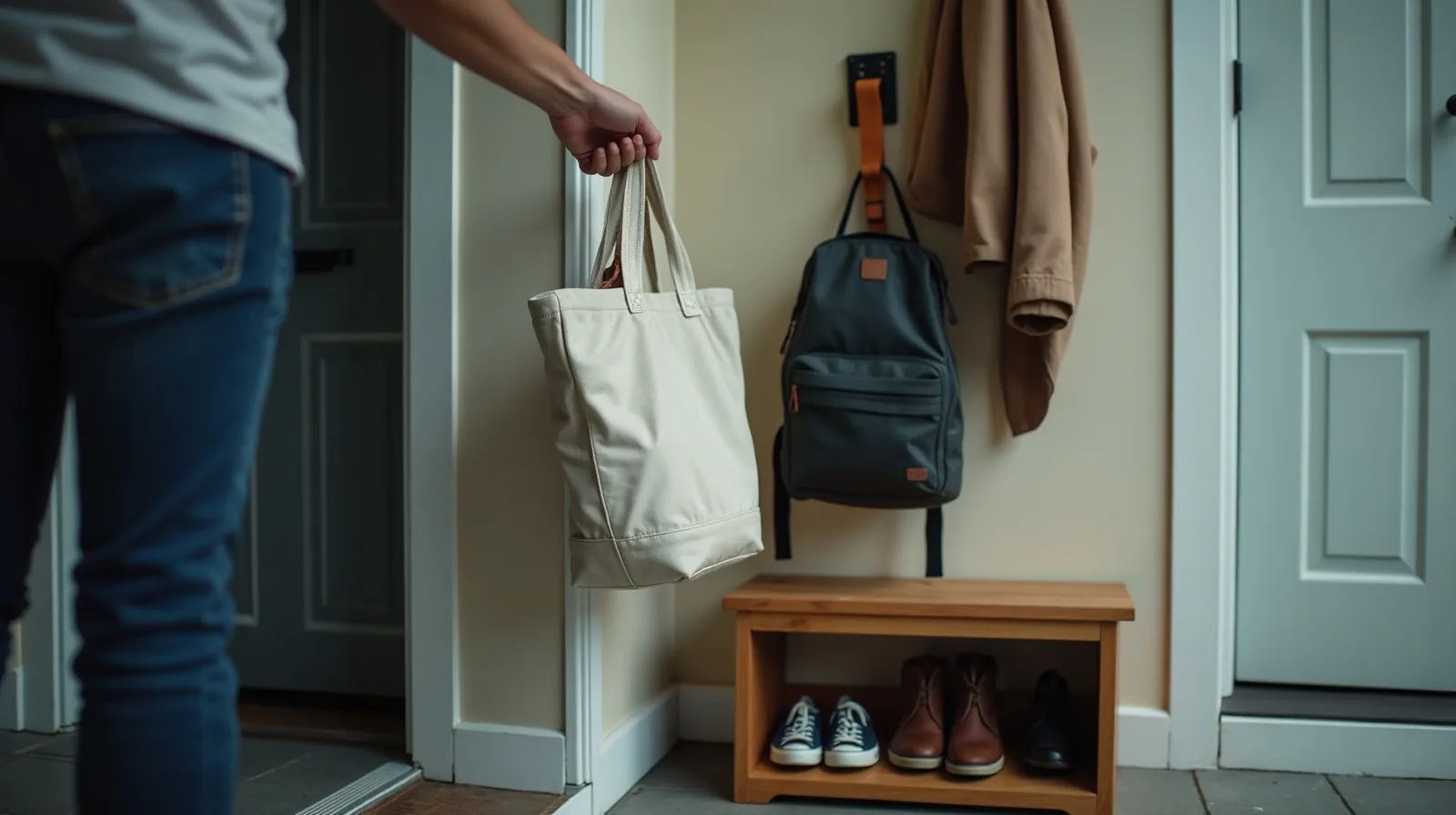
- Block the exit. Anything that must leave the house with you goes on the floor directly in front of the door, not on a table somewhere near it.
- Break the pattern. Move a familiar object, turning a picture frame to the wall or leaving one shoe on the counter, so it raises the question of why it is there.
- Pair it with a habit. Stick the note to the kettle, the coffee tin, or the car keys, so the cue arrives attached to something you do without thinking.
- Put it where it fails. The library book lives on the passenger seat, the vitamins beside the toothbrush, the gym clothes on top of the bag by the stairs.
- Keep one drop zone. A single tray for keys, cards, and anything mid-errand means fewer searches and far fewer forgotten handoffs.
Say It Out Loud, Then Say It Again
Speaking a phrase aloud makes it noticeably easier to recall later than reading it silently; producing the words gives memory a second, more distinctive trace to find. It is why narrating where you set the keys down works so reliably, and why reading a shopping list under your breath in the aisle beats scanning it. Pair that with spacing: glance at the list once, look away, check again a few minutes later, then once more an hour on. Two short re-readings spread apart hold better than five in a row, and the whole routine takes under a minute.