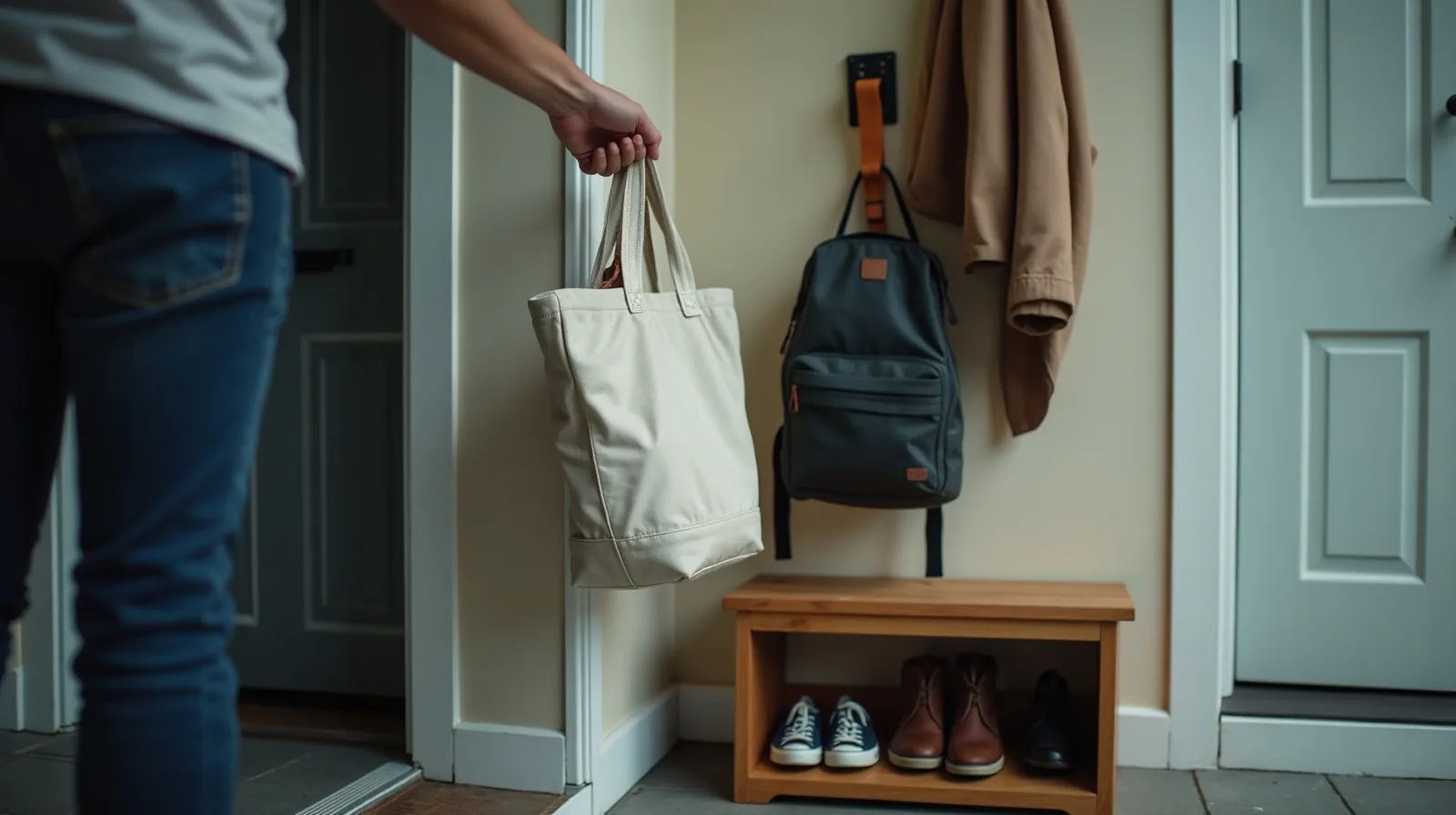
The entry is the smallest space in most homes and the one asked to do the most work. Coats, backpacks, shoes, mail, sports gear, dog leashes, and the library books due Thursday all pass through a strip of floor barely wider than the door, usually with nowhere to land. So they land on the stairs, the dining chair, the kitchen counter, and the mess spreads outward from there. Treating that strip as a system, with a small number of defined spots that each do one job, quietly fixes more household clutter than almost any other hour of work.
Watch What Comes Through the Door First
Resist the urge to buy anything for a week. Pay attention instead to what genuinely arrives and where it stalls. Most homes have four or five repeating flows: outerwear worn daily, bags that get set down and picked back up, shoes in two categories, paper that arrives and has to be dealt with, and things that need to leave the house again soon. Buying storage before those flows are clear is how an entry ends up with a handsome console table nobody uses and a pile of shoes beside it. Match hardware to traffic, not to a photograph.
Hooks at the Heights People Actually Use
Hooks beat a closet rod for anything worn daily, because a hook takes one second and a hanger takes ten. Ten seconds is enough friction to lose the habit. Mount them into studs or use proper drywall anchors; a rail spreads the load and gives you a straight line to work from. Rough numbers to start from, adjusted to the people in the house:
- Adult hooks near eye level. Roughly 62 to 66 inches from the floor keeps coat hems off the ground and shoulders off the wall.
- A second rail for children. Somewhere near 38 to 42 inches puts a backpack within reach of a five-year-old, which is the only way a five-year-old will ever use it.
- Eight to ten inches between hooks. Any closer and coats overlap into one lump nobody wants to dig through.
- A shelf above, about 72 inches up. Hats, gloves, and sunscreen live there in open baskets, not behind cabinet doors.
- One hook per person, plus one spare. The spare absorbs guests and the jacket not yet put away; more than that and the rail becomes long-term storage.
A Bench and a Real Landing for Shoes
Shoes end up in the entry because that is where they come off, and fighting that fact never works. Give them a defined footprint instead. A bench at seating height, roughly 18 inches, means shoes come off sitting down rather than kicked toward a corner, and a boot tray with a raised lip underneath contains drips, grit, and road salt. Keep the tray small on purpose: one pair per person is the rule, and when it overflows the extras go back to the closet rather than the tray getting bigger. A bench with a lidded seat or open cubbies below adds storage without adding another piece of furniture to a narrow space.
Mail, Paper, and the Basket for Things That Travel
Paper is the flow most entries ignore, and it is the one that migrates fastest to the kitchen. A shallow wall pocket or a single tray, sized so it cannot hold more than a week of mail, gives envelopes somewhere to sit, and a small recycling bin directly underneath means junk mail never enters the house at all. Sort standing up, on the way in, and only two things survive the trip: what needs action and what needs filing.
Then add the piece most entries are missing: one basket, by the door, for things that need to leave. Returns, library books, the signed permission slip, the dish that belongs to a neighbor. Anything headed out goes in the basket instead of onto a counter, and the basket gets a glance every time somebody reaches for their keys. It is the cheapest fix on this list and usually the one people notice first.