Rice is one of the cheapest and most forgiving foods in the kitchen, right up until the moment it is not. One pot comes out light and separate; the next is a gluey mass welded to the bottom, or crunchy in the middle with a puddle of water sitting on top. The frustrating part is that nothing obvious changed between them. What actually changed was some combination of rinsing, ratio, heat, and patience — four small variables that decide the whole outcome, and all four are easy to pin down.
Rinse Until the Water Runs Almost Clear
Dry rice arrives coated in loose surface starch from milling and transport, and that powder is what glues grains together in the pot. Put the rice in a bowl, cover it with cool water, swish it with your fingers, and pour off the cloudy water. Three or four rounds is usually enough; the water never goes perfectly clear, and chasing that is a waste of time. Drain it well in a sieve so the rinse water does not quietly become part of your ratio. Two exceptions: skip the rinse when the starch is the point, as in a creamy short-grain dish, and go lightly on rice coated with added vitamins, since rinsing washes some of it away.
Ratios Change With the Grain
The one-to-two rule printed on a lot of packages is a compromise that fits almost nothing perfectly. Rinsed rice already carries water, and different grains drink different amounts. Measure by volume with the same cup for both, use a pot with a heavy bottom and a lid that seals, and start from these rough ratios.
- Long-grain white rice. About one and a half parts water to one part rinsed rice, simmered for roughly fifteen minutes. Fluffy and separate is the target.
- Aromatic long grains. Slightly less water, closer to one and a quarter parts, and a ten-minute soak beforehand helps the grains stay long and unbroken.
- Short and medium grains. Around one and a quarter parts water for a tender, faintly sticky result that holds together on a spoon.
- Brown rice. Closer to two parts water and about forty minutes, because the intact bran layer takes far longer to soften.
- Parboiled rice. Roughly two parts water and twenty minutes; the most forgiving grain here if the timing slips.
The Absorption Method, Start to Finish
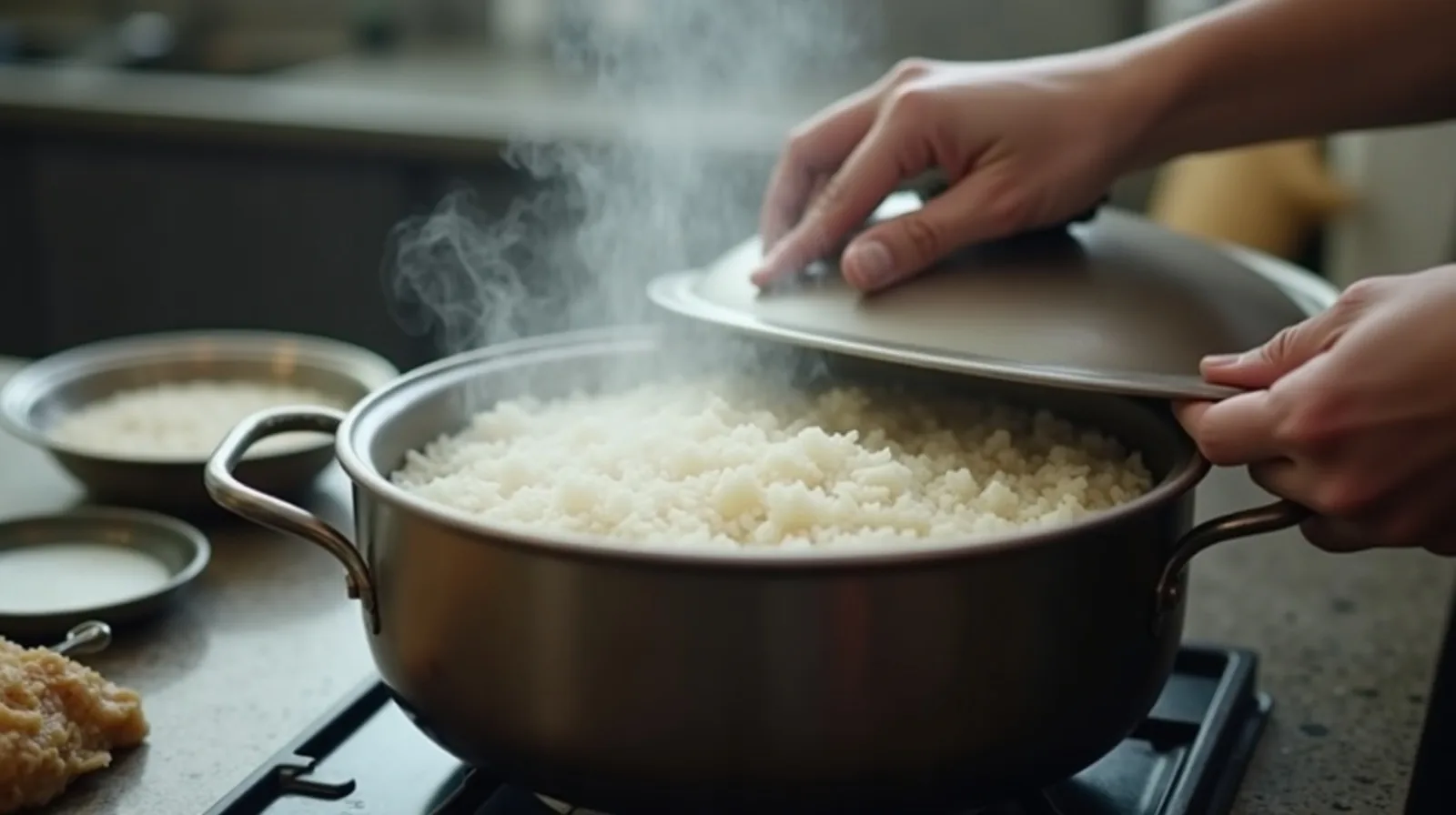
Combine drained rice, measured water, and a pinch of salt in the pot. Bring it to a full boil uncovered, give it one stir to loosen anything sitting on the bottom, then drop the heat to the lowest setting that keeps a lazy simmer and put the lid on. From there the job is to leave it alone. Every lift of the lid releases the steam doing the cooking and resets the timing unmeasurably. When the time is up, pull the pot off the burner entirely and let it stand, still covered, for ten minutes. That rest is not optional — it lets moisture even out from the wet bottom to the drier top. Then take the lid off and fluff with a fork, lifting rather than stirring, so the grains separate instead of smearing.
Fixing Gummy, Crunchy, or Scorched Rice
Gummy rice usually means too much water, too much stirring, or both. Spread it on a sheet pan in a thin layer and let the steam escape for a few minutes; it will never be perfect, but it becomes usable, and it fries beautifully the next day. Crunchy centers over a dry pot mean the water ran out early: sprinkle two or three tablespoons of hot water over the surface, cover, and give it five more minutes on very low heat. A wet, soupy top over cooked grains is the opposite problem — leave the lid off over low heat and let the excess steam away. If the bottom scorched, resist stirring, since that spreads the burnt flavor through everything; spoon the good rice off the top and leave the dark layer behind.