
Every family has attempted the strict screen-time regime at least once: precise daily minute allowances, maybe a timer, definitely a chart. And every family knows how it ends — with a parent doing math at 7 p.m. about whether a video counts against the quota, a child negotiating like a small lawyer, and the whole system quietly collapsing by the following weekend. The problem isn’t that limits are wrong. It’s that minute-counting is the hardest possible way to enforce them. Rules anchored to places and times do the same job with a fraction of the arguing — because the situation does the enforcing, not you.
Why Minute-Counting Fails
Counting minutes fails for three predictable reasons. First, it makes a parent the referee of every single session, and referees get appealed to constantly — the rule generates the exact negotiation it was meant to end. Second, it treats all screen time as identical, when a video call with grandparents, a drawing app, and an hour of autoplay clearly aren’t the same thing. Third, it has no natural stopping cue: “forty-five minutes” is invisible, but “dinner is on the table” is not. The families whose rules survive tend to have stopped asking how long and started asking where, when, and what.
Anchor the Rules to Places and Times
Location-and-time rules are easier to keep because everyone can see when they apply — there’s nothing to track and little to argue. A workable starter set:
- Screens eat last. Homework, chores, and some outdoor time come first; screens fill what’s left. No stopwatch required — the day sets the limit.
- The table is screen-free. Meals are conversation territory, for everyone, every time. One sentence, zero ambiguity.
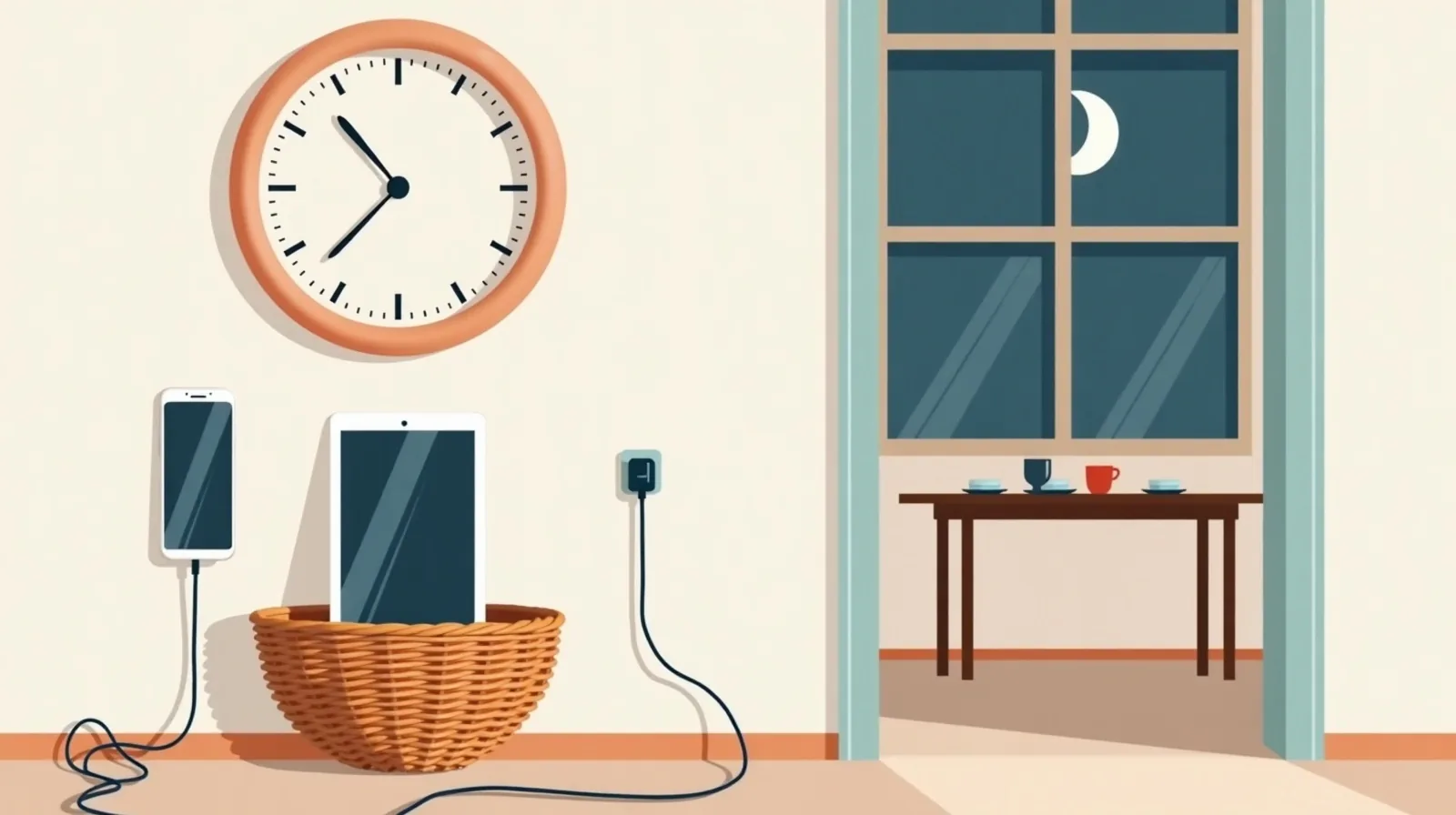
- Devices sleep in the kitchen. A charging basket on a shelf, everything docked at a set hour. Pediatric guidance generally points toward keeping screens out of bedrooms overnight — sleep wins, and the morning scroll never starts.
- Weigh the what, not just the when. Creating, building, and watching together sit in a different category than solo autoplay. Rules can be looser for one and firmer than usual for the other.
- Put the rules on paper. Written and posted where everyone can see them, the rules become the house’s — not a parent’s mood. Kids argue with parents; they argue less with the wall.
The Rules Apply to Adults Too
Here’s the uncomfortable part: children learn screen habits mostly by watching, and a rule that only binds the shortest people in the house reads as arbitrary — because it is. If devices sleep in the kitchen, the adult phones dock in the same basket. If the table is screen-free, that includes the parent “just checking one thing.” This isn’t about performing perfection; it’s that shared rules feel like how our family does things, while one-sided rules feel like something done to the kids — and only one of those survives adolescence.
Plan to Renegotiate
No screen-time system survives contact with a new school year, a new console, or a kid turning thirteen — and that’s fine, because the goal is a living agreement, not a monument. Revisit the rules every few months, with the kids in the conversation: what’s working, what’s causing daily fights, what they think is fair. Rules kids helped write get followed noticeably more than rules handed down. And if screens seem tangled up with real trouble — sleep that’s falling apart, a mood that’s shifted, school sliding — that’s bigger than a house rule, and your pediatrician or a qualified professional is the right next conversation.