Stir-fry is the most useful thing a tired cook can know, because it is a technique rather than a recipe. Half an onion, a lonely carrot, a handful of greens going soft at the edges, whatever protein is thawed: fifteen minutes later that is dinner, and it does not taste like leftovers. What separates a good one from a gray, watery one has almost nothing to do with the ingredients. It comes down to heat, dryness, order, and how much is in the pan at once.
Get the Pan Hotter Than Feels Comfortable
The whole method depends on high heat. Food that hits a hot surface browns and stays crisp; food that hits a warm surface releases water and simmers in it. Preheat the empty pan until a drop of water skitters and evaporates on contact, then add oil and let it shimmer before anything else goes in. Choose an oil that tolerates that heat, which rules out most finishing oils, and save the delicate ones for drizzling at the end.
A carbon steel wok is traditional and a heavy skillet works fine, but a thin nonstick pan struggles here because it neither holds heat nor likes being pushed that far. Turn on the extractor fan before starting.
Dry Ingredients, Cut to Match
Water is the enemy of browning, so everything gets patted dry with a towel before it goes near the oil — especially anything rinsed, thawed, or marinated. Sliced protein benefits from a light dusting of cornstarch, which sets a thin coating that browns quickly and keeps the inside tender.
Cut for even cooking rather than for looks. Pieces roughly the same size finish at the same moment, and thin diagonal slices on stems expose more surface to the pan. Dense vegetables want to be cut smaller than tender ones. Then prep everything and line it up next to the stove, because once the cooking starts there is no pause long enough to go chop something.
Cook in Order of Density
Everything entering the pan at once is the single most common mistake, and it guarantees that something is raw while something else is limp. Stage the ingredients instead, adding each group when its cooking time says so.
- Protein first, then out. Sear it in a single layer, cook it through or nearly so, and move it to a plate while the vegetables cook.
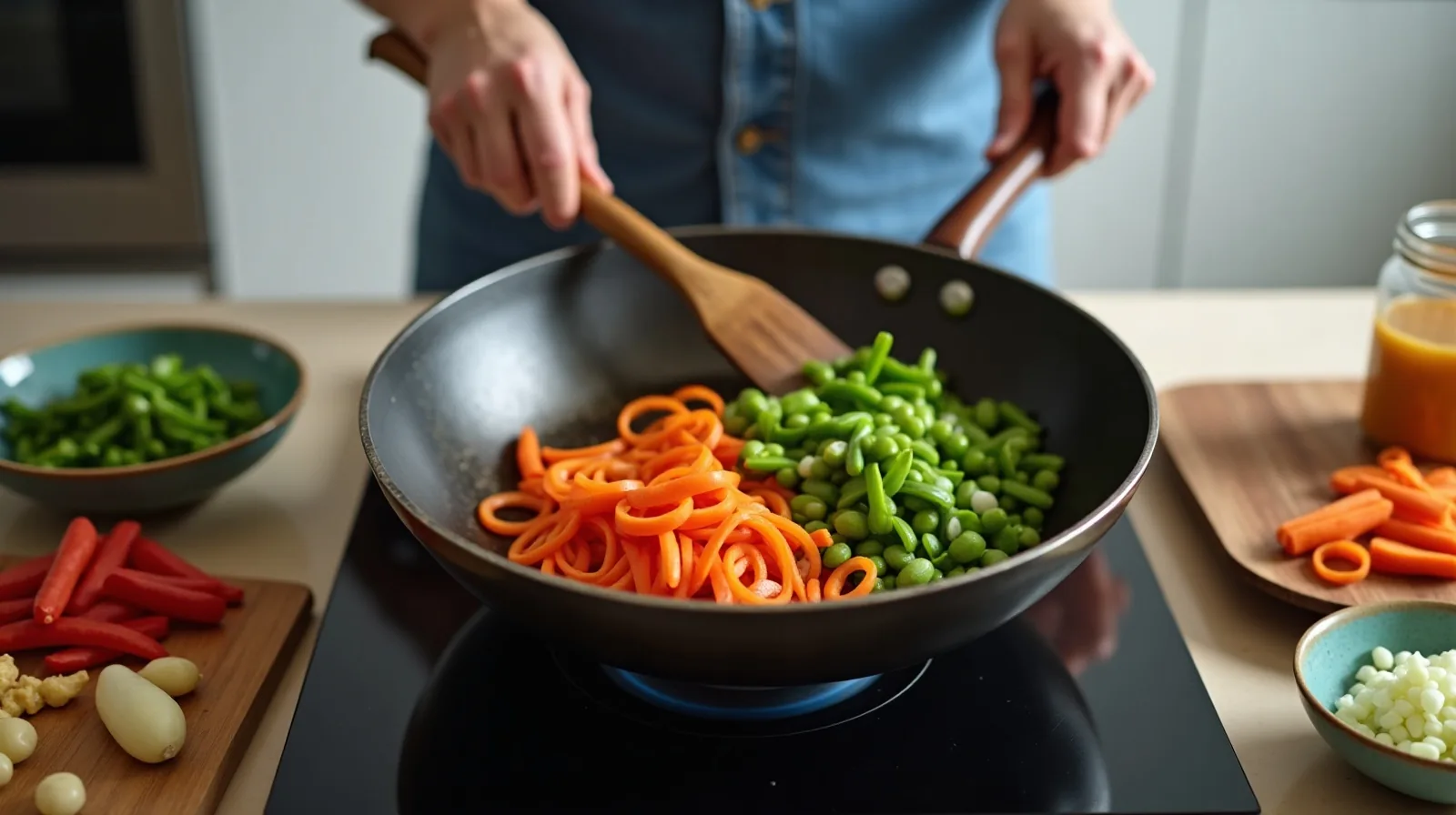
- Firm vegetables next. Carrots, broccoli stems, cauliflower, green beans. Give them a couple of minutes alone, and a splash of water with a lid if they need steam to soften.
- Tender vegetables after. Peppers, snap peas, mushrooms, cabbage. A minute or two is usually plenty.
- Aromatics late. Garlic, ginger, chilies, and scallion whites burn easily, so they go in for the last thirty seconds rather than the first.
- Leaves and the sauce last. Return the protein, add spinach or bok choy leaves, pour the sauce around the edge of the pan, and toss until it clings.
A Sauce in Three Parts
Bottled stir-fry sauce is unnecessary once the shape of one is clear: something salty, something sweet, and something sharp, loosened with a little liquid. A rough starting ratio is three spoons of a salty soy-style sauce, one of sugar or honey, and one of vinegar or citrus juice, plus a few spoons of water or stock. Stir a half spoon of cornstarch into the cold mixture before it goes anywhere near the heat, and it will thicken into a glaze in about twenty seconds. Taste and adjust once the pan is off the heat, since flavors concentrate as the sauce reduces.
Give the Pan Room
Crowding drops the temperature and traps steam, which turns the whole idea inside out. If ingredients are piled more than one layer deep, cook in two batches and combine at the end. Keep everything moving with a wide spatula, but leave brief pauses so surfaces get a chance to color. And serve it right away, because a stir-fry keeps softening in a warm pan long after the burner is off.