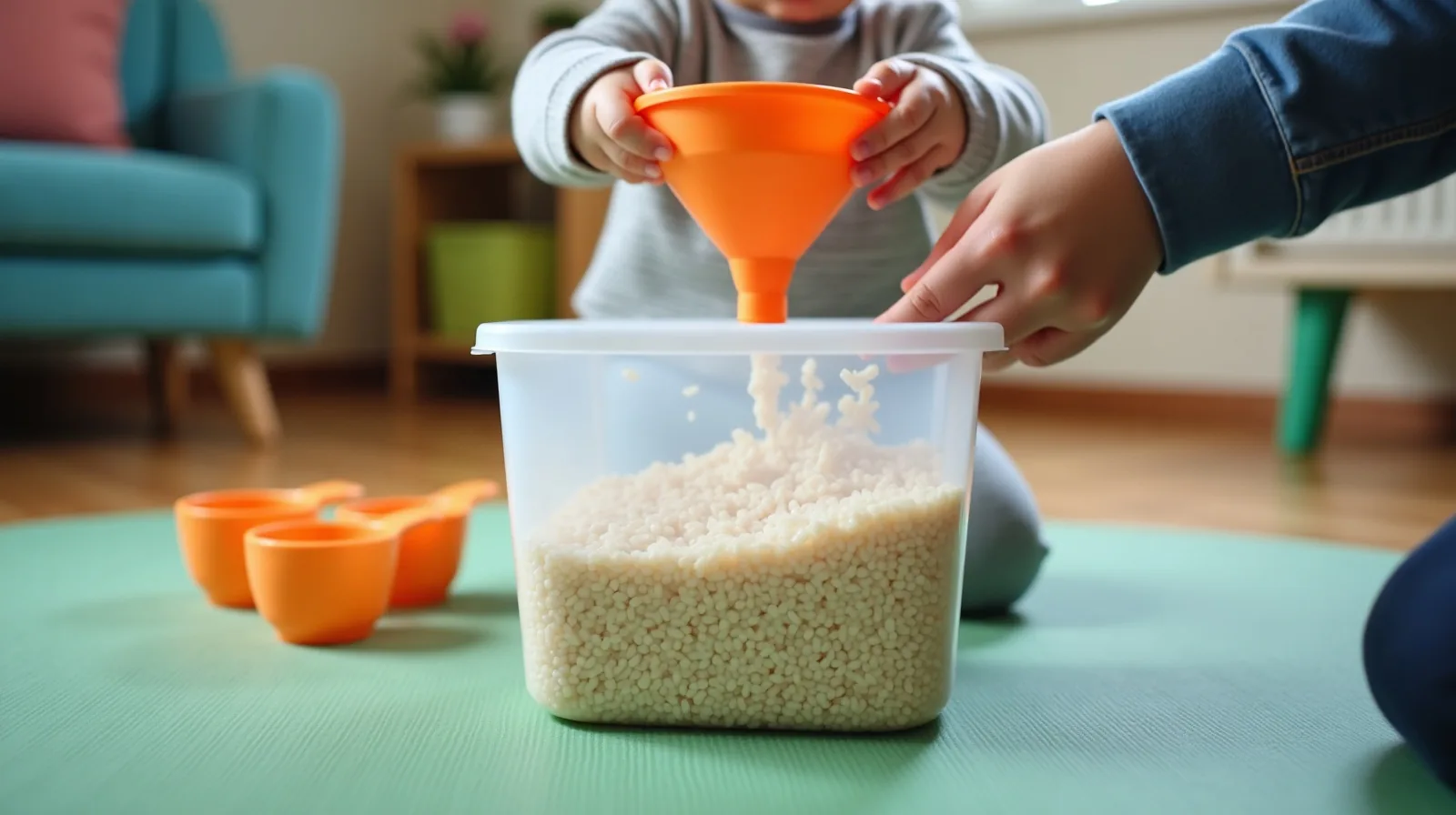
Somewhere along the way, “sensory play” picked up a reputation as something that requires a specialty kit and a color-coordinated playroom. It doesn’t. At its core, sensory play is a shallow bin, something interesting to touch, and a scoop — and most of the best versions come straight from the pantry. For a toddler, digging, pouring, and squishing isn’t killing time; it’s genuinely absorbing work. For the adult nearby, a good bin buys twenty quiet minutes and costs about as much as a bag of rice.
What All That Digging Actually Does
Watch a toddler run rice through their fingers for the tenth time and it looks like nothing much. Underneath, quite a lot is happening: scooping and pouring build the small hand muscles that later hold pencils, describing textures grows vocabulary (cold, bumpy, squishy), and figuring out that a small cup fills a big one is early math wearing a disguise. Just as useful for many kids is the calming side — repetitive touch-based play tends to settle a wound-up child the way a stress ball settles a wound-up adult. It’s one of the few activities that’s both stimulating and soothing at once.
The Simple Bin Formula
Every sensory setup is the same three parts: a container (a shallow storage bin, a baking dish, even a big mixing bowl), a base to dig in, and a few tools — measuring cups, spoons, a funnel, small cups from the kitchen drawer. Bury a couple of familiar toys in the base and you’ve added a treasure hunt for free. Set the bin on a beach towel or an old sheet, and the cleanup shrinks to shaking it out over the trash or the yard.
Bases and Setups to Try First
- Colored rice. Shake dry rice in a zip-top bag with a few drops of food coloring, spread it to dry for an hour, and it keeps for months in a sealed container.
- A water station. Two bowls, cups, a whisk, and a turkey baster on a towel-covered floor. Warm water on a cold day feels like a spa; add a drop of dish soap for bubbles.
- Taste-safe dough. For kids who still mouth everything, mix oat flour with a little oil until it clumps — crumbly, moldable, and harmless if sampled.
- Sensory bags. Hair gel and a few beads sealed inside a heavy zip-top bag, edges reinforced with tape — squishing without the mess, good for the youngest players.
- Frozen treasures. Freeze small toys in a bowl of water, then hand over warm water, a spoon, and the mission of the century.
- A nature bin. Pinecones, large smooth stones, leaves, and sticks from one walk around the block — free, seasonal, and endlessly rearrangeable.
Keep It Safe, Keep It Sane
Two rules do most of the safety work. First, sensory play is supervised play — stay within arm’s reach the whole time, especially with water. Second, respect the choking rule: for children under three, or any child who still puts things in their mouth, skip small, hard items like dry beans, marbles, beads, and anything that could fit through a cardboard tube, and choose taste-safe bases instead. Check tools for cracked edges, and dump water bins as soon as play ends. On the sanity side, make the last five minutes part of the game — toddlers who help pour the rice back into its container are far more likely to be handed the bin again tomorrow.