
Garages fill up because they’re where “later” lives — the donation pile that never got donated, the sports gear between seasons, the paint from two colors ago. And the standard instinct, a big trip to the storage aisle for matching bins and racks, quietly gets the order backwards: it buys containers for stuff that shouldn’t be kept, before anyone knows what actually needs a home. The better version costs a weekend and almost nothing else, because a house that filled a garage already owns everything required to organize one.
Empty First, Sort Ruthlessly
Pull everything — genuinely everything — out onto the driveway, and sort it into three zones: keep, donate, toss. Give the sort teeth with a few standing rules: anything broken for more than a year goes; duplicates get donated (nobody needs three half-working rakes); and “might need it someday” only earns a spot if you can name the someday. This step matters more than any shelf, because half of a garage’s storage problem usually leaves in the donate pile. Only when the keep pile is final do you decide where things go — organizing before purging just builds tidier monuments to clutter.
Shop Your Own House for Storage
- Glass jars. Screws, nails, washers, and wall anchors, sorted where you can see them. Screw the lids to the underside of a shelf and the jars hang in a tidy row.
- Sturdy cardboard boxes. Labeled with a big marker by category — “camping,” “paint,” “holiday” — not by contents list. Categories survive; inventories don’t.
- Milk crates and buckets. Balls, extension cords, car-wash gear. Crates stack, carry, and can be screwed straight to the wall as instant cubbies.
- A retired bookshelf or dresser. The one that’s too shabby for the house is perfect out here — drawers swallow gloves, tape, twine, and spare bulbs.
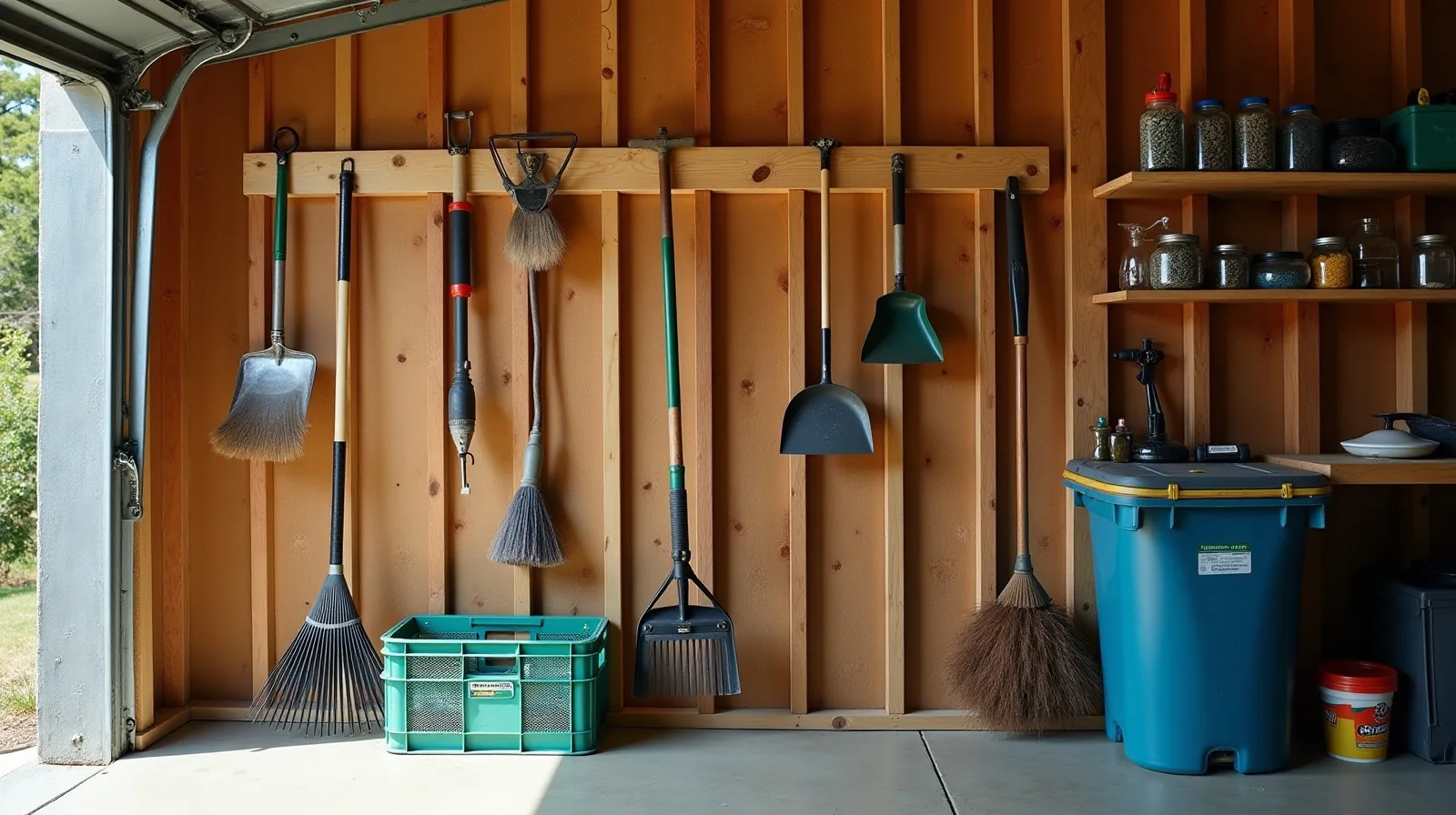
- Scrap wood and long nails. A board screwed into the studs with pairs of nails becomes a rack that gets rakes, shovels, and brooms off the floor for the price of nothing.
- Muffin tins and egg cartons. Drawer organizers for the small hardware that otherwise forms The Jar of Mystery.
Let the Walls Do the Work
The floor is the most valuable space in a garage, so give it a rule: only things with wheels or things too heavy to lift live at ground level. Everything else goes up — nails and screws driven into studs for hand tools, that scrap-wood rack for the long-handled fleet, crates on the wall for grab-and-go gear. If a pegboard is already hanging around, trace each tool’s outline with a marker so every item has an obvious address and every gap announces what’s missing. Group by errand, not by object type — a yard zone, a car zone, a fix-it zone, a sports zone — so one trip to one spot gathers everything a job needs. Keep heavy things low, light things high, kid gear reachable, and anything sharp or chemical up high or locked away from small hands.
Keep It That Way
Organized garages relapse through the door, so guard the door: a standing donate box lives beside it and leaves whenever it fills, and anything new that comes in has to displace something old — one in, one out. Flat surfaces attract piles, so the workbench gets cleared at the end of every project, not every season. Then four times a year, spend ten minutes walking the zones and returning strays. That’s the entire maintenance plan — ten minutes a season is cheap rent for a garage the car still fits in.