Somewhere along the way, hobbies picked up a job description. They’re supposed to be monetizable, postable, or at least impressive — and the starter kit alone can run three figures. No wonder so many people answer “what do you do for fun?” with a blank stare and a scroll through their phone. But the original point of a hobby was never output. It was the specific, hard-to-fake calm of doing something pleasant with your hands and attention — and that kind of hobby still exists, usually for less than the cost of a takeout dinner.
Why Hobbies Stopped Feeling Like Rest
Two things quietly ruined hobbies: performance and gear. The moment a pastime becomes content — photographed, posted, compared — it inherits all the anxiety of an audience. And the modern reflex to “get into” something by buying its full equipment loadout turns week one into a shopping project and week three into guilt about the unused pile. A relaxing hobby needs the opposite conditions: low stakes, low cost, and nobody watching. If quitting it for a month would cost you nothing and disappoint no one, you’ve found the right category.
What Makes an Activity Genuinely Restful
The hobbies that actually lower the shoulders share a shape. They occupy your hands and just enough of your mind to crowd out rumination. They have no deadline and no one keeping score. And the process is the point — a mediocre sketch or a lopsided loaf still delivered the hour of calm that made it. Think of it as being pleasantly absorbed: challenged enough to stay interested, never enough to feel tested. Scrolling rarely qualifies, because feeds are built to fragment attention, not settle it — which is exactly why an evening of “relaxing” on the phone so often ends with you feeling less rested than when you sat down.
Six Starters Under the Cost of a Takeout Dinner
None of these requires talent, and all of them start with pocket change:
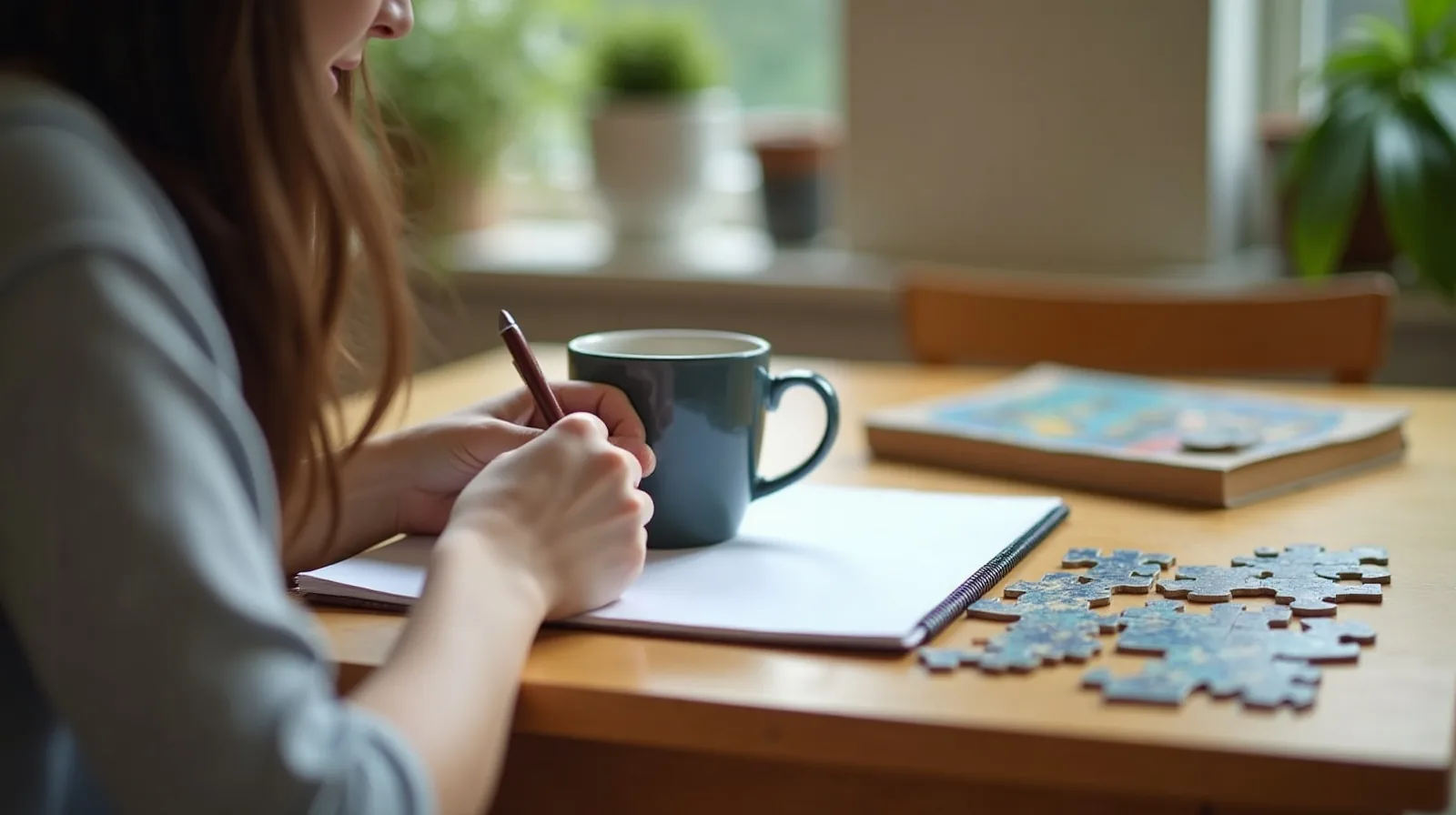
- Sketching or watercolor. A pencil, a cheap pad, a small paint set. Draw the mug in front of you, badly — the badness is not the point.
- Walking with a subject. Pick something to notice — birds, front doors, interesting trees — and an ordinary walk turns into a quiet treasure hunt.
- Library reading. The card is free, the hold shelf is a gift you send yourself, and a paper book is the cheapest attention repair there is.
- Jigsaw puzzles. Absorbing, silent, and endlessly reusable through swaps with friends or thrift-store finds.
- Windowsill growing. Green onions in a glass, a sprouted seed, a cutting from a friend’s houseplant — gardening at teacup scale.
- Simple baking. Flour, yeast, salt, water: bread costs almost nothing and asks for exactly the unhurried attention screens never do.
Start Ugly and Keep It Private
The only real barrier is the awkward beginner phase, so plan for it. Buy the cheap version of the kit and upgrade only after a month of actual use. Give the hobby a small home — a shoebox, one shelf — and a loose weekly slot rather than a daily quota, so missing a day means nothing. Most of all, consider keeping it entirely offline for the first while: no progress posts, no before-and-afters, no comparing your week three to someone else’s year ten. A hobby with no audience can’t be failed at — which, it turns out, is exactly what makes it relaxing.