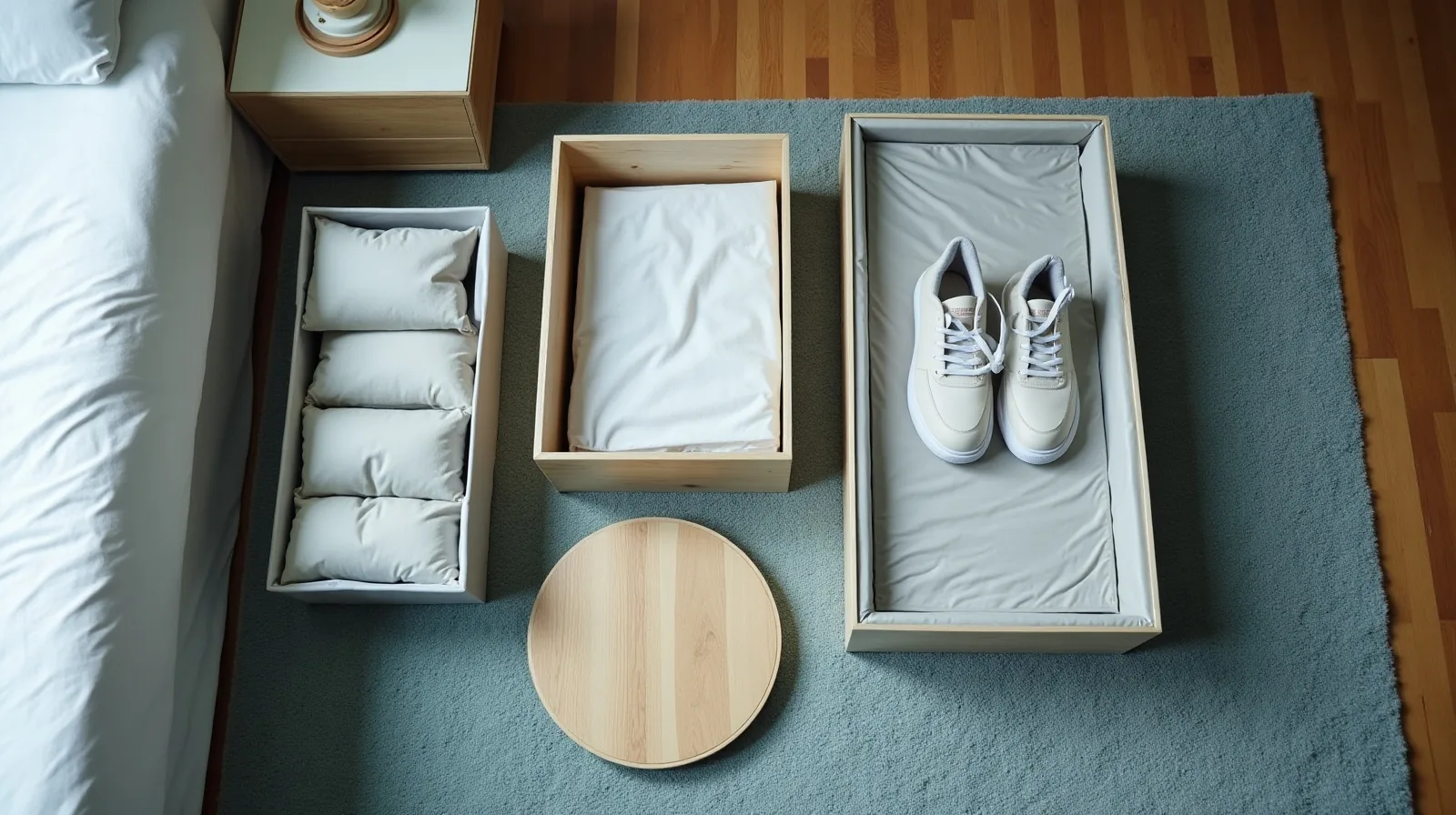
A linen closet rarely gets messy all at once. It slides there one mismatched pillowcase at a time, until the door barely latches over a leaning stack. Getting it back in order comes down to four things: an honest inventory, shelves zoned by how often something gets reached for, a fold that survives being pulled from the middle of a stack, and containers for the odd shapes that will never stack cleanly on their own.
Start With a Full Inventory, Not a Quick Straighten
Pull everything off every shelf before deciding where any of it goes back. A quick straighten just rearranges the same clutter into a tidier pile; an empty closet forces an honest count. Sort into simple groups — bath towels, bed linens by size, seasonal or spare bedding, and the miscellaneous pile of heating pads and guest supplies that collects by default. The real number of towel sets or spare sheets usually turns out to be double what the household actually uses, and a few long-untouched items surface for donation. A linen closet only holds what gets used regularly; it is not a second attic.
Zone the Shelves by How Often You Reach for Something
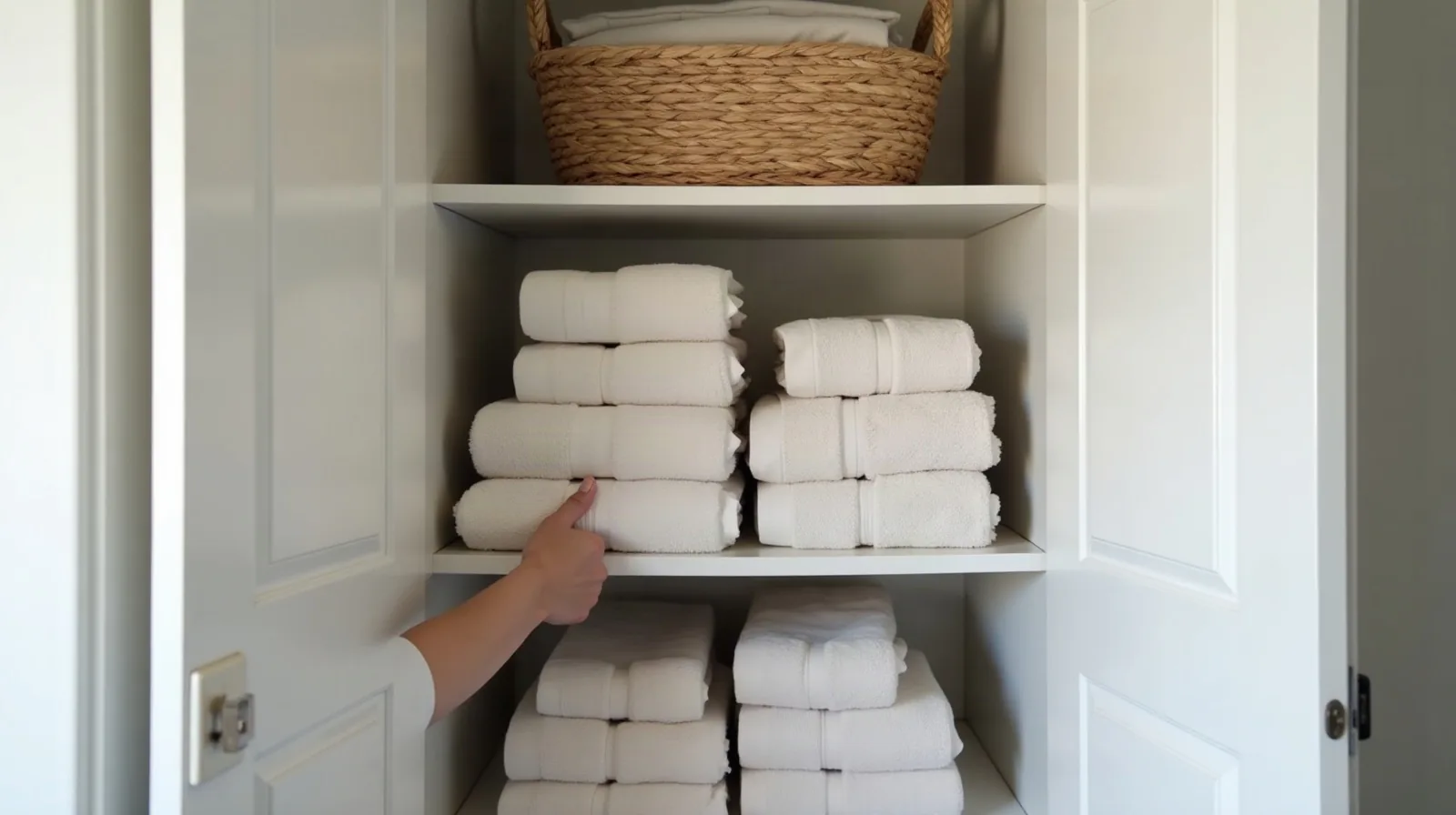
Once the keep pile is set, assign shelves by frequency rather than by category alone. The shelf at eye level and the one below it are easiest to reach, so everyday bath towels and the current sheet set belong there. The top shelf, which usually needs a step stool, suits spare or seasonal bedding — a heavier comforter, guest linens used a few times a year. The bottom shelf, meaning bending down, works best for bulky, awkward shapes: a spare pillow, a folded heating pad, a stack of bath mats. Matching effort to frequency means daily items never require a stretch or a crouch.
Fold So a Stack Actually Stays a Stack
The classic tri-fold-then-stack method looks tidy for about a day, until one towel gets pulled from the middle and the rest lean sideways. A filing method solves that: fold each towel or sheet set into a compact rectangle, then stand it on edge in a row instead of laying it flat. Every piece stays visible from above, and pulling one out does not disturb its neighbors. Sheet sets hold together best when the flat sheet, fitted sheet, and pillowcases all get tucked inside one pillowcase, turning a set that tends to scatter into one grab-and-go bundle.
Contain What Refuses to Stack on Its Own
Not everything folds into a neat rectangle, and forcing it to try causes most of the sliding and toppling. Give the odd shapes a bin or basket instead of a bare shelf: one basket for spare pillows, one bin for heating pads and spare throws, and a shallow tray for small items like sachets that would otherwise drift into gaps. A basket also solves the top-shelf problem — instead of a stack that shifts every time the door opens, seasonal bedding sits inside one container that lifts down and back up as a single unit.
Keep It From Sliding Back Into Chaos
A linen closet stays organized on habits more than on the initial setup. A few keep it from drifting back to where it started:
- One-in, one-out on towels and sheets. A new set replaces an old one instead of adding to the pile, so the total count never creeps back up.
- Fold laundry straight into the stack. Sliding a fresh towel into its filed row takes seconds and never becomes a separate pile to deal with later.
- A five-minute check every season change. Swapping seasonal bedding is the natural moment to notice what has gone unused and let it go.
- Nothing stored on the floor of the closet. A floor pile is the first sign a zone has run out of room and needs a container, not more stacking.