A freshly organized pantry rarely falls apart on day one. It falls apart three weeks later, when a rushed grocery unload lands wherever there happens to be room and the labels stop matching what is actually sitting behind them. The fix is not another haul of matching bins. It is a system built around how the shelves actually get used — what belongs where, what gets contained, and one small habit that catches the slide before the whole thing needs another weekend.
Start By Taking Everything Out
Skip the temptation to reorganize around whatever is already sitting on the shelves. Pull every box, bag, and jar out onto the counter or the floor, wipe the shelves down, and sort the pile into rough categories before anything goes back — baking supplies, snacks, canned goods, grains and pasta, breakfast items, spices. This is also the moment to check dates and toss what has gone stale or expired months ago, since a pantry rarely gets a full inventory any other way. Group duplicates together too. Most households turn up two or three open bags of the same flour, or half-used spice jars tucked into different corners, and that overlap is often the real source of the clutter, not a shortage of storage space.
Zone the Shelves By How Often You Reach for Something
Decide what goes where based on reach, not on what looks tidiest in a photo, before buying a single container. A pantry with clear zones tends to stay organized because putting things back becomes automatic instead of a decision made under a full grocery bag.
- Eye-level shelf. Everyday items reached for several times a week — cereal, snack packets, the oils and staples used most often.
- Top shelf. Overflow, seasonal items, and bulk backups that are fine to fetch with a step stool a few times a month.
- Bottom shelf. Heavier staples and anything within a child's reach, since a dropped bag of rice matters far less than a dropped jar.
- Door rack or a narrow side shelf. Small jars, spice packets, and thin items that get lost behind taller cans on a flat shelf.
- Floor space or a low crate. Bulky cases, large bags, and appliances that only come out occasionally.
Contain What Spills, Label What Confuses
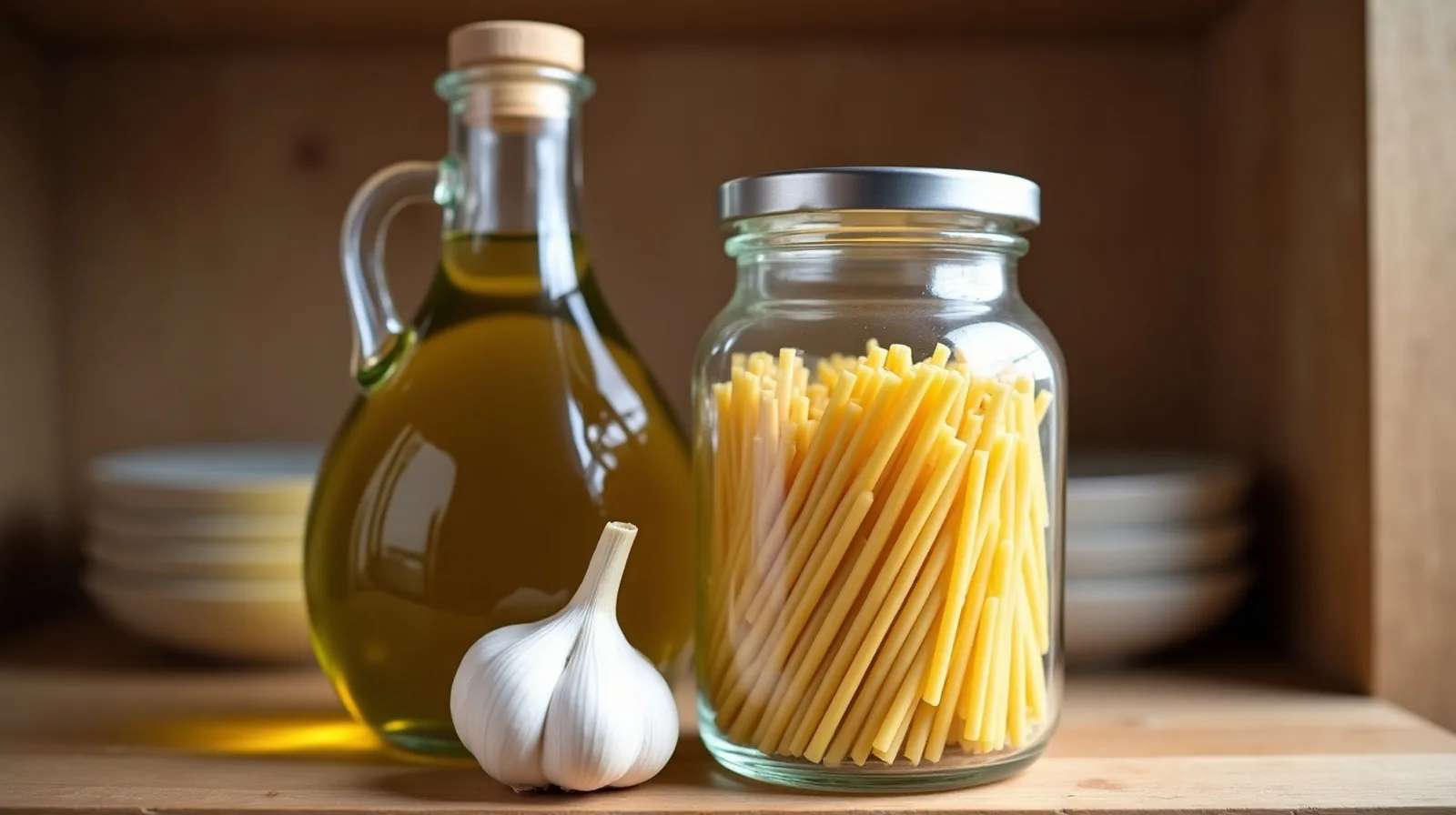
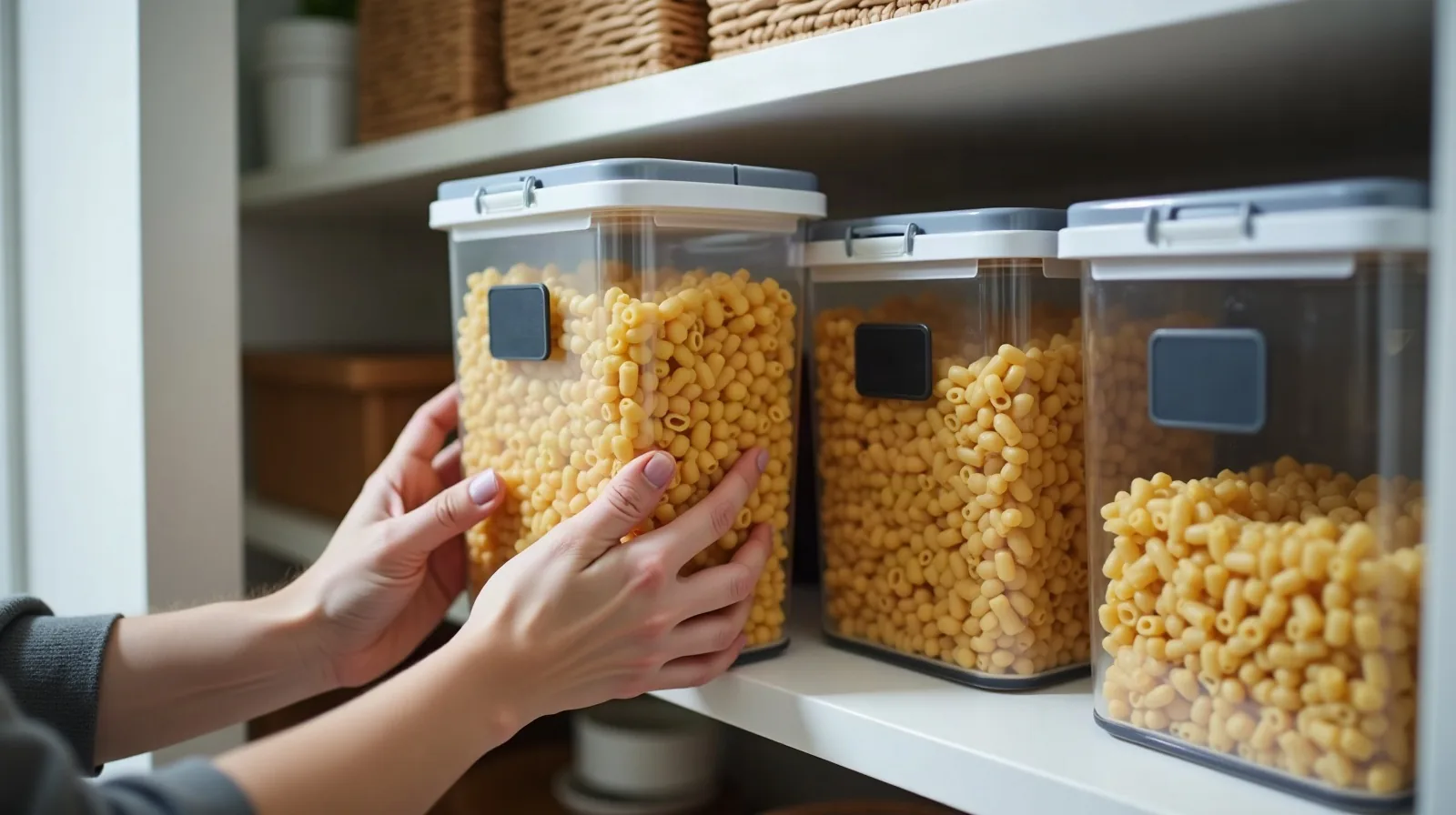
Loose bags of snacks, half-open cereal boxes, and small packets are the items most likely to tip a shelf back into chaos, so give each of them a container with a lid: a clear bin for snack packets, a basket for produce that doesn't belong in the refrigerator, a set of matching jars for grains used often enough to justify decanting. Not everything needs a container — canned goods and boxed items with clear printing already tell you what they are, so save the effort for what actually confuses at a glance. A plain label on each container, written in permanent marker or a printed strip, means anyone in the household can put an item back in the right place without asking where it goes.
The Habit That Keeps It From Sliding Back
A system this well organized still needs one small habit, or it drifts back toward where it started. Build a return pass into the grocery unload itself: as bags empty onto the counter, sort into the same categories used during the original reset before anything touches a shelf, rather than shoving a new box wherever there happens to be a gap. Keep one small empty basket on a shelf for items that genuinely have no home yet, so they land somewhere contained instead of wedged sideways between two boxes. Once a month, spend five minutes checking that the eye-level zone still holds what actually gets used, since habits shift over time and the zones work best when they shift too.