Ask a new cook why dinner didn’t happen and the answer is rarely about skill. It’s the recipe that assumed a stocked kitchen — called for vinegar, or cumin, or “any short pasta” — and the slow deflation of realizing a simple meal now requires a store run. A stocked pantry is the difference between cooking being a project and cooking being a habit. The list below isn’t everything a kitchen can hold; it’s the short shelf that lets a beginner open the cupboard on a random Tuesday and reliably make food.
Think in Categories, Not Ingredients
The pantry stops feeling random once you see it as five jobs. Something starchy to build on (rice, pasta, oats). Something in a can that counts as substance (beans, tomatoes, fish if you like it). Fat to cook in. Acid to wake things up. And seasoning to make it taste like a decision. Nearly every simple dinner on earth is those five roles in different costumes — which means when you shop, you’re not collecting ingredients, you’re filling roles. A missing spice is an inconvenience; a missing role is why there’s “nothing to eat.”
The Starter Shelf
Buy these once and dinner is always at least possible:
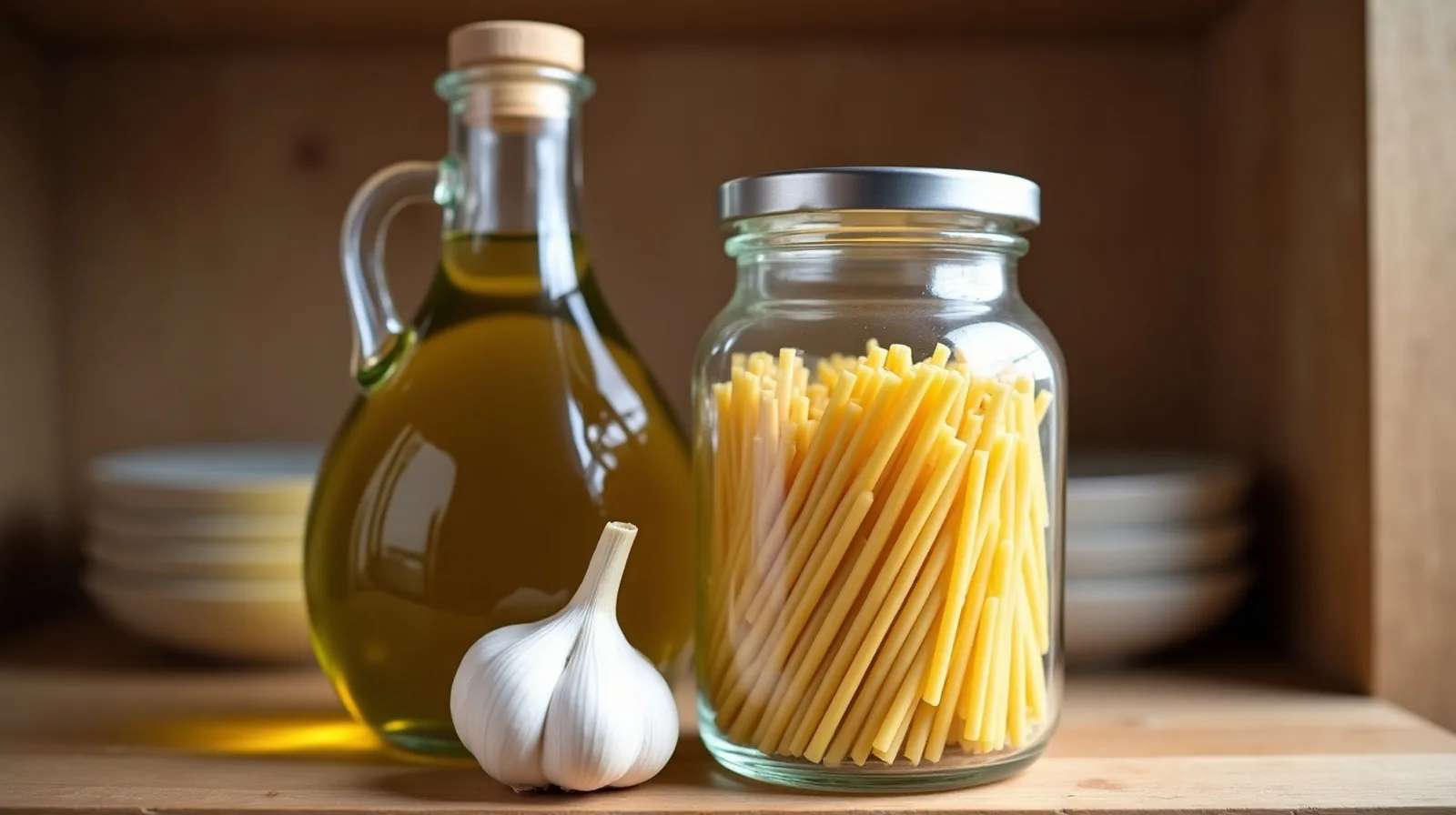
- Two oils. A neutral oil for high-heat cooking and an olive oil for flavor, dressings, and finishing.
- Two starches. A bag of rice and one short pasta shape cover the base of most weeknight meals.
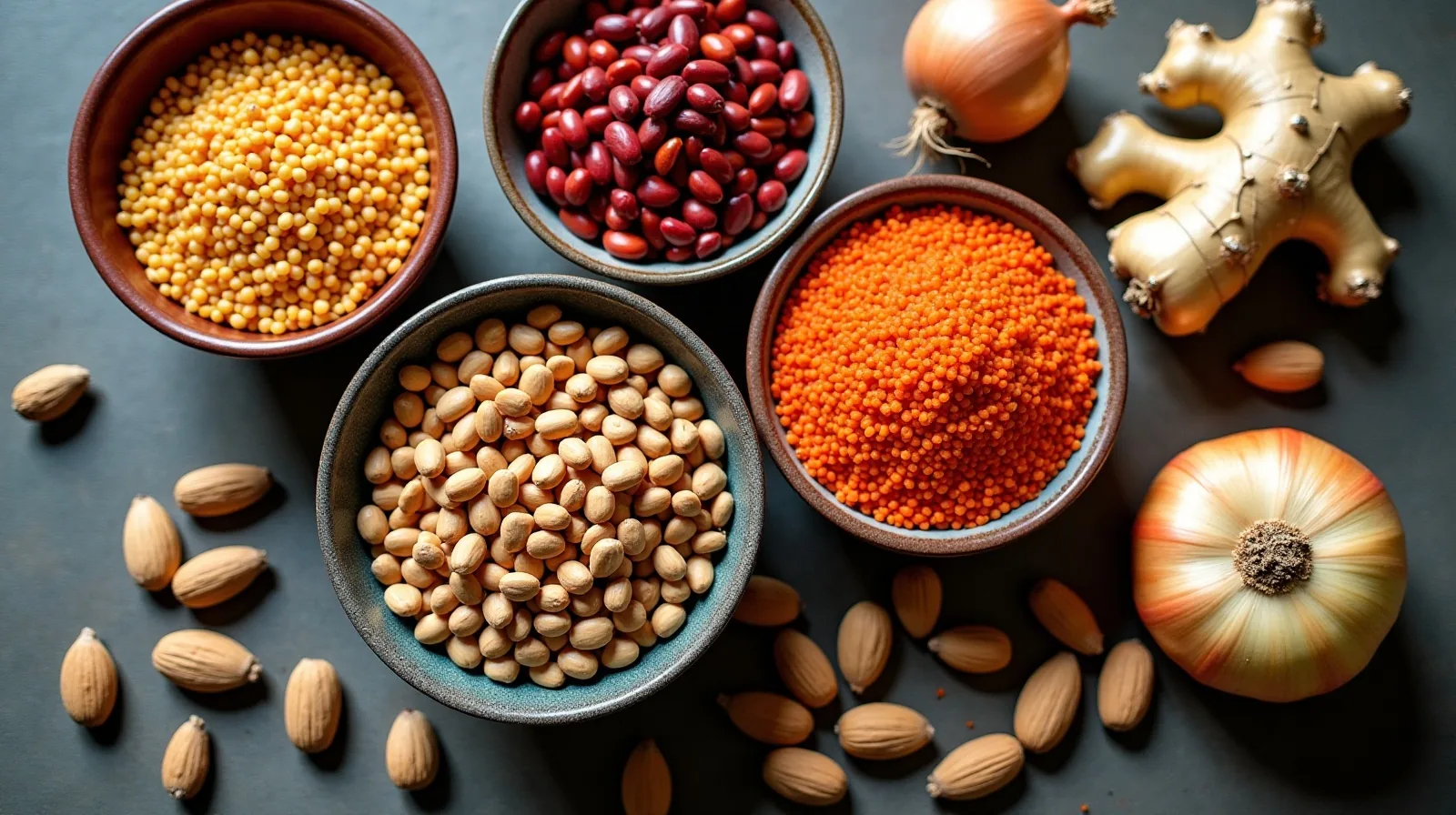
- Cans with substance. Beans (any kind you’ll actually eat) and whole or crushed tomatoes — the two most flexible cans in the store.
- A small spice bench. Salt, black pepper, garlic powder, chili flakes, cumin, and a dried herb like oregano. Six jars, hundreds of dinners.
- An acid or two. A bottle of vinegar and a lemon in the fruit bowl rescue more bland dishes than any gadget.
- Flavor boosters. Soy sauce, stock cubes, and honey — instant depth, salt, and sweetness, all with long shelf lives.
Add onions and garlic — technically produce, practically pantry — and the shelf is complete.
What This Shelf Actually Cooks
The point of the list is what it unlocks without a shopping trip. Pasta with a sauce built from canned tomatoes, olive oil, garlic, and chili flakes. Rice and beans warmed with cumin and finished with a squeeze of lemon. Fried rice from yesterday’s rice, an egg, and soy sauce. A quick soup from stock, a can of beans, and whatever vegetable is lingering in the crisper. A pot of oats that becomes breakfast all week. None of these require a recipe so much as a pattern — starch plus can plus fat plus acid plus seasoning — and every one of them beats ordering in on both cost and speed once you’ve done it twice.
Stock Slowly, Store Smart
Resist the urge to build the pantry in one heroic shopping trip. Buy the starter shelf, then let recipes add to it one ingredient at a time — when a dish calls for smoked paprika, that’s the day you own smoked paprika, and it enters the rotation already useful. Store dry goods somewhere you can see them; food you can’t see is food you rebuy or let expire. And keep spices small: little jars replaced often taste better than big ones going stale for years. A good pantry isn’t large. It’s chosen, and it earns its shelf space every single week.