Small homes have a reputation for lacking storage, but walk through one with a critical eye and the story changes: there’s a suitcase-sized void under the bed, half a dozen doors with empty backs, walls bare from waist height to ceiling, and dead corners in every room quietly holding nothing. Small spaces don’t lack room — they lack claimed room. Here’s the zone-by-zone claim, starting with the biggest prize in the house.
Under the Bed: The Biggest Drawer You Own
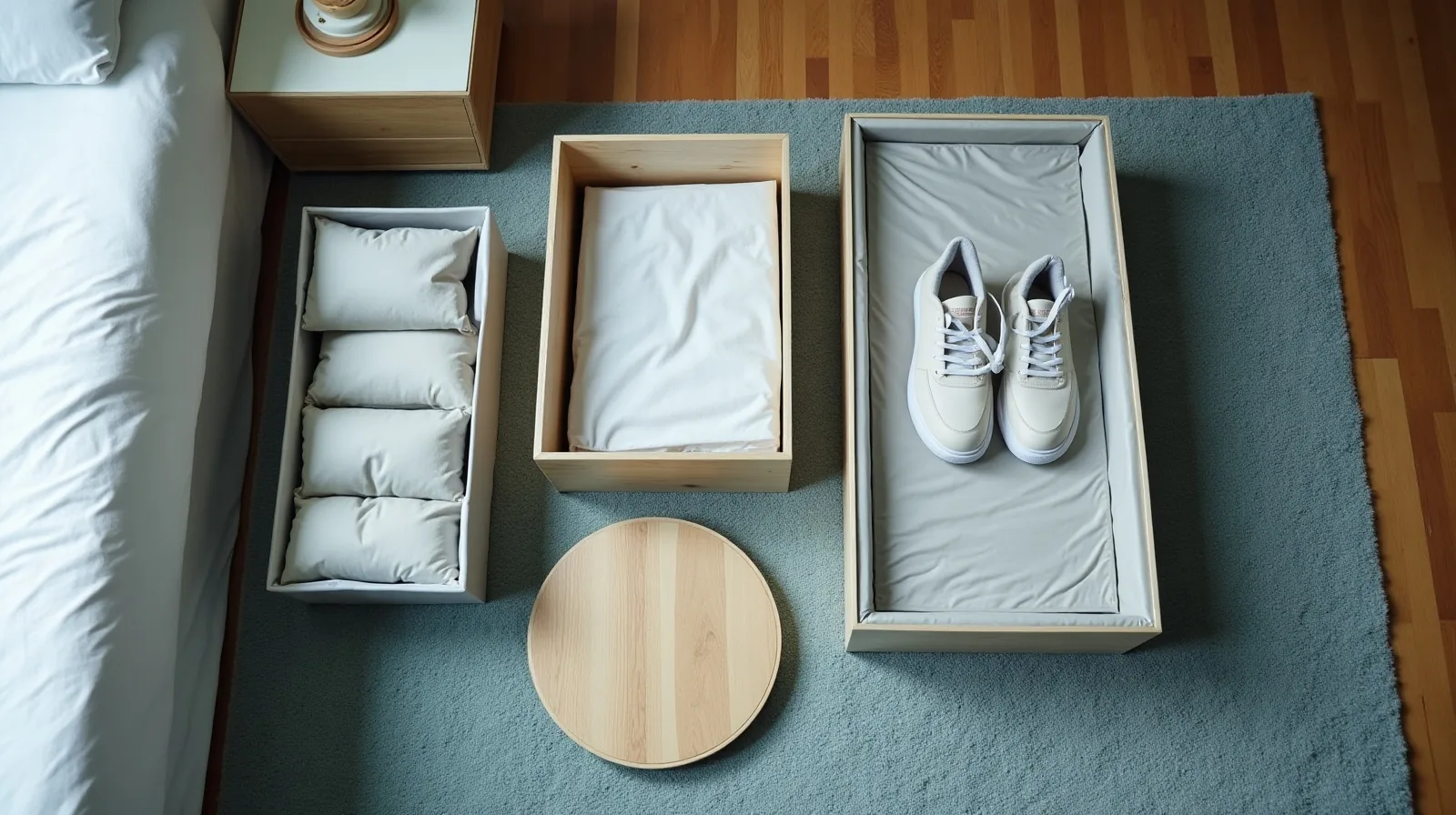
The space under a typical bed rivals a dresser, and most of it sits empty or collects dust and lost socks. Rolling bins with lids are the workhorses — they slide out one-handed, keep dust off, and disappear behind a bed skirt. Vacuum storage bags earn their keep on the puffy stuff: off-season comforters, spare pillows, and winter coats shrink to a fraction of their size and lie flat inside a bin. If clearance is tight, bed risers add several inches of height for a few dollars. Two rules keep the zone functional: label the end of every bin that faces out, and store things you reach for seasonally, not daily — under-bed storage is deep storage, and anything you need weekly will quietly stop getting put back.
Doors and Walls Work for Free
Every interior door is an unused wall. Over-door organizers were designed for shoes but hold nearly everything better: cleaning sprays on the utility-closet door, snacks and packets on the pantry door, craft supplies, toiletries, hats and gloves by the entry. Hooks on the back of a door catch robes, bags, and tomorrow’s outfit. Then look up, because most rooms are empty above head height. A single shelf run above a doorway holds the books and baskets you rarely touch; a pegboard turns a strip of kitchen or entry wall into hanging storage you can rearrange on a whim; narrow floating shelves climb the tall, awkward wall slivers that fit no furniture. In a small home, storing vertically is the closest thing there is to adding square footage.
Dead Corners and Awkward Gaps
The last zone is the space between spaces — small on its own, meaningful together:
- The appliance gap. A slim rolling cart slides into the gap beside the fridge or washer and holds cans, spices, or cleaning supplies sideways.
- Under the sink. Stacking shelf risers double the usable height, and a small caddy on the cabinet door catches sponges and brushes.
- Cabinet corners. A turntable tray ends the archaeology dig for whatever rolled to the back of the shelf.
- Above the toilet. A ladder shelf or slim cabinet uses the one wall every bathroom leaves bare.
- Furniture that hides things. Storage ottomans, benches with lids, and lift-top tables tuck blankets, games, and cords inside pieces you already needed anyway.
Sort First, Buy Bins Second
The classic small-space mistake is buying beautiful containers first and sorting later — which reliably produces beautiful containers full of things you didn’t need to keep. Purge each zone before you outfit it, measure before you buy anything (under-bed clearance and door widths are unforgiving), and label as you go. Then protect the system with two habits: things you use daily live at easy reach, with the hard-to-access zones reserved for seasonal and occasional stuff, and one-in-one-out keeps the newly claimed space from silently refilling. Storage isn’t a shopping project — it’s a matching project between what you own and the space that was there all along.