Shoes are the one household item that multiplies without anyone deciding to let it. A family of four can easily own forty pairs, and nearly all of them arrive at the same three square feet of floor by the door. The pile that forms there is not really a discipline problem. It is a capacity problem: the landing spot holds four pairs and the household generates twelve, so the overflow spreads into the hallway and then under the coffee table. Sorting by frequency, then giving each group its own address, fixes it more durably than any rack.
Count the Pairs, Then Sort by How Often They Are Worn
Pull every pair in the house into one room, which is uncomfortable and clarifying. Then make three piles: worn this week, worn this season, worn rarely or never. The third pile is usually the biggest, and it explains why the door is crowded — long-term storage has been sitting in the prime spot. Anything with broken soles or a fit that has been wrong for two years leaves the house now; anything sentimental but unworn goes to storage rather than back to the door. Whatever remains is the real number the system has to hold.
The Landing Zone by the Door
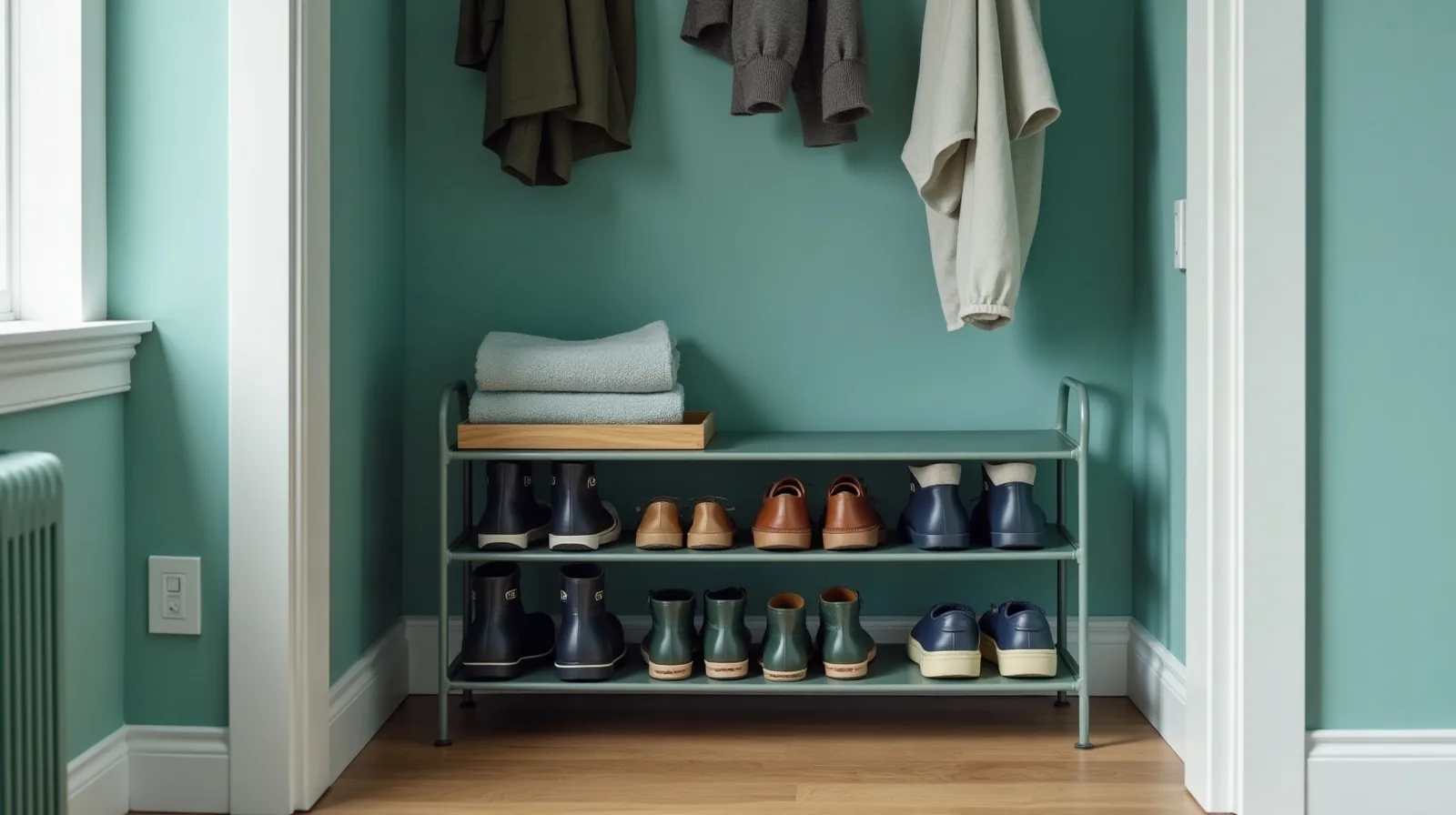
The spot by the door is prime real estate, so it gets a strict limit: one or two pairs per person, and nothing else. A low open rack works better than a closed cabinet here, because a shoe that requires opening a door tends to get dropped beside it instead. In wet climates a lipped tray is better, since it contains water and grit. Whatever holds them, keep the capacity fixed. One rule makes the whole thing stick: when a new pair arrives at the door, an older pair goes back to its long-term home the same day.
Where the Rest of the Pairs Should Live
Everything outside the daily rotation belongs somewhere visible but out of the traffic path, roughly in order of how much space each option buys:
- Clear or open-front bins. Storage you can identify at a glance gets used; opaque lidded boxes turn into archaeology within a season.
- Shelf risers inside a closet. A single shelf becomes two, doubling capacity for roughly the price of a takeout dinner.
- Over-the-door pockets. Best for flats, sandals, and canvas shoes; heavy boots pull the panel crooked.
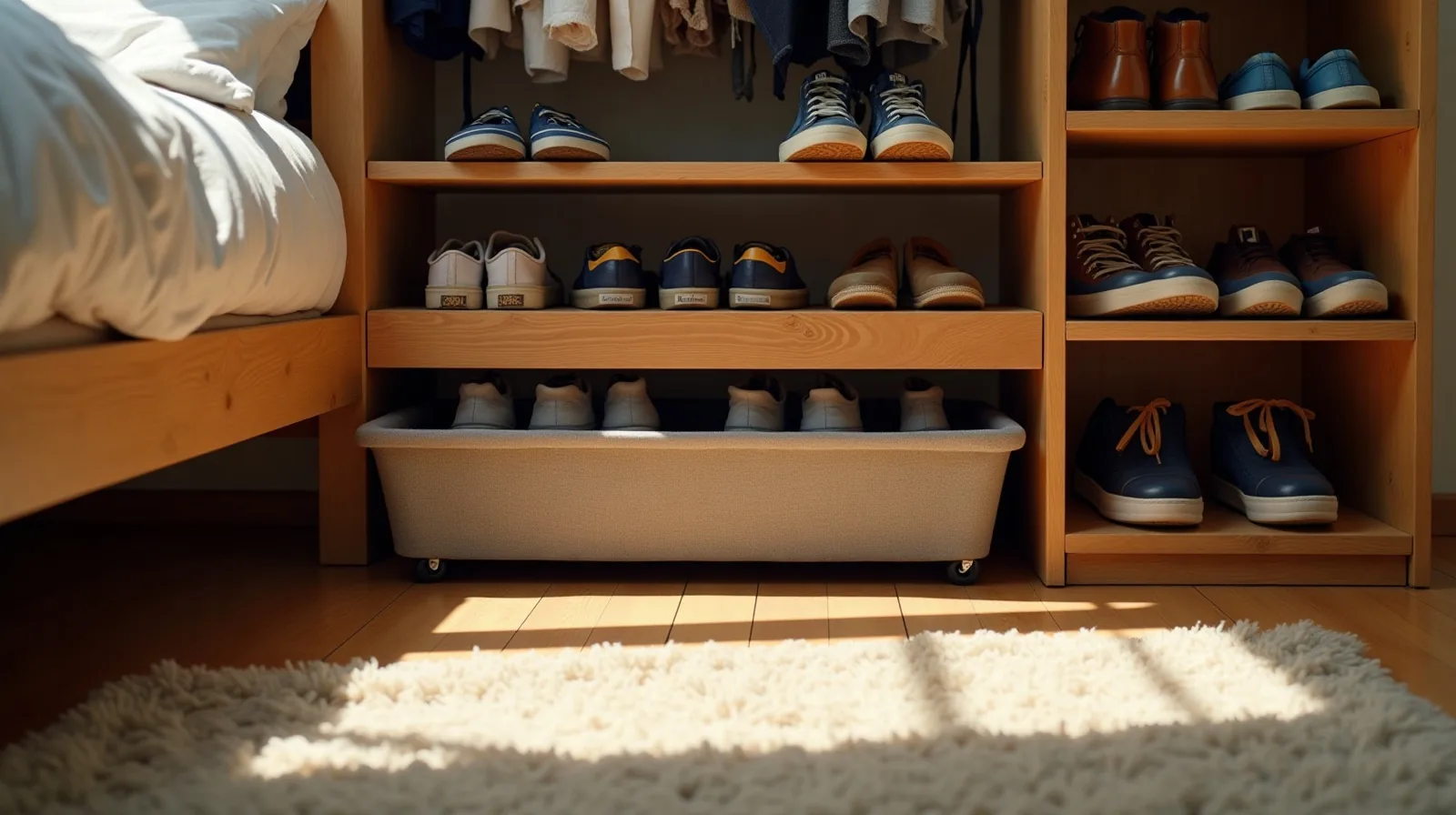
- Under-bed trays on wheels. Excellent for off-season pairs, as long as they roll out without moving furniture.
- A high shelf for the rarely worn. Formal pairs can go where nothing else fits, since reaching them twice a year costs nothing.
Vertical Space and the Room Under the Bed
Most homes run out of floor long before they run out of wall. Look up: the gap between the closet rod and the ceiling is usually empty, and one shelf there holds a season of boots. Look down: the few inches under a bed make up the largest unused storage volume in most bedrooms, and shallow rolling trays turn that gap into a drawer. Stack pairs heel to toe rather than side by side and they take up roughly a third less width. Keep leather off concrete and away from direct heat, air out anything worn that day before it goes into a closed bin, and tuck a moisture absorber or cedar block into long-term storage.
Wet, Muddy, and Still Dripping
The wet pair breaks most shoe systems, because it cannot go on the rack and there is nowhere else for it. Build the exception in on purpose. A lipped tray directly inside the door, big enough for two pairs, takes whatever is dripping; a slatted insert keeps soles above the puddle they make. Let mud dry completely before brushing it off, since wet mud smears and dry mud flakes away. Loosen the laces, pull the insoles out, and stuff wet shoes with newspaper or a dry towel to draw moisture from the inside. Keep them away from radiators and hot vents, which crack leather and soften glue. Once dry, they rejoin the rotation and the tray goes back to empty, which is where it should spend most of its life.