Sheet-pan dinners promise that everything goes in at once, and salmon is the ingredient that breaks the promise. A thick fillet is finished in eight to twelve minutes in a hot oven. Potatoes need roughly three times that, broccoli about twice. Put them all in together and you get chalky fish next to crunchy vegetables, sometimes both on the same plate. The fix is not a different recipe. It is a staggered start, and once that timing lives in your head, one pan turns out dinners that look like they took far more effort than they did.
Why Fish Breaks the One-Pan Rule
Salmon cooks quickly because it is soft, wet, and thin compared with a root vegetable. Its proteins set at a far lower temperature than a potato needs to soften, and the window between silky and dry is only a couple of minutes wide. At 425 degrees, a one-inch fillet is generally ready in eight to ten minutes, and a thick center cut may want twelve. Nothing you can do to the vegetables will pull them onto that schedule, so the vegetables start alone and the fish joins them late.
Give the Vegetables a Head Start
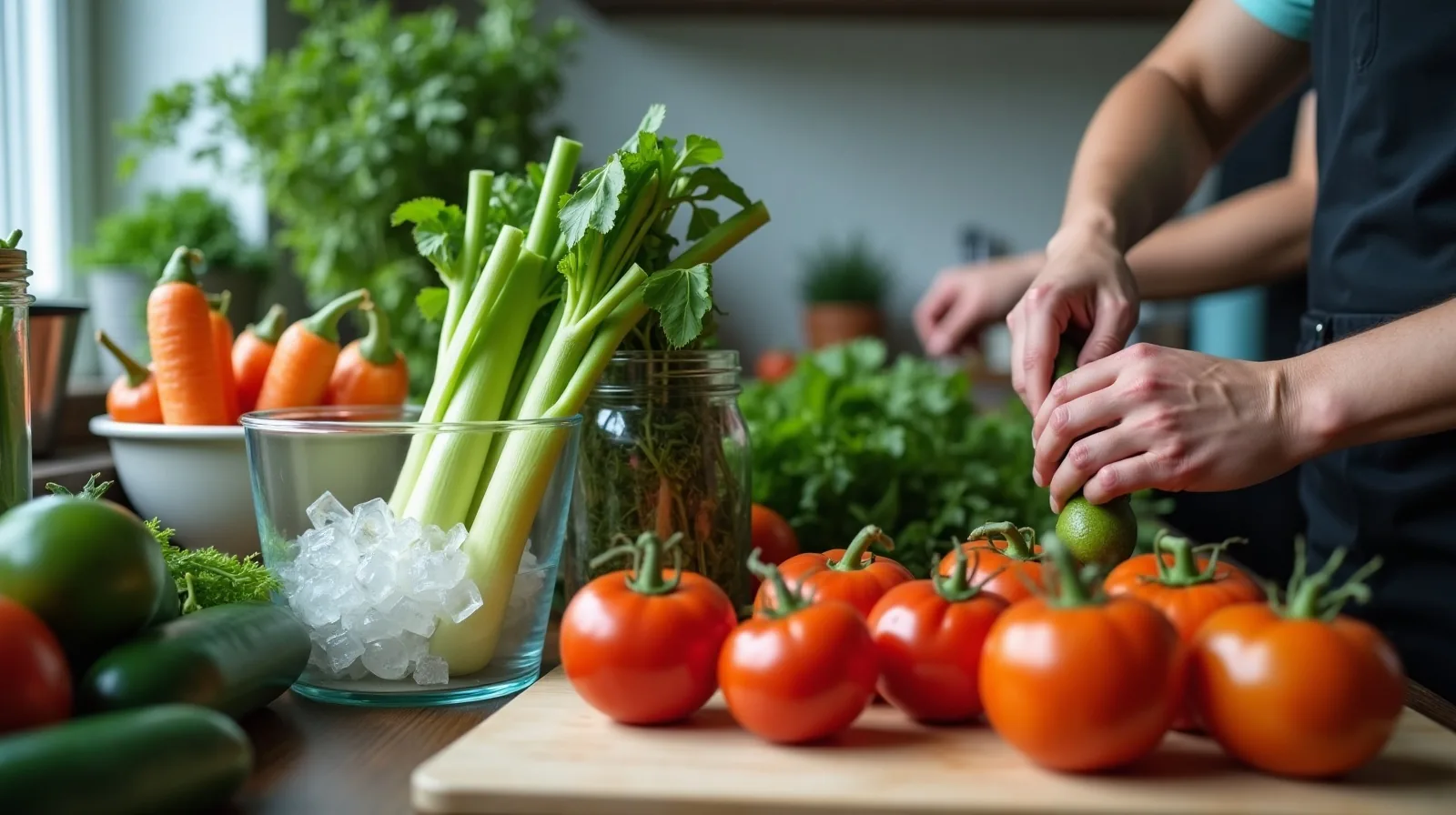
Sort whatever is in the drawer into three groups and the timing sorts itself out. Dense roots such as small-cut potatoes, carrots, winter squash, and beets go in twenty to twenty-five minutes ahead. Medium vegetables like broccoli, cauliflower, green beans, peppers, and thick asparagus need ten to twelve. Quick ones, including cherry tomatoes, snap peas, thin asparagus, and sliced zucchini, go in at the same moment as the fish.
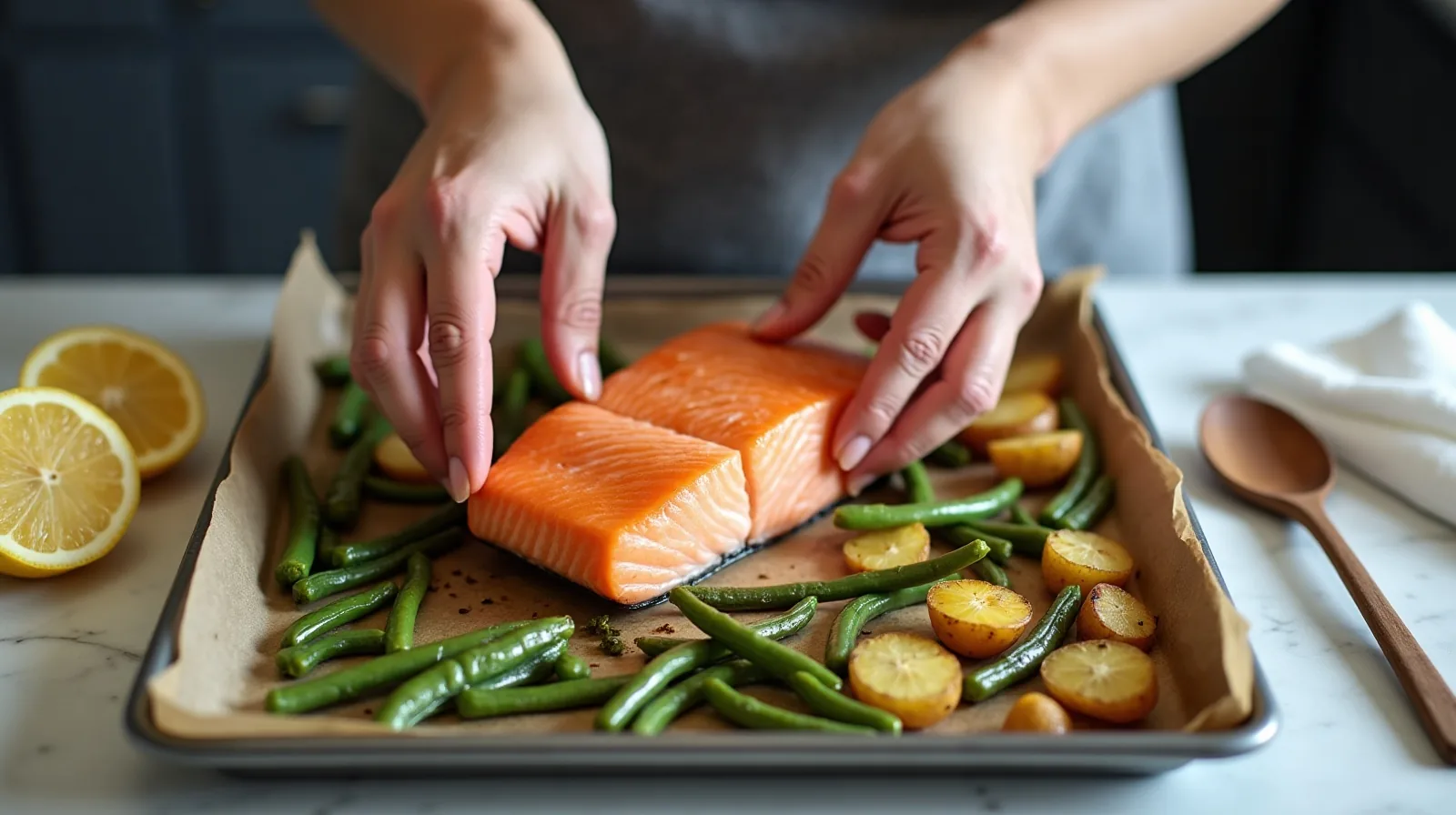
When the head start is up, pull the pan out, push the vegetables to the edges, and set the fillets on the cleared center so they roast instead of steaming in a crowd. The hot metal under the fish is a bonus: the skin side firms up rather than sticking, and the whole thing lifts off cleanly with a thin spatula.
Four Pairings Worth Repeating
Each of these works on one pan with one head start, and none of them needs a sauce made separately.
- Potatoes, green beans, and lemon. Halved baby potatoes go in first, beans and lemon slices join at the ten-minute mark, salmon last. The most forgiving version of the whole idea.
- Asparagus and cherry tomatoes. No head start at all. Everything roasts together in about twelve minutes, the tomatoes burst into a loose sauce, and dinner is genuinely fast.
- Broccoli and red onion with mustard and honey. Whisk a spoonful of each with oil, brush it on the fish only, and let the florets crisp at the edges while the glaze sets.
- Sweet potato, chickpeas, and yogurt. Cubed sweet potato and drained chickpeas get the long start; a spoonful of yogurt thinned with lemon goes over everything at the table.
- Fennel, orange, and olives. Sliced fennel softens and sweetens in about fifteen minutes, and the citrus keeps the fish from drying at the thin end.
How to Tell When It Is Done
An instant-read thermometer in the thickest part is the only method that removes guesswork. Mainstream food safety guidance points to 145 degrees for fully cooked fish, and that is the number to follow if anyone at the table is pregnant, very young, older, or managing a weakened immune system. Many cooks pull salmon earlier, around 125 to 130, for a moister result and accept that this is a personal risk judgment rather than official advice.
Without a thermometer, press the top of the fillet with a fork and twist gently. Cooked salmon separates into flakes but still looks slightly translucent at the very center; fully opaque all the way through usually means it went a minute too far. Remember that a fillet keeps cooking for a few minutes off the heat, and that a tapered tail end finishes early, so tuck it under itself before roasting to even out the thickness.
Finishes That Do the Heavy Lifting
Everything that makes these dinners feel restaurant-ish happens in the last thirty seconds. Something acidic wakes the whole pan up, whether that is a squeeze of lemon, a splash of vinegar, or the roasted citrus slices themselves. Fresh herbs go on after the oven, never before. A spoonful of something creamy pulled together from what is in the fridge, thinned yogurt or mashed avocado with lemon, turns a plain pan into a plated dish. Flaky salt at the end matters more than salt at the start.