
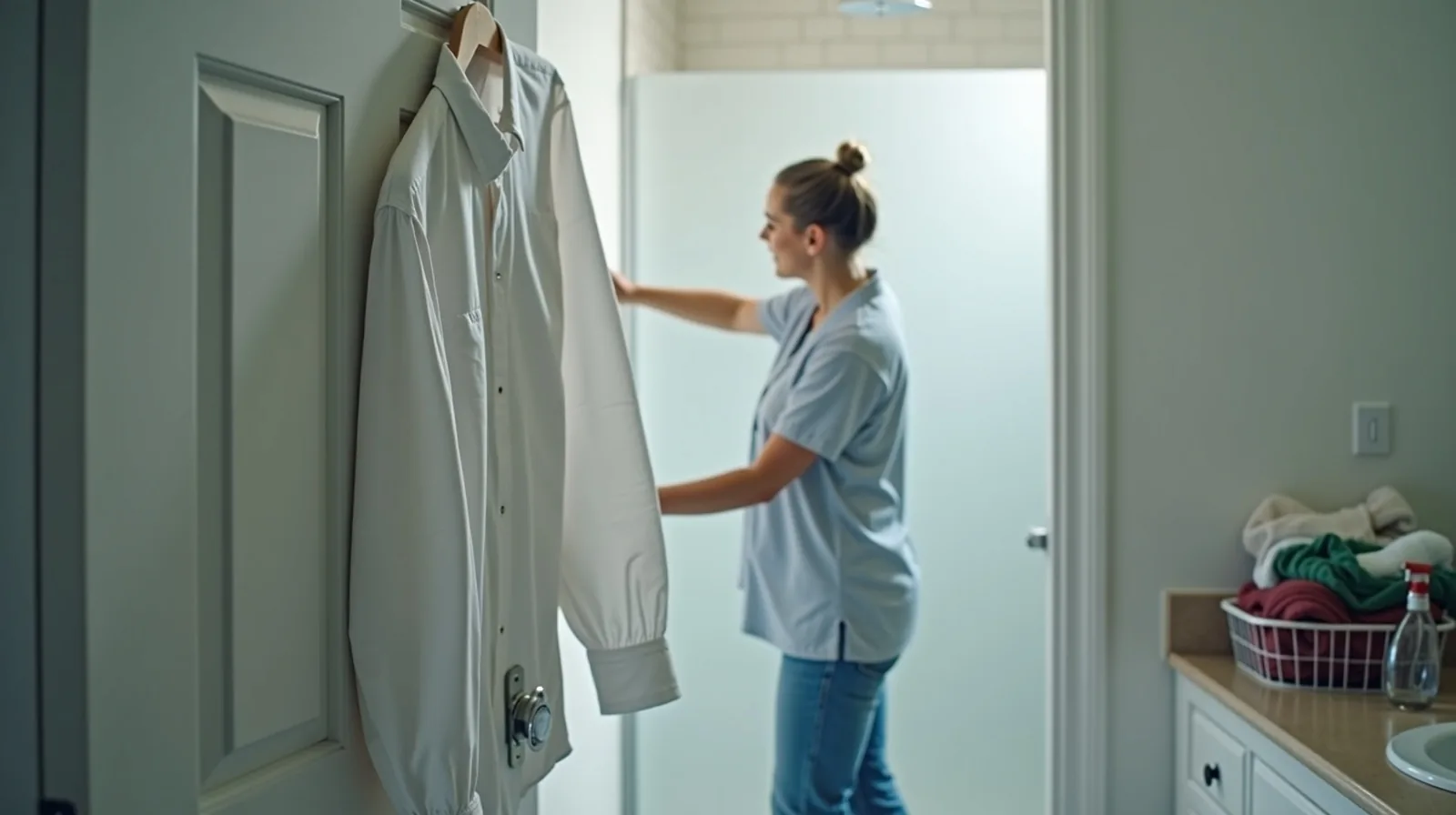
The one shirt you needed comes out of the bag folded into hard creases, the iron is somewhere behind the vacuum, and you leave in twenty minutes. Most wrinkles do not need an iron at all. They need moisture, a little tension, and a few minutes of patience, applied in that order. Fabric holds a crease because its fibers dried and cooled while bent into a shape, so the fix is simply to reverse the conditions that set them. Once you know which method suits which fabric, the iron stops being the only answer on a rushed morning.
What a Wrinkle Actually Is
A wrinkle is a kind of memory. Cotton and linen fibers hold loose chemical bonds that soften when the fabric gets warm and damp, then reset into whatever shape they are holding as they dry. That is why a shirt crushed under a suitcase lid comes out sharply lined, and why the same shirt hung wet comes out nearly flat. Every method below is a variation on the same two steps: put moisture back into the fibers, then hold the fabric straight while it dries. Heat only speeds things along. Moisture and gravity do the real work, which is good news when the closest thing you own to a steamer is a running shower.
Steam It Without a Steamer
The bathroom method costs nothing but time. Hang the garment on the back of the door or on the shower rod, well clear of the spray, run the water as hot as it will go, and shut the door for fifteen to twenty minutes. When you come back, run your fingers firmly down the seams, plackets, and cuffs while the fabric is still warm and slightly damp. It will not put a knife edge on a collar, but it clears packing wrinkles from most shirts, dresses, and synthetic blends.
The dryer version is faster and more reliable. Put the wrinkled item in alone with a clean hand towel wrung out damp, run medium heat for about ten minutes, then take the garment out the moment the cycle stops and hang it immediately. That last part is where people go wrong. Fabric left to cool in a heap simply sets a fresh round of wrinkles in a brand new pattern.
Five Fixes, Ranked by Effort
Almost every situation is covered by one of these, and the right choice usually comes down to how much time you have left.
- Bathroom steam. Zero effort, twenty minutes, no risk to delicate fabrics. Best when you are getting ready anyway and the garment is already on a hanger.
- The damp-towel dryer cycle. Ten minutes and the most consistent results for cotton. Hang the piece the second the drum stops turning.
- Spray and smooth. A water bottle plus flat hands, aimed at one panel rather than a whole garment. Ideal for a crease across the back of a shirt.
- Hang it damp from the wash. The wrinkle you prevent costs nothing. Shake each piece out hard and hang it while it is still heavy with water.
- A quick pass with a hair dryer. Mist the spot, then hold the dryer a few inches away on medium and keep it moving. A collar or a cuff, not a whole dress.
The Spray Bottle Deserves More Credit
For a single stubborn panel, fill a spray bottle with plain water, mist until the area is evenly damp rather than soaked, and lay the piece flat on a firm surface. Pull the fabric taut with one hand and press the flat of your other hand across the crease several times, working from the middle outward, the way you would smooth a bedsheet. Then hang it and leave it alone until it dries. Some people add a splash of white vinegar or a spoonful of hair conditioner to the bottle, and both do relax fibers a little, but test either one on an inside hem before committing a whole garment to the experiment.
Which Fabrics Respond to What
Cotton and linen wrinkle hardest and release best with real steam, so give them the shower or the dryer. Polyester and other synthetics resist creasing but also resist steam once creased; they do better with a damp spray and hand tension, and they can scorch or go shiny under direct heat, so keep any dryer moving and at a distance. Wool usually relaxes on its own overnight on a padded hanger in a humid room. Silk, rayon, and anything labeled dry clean only should skip water entirely, since spot moisture can leave rings — hang those in bathroom steam instead. When a garment matters and the care label is vague, test on an inside seam first.