
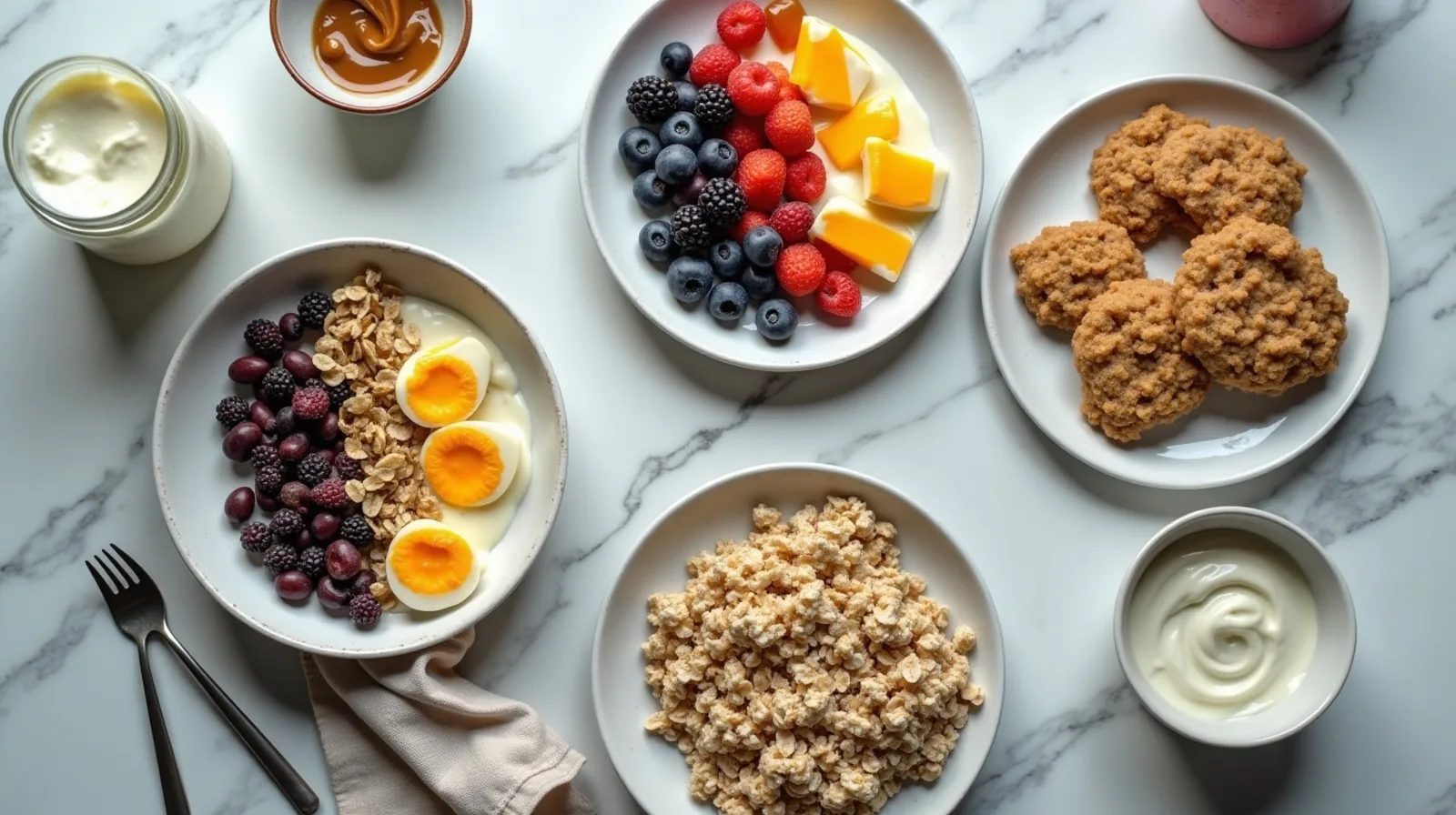
Some breakfasts are gone by ten. Toast with jam, a bowl of cereal, a pastry alongside coffee — they land pleasantly and leave quickly, and the mid-morning hunt for a snack arrives almost on schedule. The usual missing piece is protein. Most people eat very little of it before lunch and a great deal of it at dinner, which is roughly backwards for how full you need to feel during a working day. Fixing that does not call for a new diet, only a slightly different first plate.
Why Protein Changes the Morning
Protein is the most satiating of the three macronutrients. It digests slowly, softens the rise and fall in blood sugar that a carbohydrate-heavy breakfast can produce, and nudges the hormones involved in signalling fullness. Research so far suggests people who eat protein-forward breakfasts tend to report less hunger and eat somewhat less later in the day, though the effect is moderate rather than dramatic and varies a good deal between individuals. Pairing protein with fiber from fruit, vegetables, whole grains, or beans stretches the effect further than either one manages alone.
Roughly How Much to Aim For
Nutrition guidance generally points toward spreading protein across the day rather than saving most of it for the evening, and something in the region of 20 to 30 grams at breakfast is a common working target for adults. In real portions that is around three eggs, a large bowl of thick strained yogurt, or a cup of cottage cheese — more than most breakfasts currently deliver, but less intimidating than the number sounds. Needs shift with body size, age, activity level, and health conditions, so anyone managing kidney disease, diabetes, or a history of disordered eating, and anyone weighing up protein supplements, should settle the specifics with a doctor or a registered dietitian rather than a general article.
Formats That Get You There
Organize the plate around a protein source first and everything else falls into place behind it.
- Eggs, in any arrangement. Two or three eggs land somewhere near 12 to 18 grams; beans, cheese, or smoked fish alongside close the remaining gap.
- Thick strained yogurt or cottage cheese. A generous bowl can reach 20 grams before a single topping goes on, and requires no cooking at all.
- Beans or lentils on toast. A cup of beans brings protein and fiber together, and an egg on top finishes the job comfortably.
- Fish from a tin. Sardines, salmon, or mackerel on dense bread with lemon makes a fast, protein-heavy plate that skips the pan entirely.
- A blended breakfast. Milk or soy milk blended with yogurt, oats, and a spoon of nut butter gets a drinkable meal into the twenties.
- Last night’s dinner. Cold chicken, tofu, or leftover chili is a perfectly reasonable breakfast and often the highest-protein thing in the fridge.
Making It Fit a Real Morning
The barrier is rarely willingness; it is the eight minutes between the alarm and the door. Keep two no-cook options permanently stocked so the decision is already made before you are awake enough to make it. Boil a batch of eggs on Sunday, buy the large tub of yogurt instead of single-serve cups, and keep tinned fish and a dense loaf on hand. If mornings are genuinely impossible, a protein-forward snack at ten captures most of the same benefit — the goal is getting protein in early, not defending breakfast as an institution.