A freezer earns its keep on the night nobody planned anything. The fridge holds condiments and half a lemon, the shops are closed or simply too far, and the only question is whether dinner is going to happen at all. What decides that is not skill — it is whether the freezer holds the right five or six things. Most home freezers are instead a graveyard of mystery containers and a bag of ice from two summers ago, which is a lot of cold real estate doing nothing.
Vegetables and Aromatics, Already Prepped
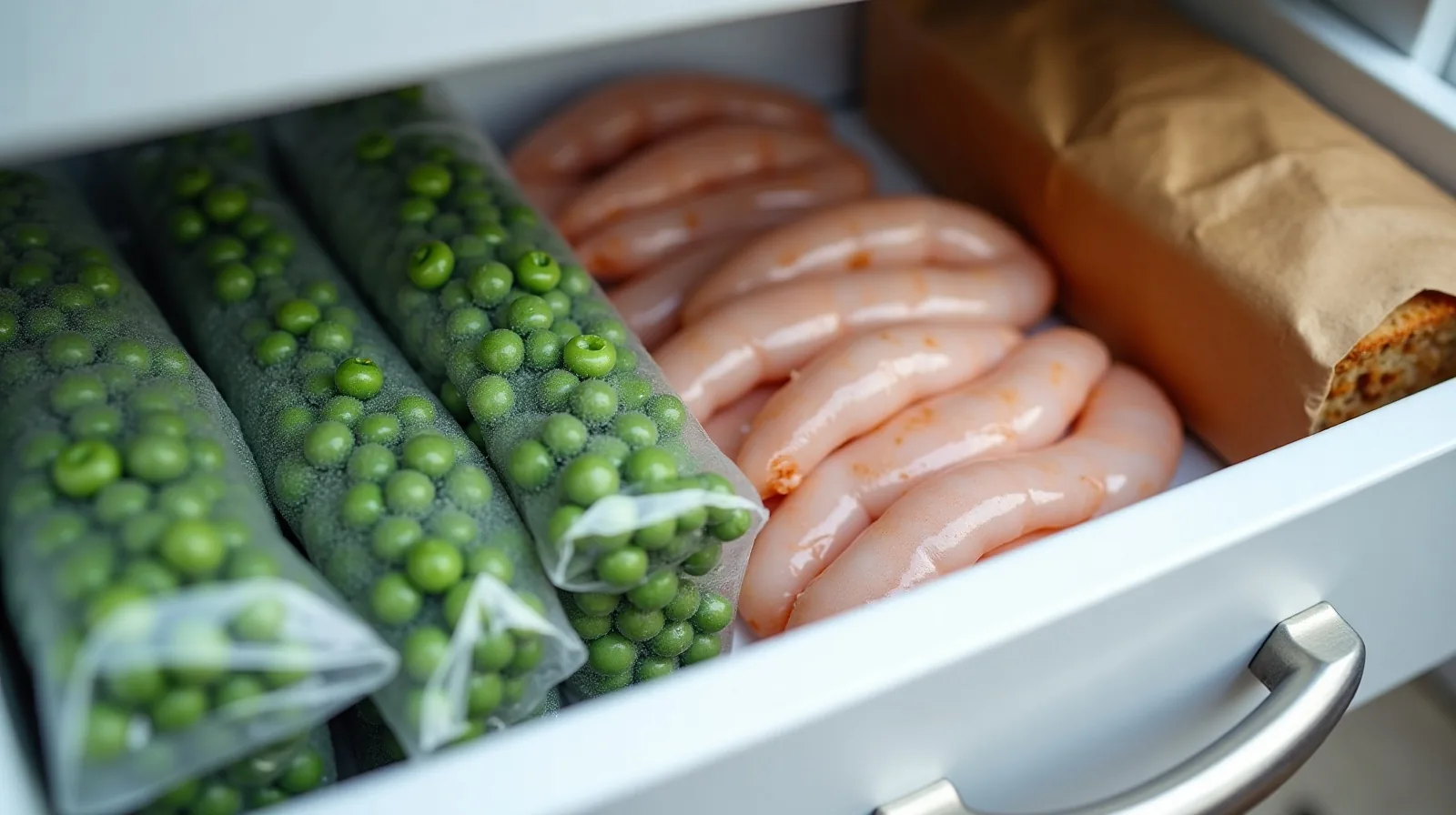
Frozen vegetables are picked and frozen fast, which is why they hold their texture and color better than the tired fresh ones at the back of the crisper. Peas, corn, spinach, green beans, and a mixed stir-fry blend cover almost every need, and none of them require thawing before they go into a pan or a pot. Aromatics matter just as much: chopped onion, minced garlic, grated ginger frozen flat in a bag, and a tub of tomato paste frozen in spoonfuls turn a bare pan into the start of something in about ninety seconds.
Proteins Worth the Space
The protein shelf is where planning pays off most, because thawing time is the usual reason a freezer meal never happens. Store things in portions that thaw quickly and cook straight from frozen where possible.
- Chicken thighs or breasts, frozen flat. Single portions in a thin layer thaw in a fraction of the time a solid block takes, and stack far better besides.
- Shrimp or white fish fillets. Both go from freezer to pan in minutes under cold running water, which makes them the fastest real protein in the house.
- Ground meat, portioned before freezing. Split a large pack into meal-sized flat packets so that no dinner ever requires defrosting more than it needs.
- Sausages and bacon. They separate easily when frozen loose on a tray first, so one or two can come out without wrestling the whole pack.
- Beans, lentils, or cooked grains. Cook once, freeze in flat portions, and a bowl becomes possible on a night when nothing else is.
Bread, Dough, and Finished Components
Bread freezes beautifully and staling stops the moment it goes cold, so a sliced loaf, a bag of rolls, tortillas, and a sheet of puff pastry are all worth permanent space. Sliced bread toasts straight from frozen with no planning at all. Beyond that, the highest-value freezer items are things already cooked: a container of tomato sauce, a block of soup, cooked rice spread flat, or a batch of meatballs. These are not ingredients, they are most of a dinner — and they turn a hungry evening into a reheating job rather than a cooking one.
How Long Things Actually Hold
Frozen food stays safe well past the point it stays good, so keeping times are about quality, not risk. As rough guidance, vegetables and fruit hold well for around eight to twelve months, uncooked poultry and lean cuts for six to nine, ground meat and fattier cuts closer to three or four, cooked leftovers about three, and bread and baked goods two to three before they start to dry out. Keep a marker in the drawer and date every bag, because six weeks of freezer time looks identical to six months. Then run the shelf in rotation: newest at the back, oldest in front, and one dinner a week built from whatever is closest to the door.