Herbs are the fastest thing in the grocery bag to betray you. A bunch of cilantro bought on Saturday is slime by Wednesday, parsley goes limp inside its bag, and basil turns black the moment it meets a cold shelf. The wasted money is real, but the bigger cost is the habit it builds: you stop buying fresh herbs at all, because you assume they will die before you use them. Nearly all of it traces back to storing every herb the same way, when herbs actually split into two groups that want opposite things.
Soft Herbs and Hardy Herbs Want Opposite Things
The soft group is parsley, cilantro, basil, mint, dill, chives and tarragon: thin leaves, tender stems, and a lot of water they lose fast. They behave like cut flowers. Bruise them, seal them wet, or let them dry out, and they rot in days.
The hardy group is rosemary, thyme, sage, oregano and marjoram: woody stems, waxy leaves, built to hang onto moisture in dry heat. They tolerate cold air far better and usually fail by drying into dust or molding inside a sealed bag.
Sorting the bunches into those two piles before anything goes in the fridge is the single decision that fixes most herb waste.
Two Setups That Do Most of the Work
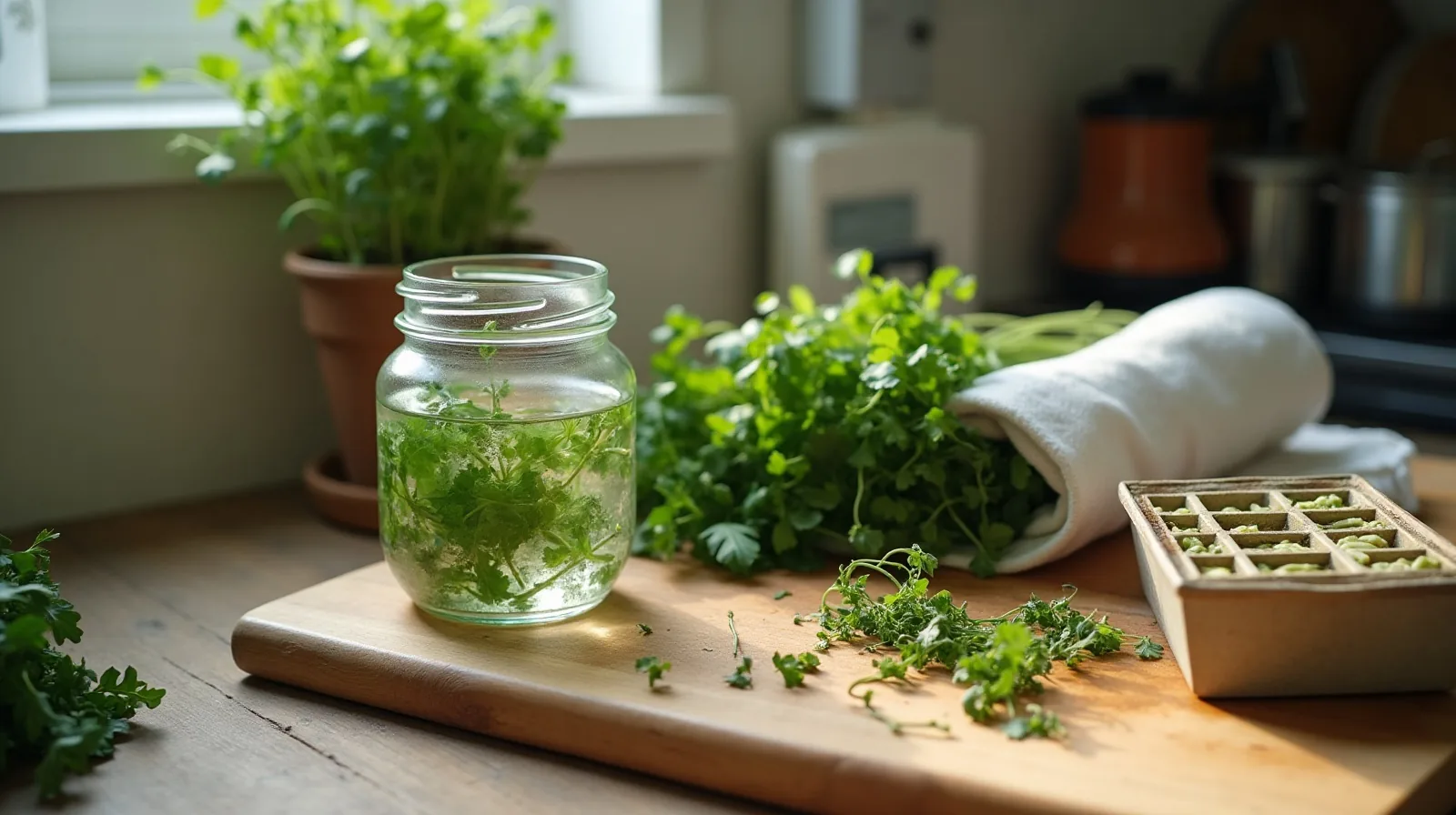
For soft herbs, use the jar of water. Snip half an inch off the stem ends, pull off any leaves that would sit underwater, and stand the bunch in a jar holding an inch or two of cool water. Drape a produce bag loosely over the leaves so the air around them stays humid without trapping wet, and put the jar in the fridge door. Change the water when it clouds, roughly every three days. Parsley and cilantro handled this way commonly last two to three weeks. Basil is the exception that proves the rule: leave its jar on the counter, because refrigeration blackens the leaves within a day.
For hardy herbs, use the damp towel. Rinse only if the stems are gritty, dry them well, then lay the sprigs on a barely damp kitchen towel or paper towel, roll it up loosely, and slide the roll into a bag or container left slightly open. Thyme, rosemary and sage keep for two to three weeks like this. The goal in both setups is the same: humid air, moving air, and no standing water touching the leaves.
When You Cannot Use Them in Time
The day a bunch starts looking tired is the day to convert it into something that keeps.
- Freeze them in oil. Chop the herbs, pack them into an ice cube tray, top with olive oil, and freeze. Drop a cube straight into a hot pan later. This is the best option for soft herbs, which freeze badly on their own.
- Freeze hardy sprigs whole. Rosemary, thyme and sage go straight into a bag stripped or on the stem. They lose their looks and keep their flavor, which is all you need in a braise or a roasting pan.
- Dry the woody ones. Bundle hardy herbs and hang them somewhere warm and airy for a week or two, then strip the leaves into a jar. Soft herbs dry poorly and taste like hay, so skip them.
- Make a rough paste. Blitz leaves with oil, salt and garlic, then freeze it flat in a bag and snap off pieces.
- Save the stems. Parsley, cilantro and dill stems carry plenty of flavor. Freeze them in a bag for stock, or chop them fine and cook them with the onions.
Small Habits That Add a Week
Wash herbs only when you are about to use them, since surface water is what starts the rot. Keep them out of the crisper drawer, where they get crushed under heavier produce, and away from the coldest back wall of the fridge, where soft leaves can freeze and turn translucent. If a bunch arrives already wilted, an ice water bath for fifteen minutes brings soft herbs most of the way back before you store them.