The freezer is the most forgiving appliance in the kitchen, and most of us treat it like a junk drawer that happens to be cold. Leftovers go in as vague lumps, grow a coat of frost, and come out months later as unidentifiable regret. None of that is the freezer’s fault. Frozen food fails for two reasons — air and disorganization — and both are fixable with technique you can learn in an afternoon. Handle it right and the freezer stops being where food goes to be forgotten and becomes what it should be: a pause button for meals you already made.
What Freezing Does (and What It Doesn’t)
Freezing doesn’t kill anything; it presses pause. At a steady zero degrees Fahrenheit, bacteria can’t grow, which is why food kept solidly frozen stays safe more or less indefinitely — the timelines on freezer charts are about quality, not danger. Freezer burn, those dry grayish patches, is dehydration and oxidation wherever air touched the food; it’s unappetizing, not unsafe, and you can simply trim it off. The genuine safety work happens at the edges of freezing: get cooked food into shallow containers and into the refrigerator within about two hours of cooking instead of leaving it out to cool slowly, and bring it back out of the freezer properly — more on thawing below.
The Techniques That Fix Almost Everything
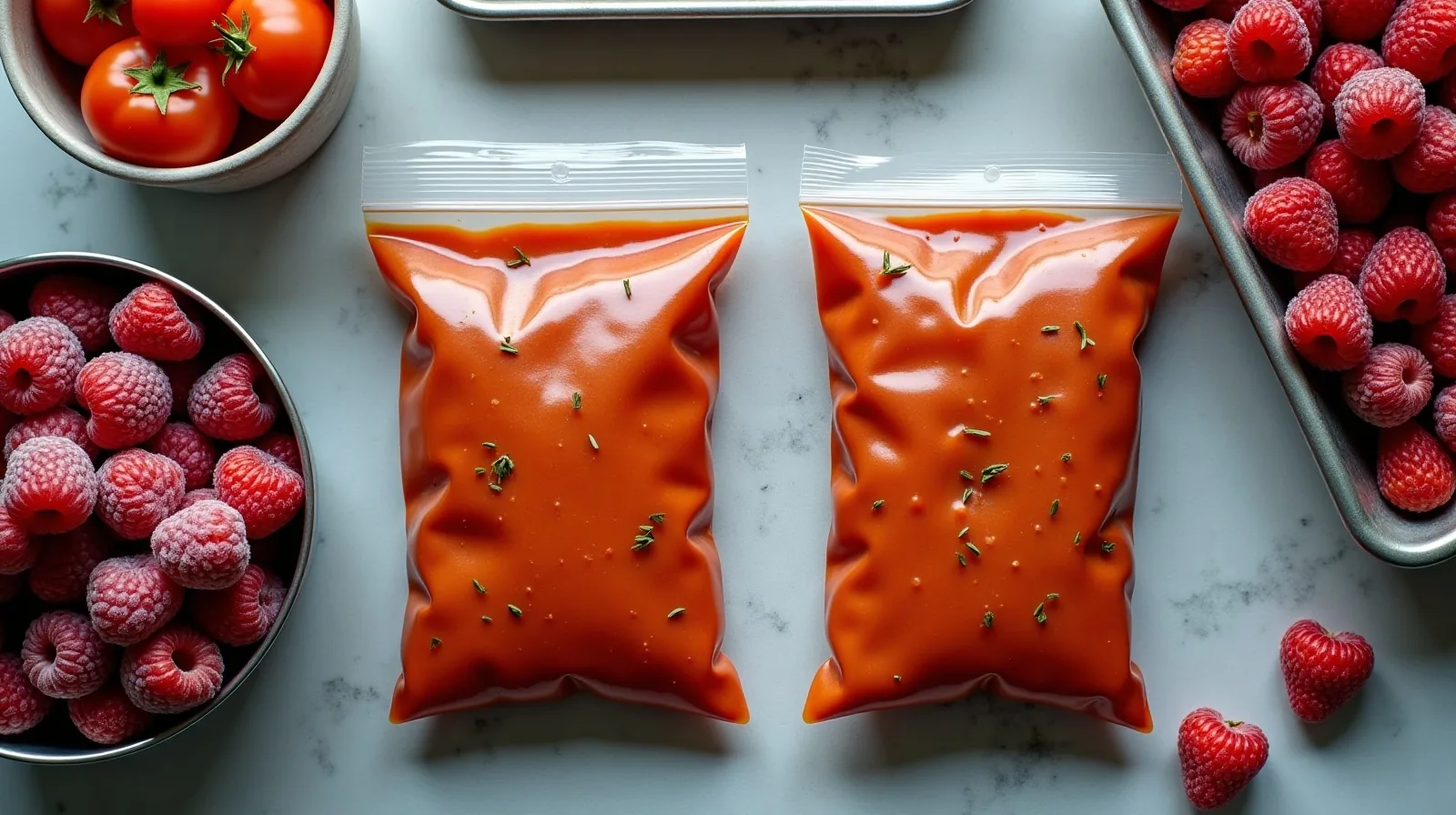
- Freeze flat. Ladle soups, stews, sauces, and ground meat into zip-top bags, press them thin, and freeze them lying down. Flat slabs stack like files in a drawer, thaw in a fraction of the time, and make the whole freezer browsable.
- Evict the air. Air is what causes freezer burn, so press bags nearly flat before sealing, wrap odd shapes tightly, and pick containers the food actually fills. For liquids in rigid containers, leave an inch of headspace — they expand as they freeze.
- Portion first. Freeze in the amounts you’ll actually thaw — two servings of chili, one recipe’s worth of broth — because a frozen gallon block is an all-or-nothing commitment.
- Tray-freeze loose things. Spread berries, dumplings, cookie-dough balls, or banana chunks on a tray until solid, then bag them. They stay loose, so you can pour out exactly what you need.
- Label like a stranger will read it. Contents and date, every time. In the freezer, chili and marinara are identical twins.
What Freezes Beautifully — and What Comes Back Wrong
Soups, stews, chili, cooked grains and beans, bread, butter, raw meat, and most baked goods freeze almost perfectly. Vegetables do well if you blanch them briefly first — a quick dip in boiling water followed by an ice bath stops the enzymes that would otherwise turn them drab and mushy in the cold. The repeat offenders are foods that are mostly water or mostly dairy: lettuce, cucumbers, and raw potatoes collapse as ice crystals shred their structure, cream-based sauces tend to split, and cooked pasta drifts toward mush — freeze the sauce alone and boil noodles fresh. When in doubt, freeze components rather than finished plates; parts reheat better than assemblies.
Thawing Is the Safety Step
How food comes out of the freezer matters more, safety-wise, than how it went in. The default is the refrigerator: slower, but the food never enters the warm range where bacteria multiply. In a hurry, submerge a sealed bag in cold water and change the water every half hour, or use the microwave’s defrost setting — with the rule that anything microwave-thawed gets cooked right away. What’s never on the list is the counter, where the outside of a roast spends hours warm while the middle is still frozen. Food thawed in the fridge can even be refrozen safely; you lose a little texture, not safety. And flat-frozen soup skips the question entirely — it can go straight into a pot over gentle heat.