Strength gets the gym time and cardio gets the credit, but balance is the fitness quality that quietly shapes how the later decades feel — and it’s the one almost nobody trains on purpose. Falls consistently rank among the most common causes of serious injury for older adults in public health data, and the ability to catch yourself starts slipping years before anyone notices. Here’s the encouraging part the statistics don’t advertise: balance responds to practice at essentially any age. A few unglamorous minutes a day at the kitchen counter genuinely moves the needle.
Why Balance Slips Without Announcing Itself
Balance isn’t one skill — it’s a committee. Your inner ear, your eyes, the pressure sensors in your feet, and the strength in your hips and ankles all vote on every step, and each member gets a little quieter with age. The decline hides because you adapt without deciding to: a slightly wider stance, a hand that finds the railing, a route that avoids the uneven curb. Those adaptations are sensible, but they also mean the first honest feedback many people get is a stumble. Practicing on purpose, in a safe setup, delivers that feedback early — while it’s still easy to act on.
Safety Comes Before the First Rep
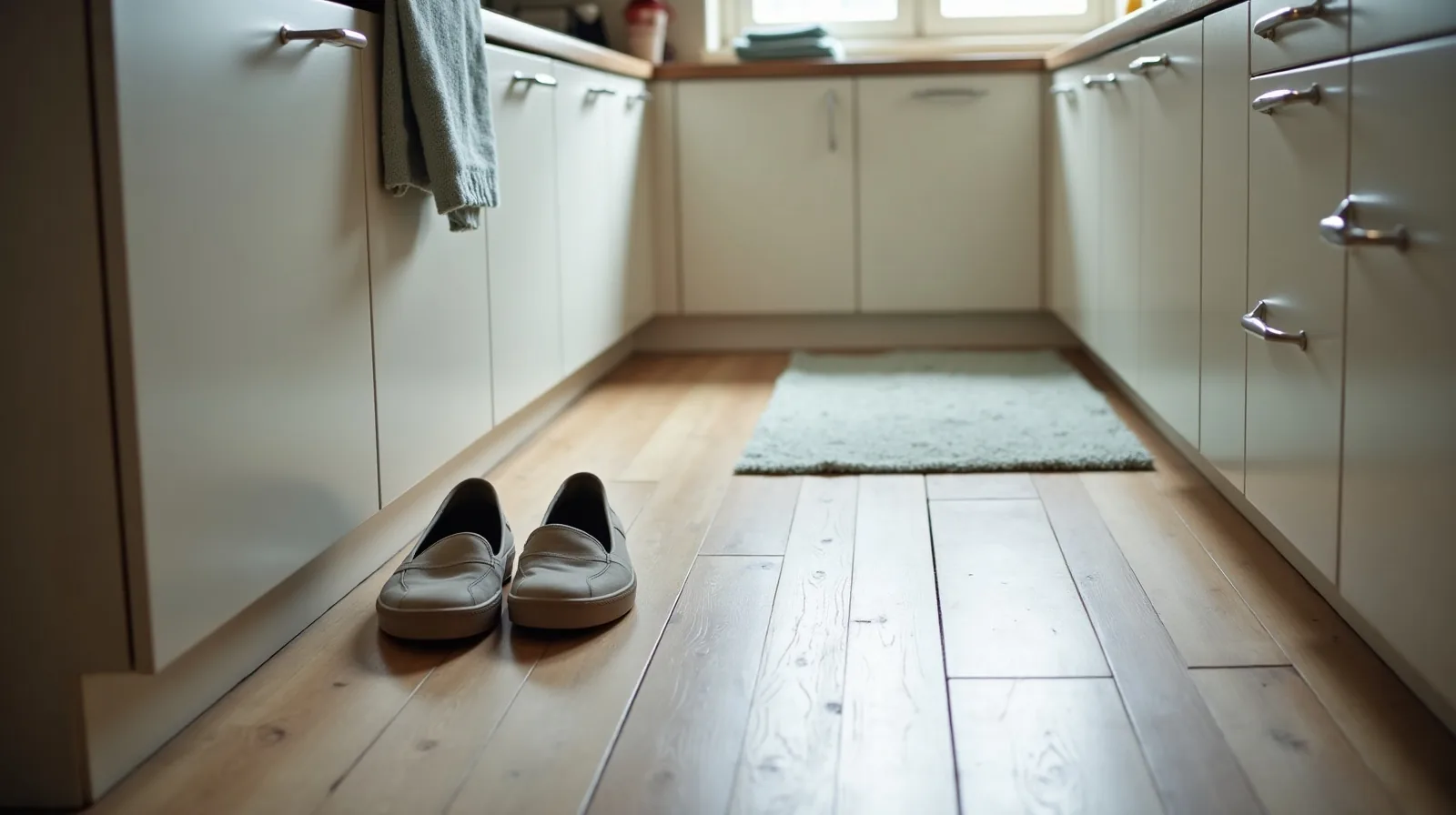
Because the whole point is working near the edge of steadiness, the ground rules are non-negotiable. Practice beside a sturdy support — a kitchen counter or the back of a heavy chair, never a wheeled stool or a flimsy shelf. Clear the floor of rugs, cords, and pets. Wear shoes with grip or go barefoot; socks on a smooth floor are how balance practice becomes the fall it was meant to prevent. Keep a hand on or hovering over the support at all times, and have someone nearby for the first few sessions. One more rule that matters most: if you’ve fallen in the past year, feel dizzy or unsteady, or take medications that can affect balance, talk with your doctor or a physical therapist before starting. A physical therapist can assess exactly where you’re starting from and tailor the work — that’s not a formality, it’s the fastest route to progress.
Five Moves That Earn Their Counter Space
Each of these takes under a minute per side, with your support in easy reach the entire time:
- Single-leg stand. Hand on the counter, lift one foot an inch off the floor, and hold for ten to thirty seconds per side. The everyday payoff is real: stairs, curbs, and putting on pants are all single-leg events.
- Heel-to-toe walk. Walk a slow, straight line along a hallway wall, the heel of one foot touching the toes of the other — a narrow base your body has to actively manage.
- Sit-to-stand. From a firm chair, stand up and sit back down slowly without using your hands, five to ten times. This is leg strength and balance in one move.
- Heel and toe raises. At the counter, rise onto your toes, lower with control, then rock back onto your heels. Ankle strength is balance’s unsung foundation.
- Weight shifts. Feet hip-width apart, shift your weight slowly side to side, letting the trailing foot go light. It rebuilds the small corrections walking depends on.
Little and often beats heroic sessions: a few minutes daily — say, while the coffee brews — outworks one long effort a week.
Progress Slowly, and Know When to Ask for Help
Progress by loosening your grip before you add time: full hand on the counter, then fingertips, then a hand hovering just above it. A gentle wobble means the practice is working; a near-fall means you skipped a step, so move back a stage. What you’re after is boring, repeatable steadiness that slowly needs less support. If things aren’t improving after a few weeks, or a fear of falling has started shaping your daily decisions, ask your doctor about a referral to physical therapy — and note that guidance for older adults generally points toward pairing balance practice with leg-strengthening work a couple of times a week, which a professional can help you structure safely.