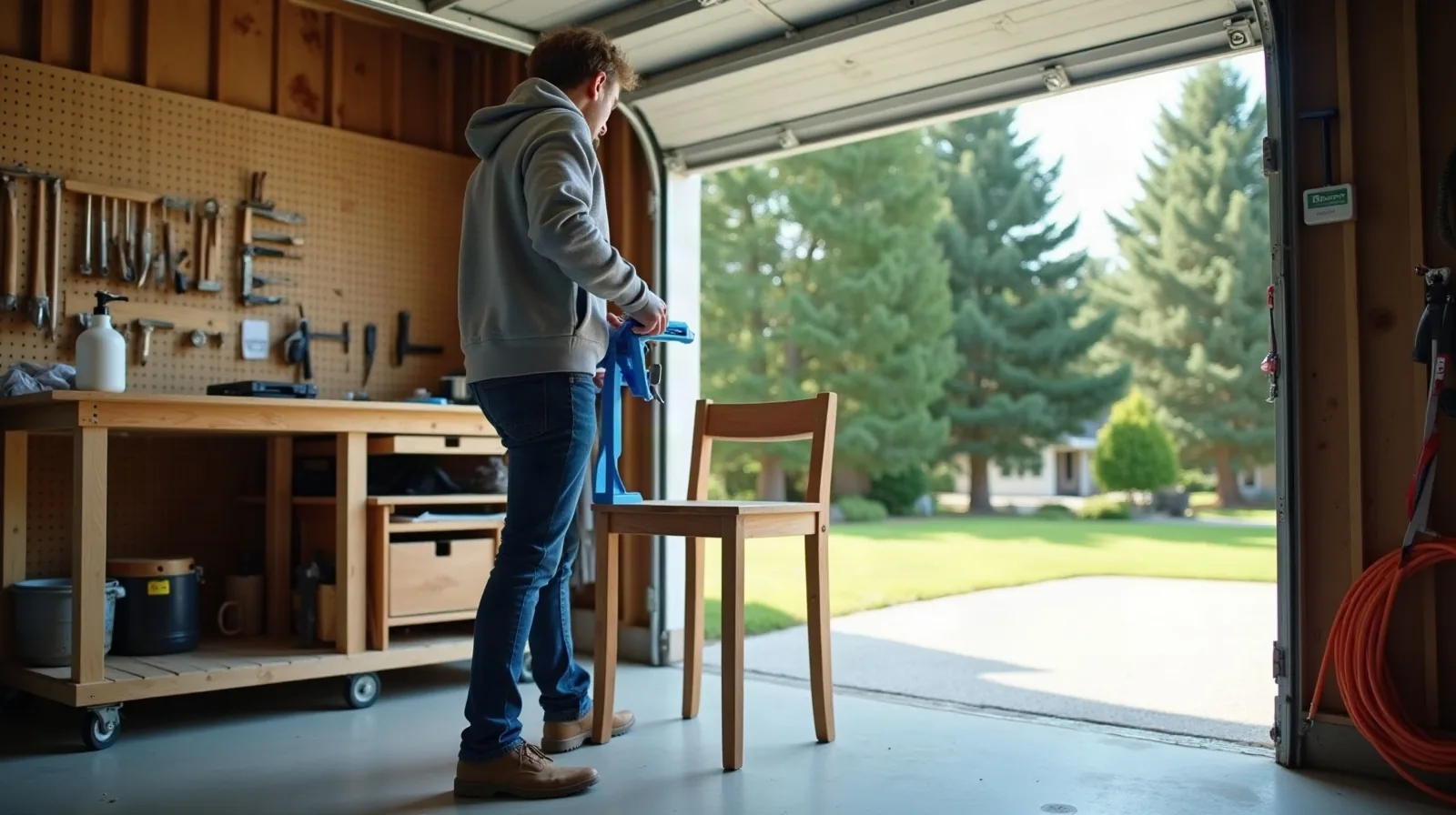
A chair that shifts under you or a table that rocks every time someone sets down a cup is easy to ignore until a joint finally gives way. The good news is that most wobbles come from a small handful of causes, and nearly all of them can be fixed in an afternoon with a screwdriver, some wood glue and a couple of clamps. The trick is diagnosing the problem before reaching for a fix.
Find Out Why It Wobbles
Set the piece on a flat, hard floor first. Carpet and old floorboards can make a sound piece look unsteady. If it stops rocking there, the floor was the problem, not the furniture.
If it still moves, flip it over and look closely. Grip each leg and push it gently side to side while watching the joint where it meets the seat or apron. A leg that moves on its own points to loose hardware or a failed glue joint. A leg that is solid but simply shorter than the others points to a leveling problem. A visible gap or a line of old dried glue means the glue has let go.
Tighten the Hardware First
Many tables and most flat-pack pieces rely on bolts and screws, which loosen as wood dries and swells with the seasons. Work around the underside in this order:
- Corner blocks. The small wooden or metal brackets inside each corner are often held by one or two screws. Snug them up, but stop before the wood starts to crush.
- Leg bolts. Many table legs attach with a bolt and wing nut or a hanger bolt. Tighten them by hand first, then a quarter turn more with a wrench.
- Stripped screw holes. If a screw just spins, pull it out, pack the hole with a few wooden toothpicks or a sliver of wood dipped in glue, let it dry, trim it flush and drive the screw back in.
- Flat-pack cam locks. Give each round cam a firm quarter turn with a screwdriver, and recheck them every few months.
Test again after each step; plenty of wobbles end right here.
Reglue a Loose Joint the Right Way
If a rung or leg moves inside its socket, the old glue has failed, and fresh glue over old glue rarely holds. Wood glue bonds to bare wood, so the joint needs to come apart. Tap it loose with a rubber mallet and a scrap block to protect the finish, and mark each piece with painter’s tape so it goes back in the same spot.
Scrape or sand the old glue from both surfaces until you see clean wood. Apply a thin, even coat of wood glue to both parts, push the joint together, and clamp it just tight enough to close the gap; too much pressure squeezes out the glue and can bow thin rungs. Wipe off squeeze-out, then let it cure for the full time printed on the bottle, usually overnight, before anyone sits on it.
If taking the piece apart is not practical, a small syringe can push glue into a tiny pilot hole drilled into a slightly loose joint — a reasonable stopgap, though weaker than a full reglue.
Level a Table That Rocks
For a solid piece with one short leg, skip the folded napkin. Slide thin cardboard or playing cards under the short leg until the rocking stops, count the layers, then replace them with an adjustable glide or a felt pad of the same thickness. Trimming the long legs works too, but it is easy to overcorrect, so take off a little at a time.
Know when to stop. A cracked leg, a split seat, or a family heirloom with a fragile finish is worth taking to a furniture repair shop, and anything that will carry a person’s weight should feel completely solid before it goes back into use.