The hardware store is not on your side. Walk in as a brand-new DIYer and every aisle insists it’s essential — a drill for every material, a wall of clamps, kits with two hundred pieces you can’t name. Here’s the calmer truth: a first year of home projects — hanging pictures, assembling furniture, tightening hinges, patching small holes — runs on a kit small enough to fit in one box. Buy that short list well, skip the rest until a project actually demands it, and the tools will pay for themselves before the year is out.
Buy for the Jobs, Not the Aisle
Before spending anything, write down the first five or ten things you actually want to fix or build: the gallery wall, the wobbling chair, the flat-pack dresser, the drafty door. Nearly all of those jobs draw from the same tiny pool of tools, which is why a starter kit works at all. The list also protects you from the two classic beginner mistakes — buying a specialty tool for a project you may never start, and buying the cheapest version of a tool your hands will hold every week. As a rule, spend decent money on anything you’ll use often, and spend nothing on tools without a scheduled job.
The Core Kit
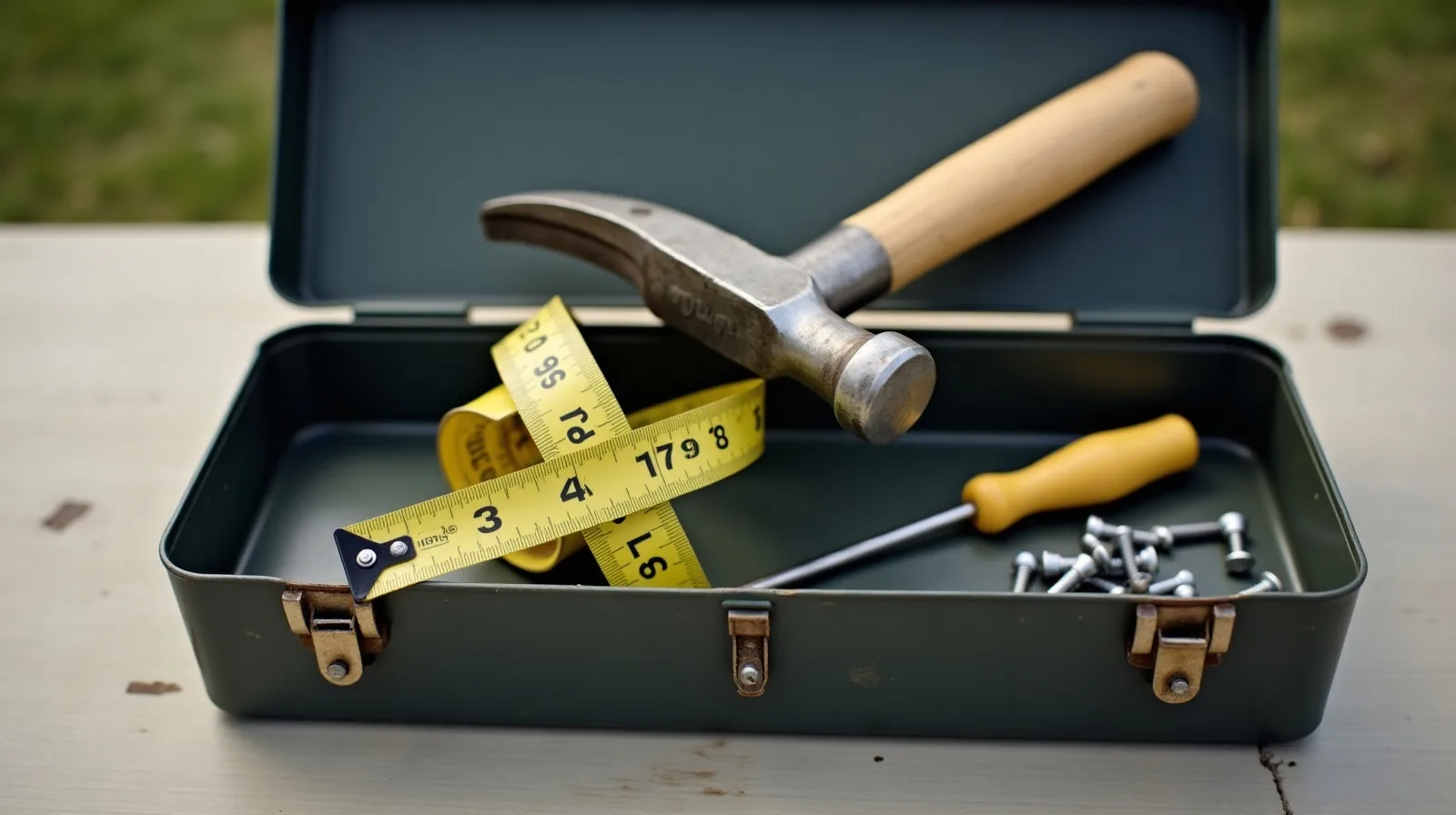
Six purchases cover the overwhelming majority of first-year fixes:
- A claw hammer. A sixteen-ounce model with a comfortable grip drives nails, pulls them back out, and persuades stubborn things into place — the workhorse of the box.
- A tape measure. Twenty-five feet, with a blade that locks. Half of DIY is measuring; the other half is measuring again to be sure.
- A multi-bit screwdriver. One handle with swappable heads replaces a drawer of singles and covers nearly every screw in the house.
- A cordless drill. The one item worth real money — it drills holes and drives screws, which between them describe most projects. A basic bit set makes it useful on day one.
- A small level. A nine-inch torpedo level ends the “does that look straight to you?” conversation permanently.
- A utility knife, pliers, and safety glasses. Cheap, constantly useful, and — in the glasses’ case — non-negotiable any time debris can fly.
What to Skip Until a Project Demands It
Everything else waits. Circular saws, sanders, jigsaws, the giant socket set, the second drill: each is genuinely useful for a specific kind of work and dead weight without it. The same goes for mega-kits padded with dozens of filler pieces — the price per piece looks efficient, but you’re paying for volume, not usefulness. The better pattern is simple: the day a real project calls for a stud finder or a tile cutter, buy exactly that, at mid-grade quality. A tool bought for a job in progress never feels like a waste, gets learned immediately, and earns its shelf space. A tool bought “just in case” mostly collects dust and a little guilt.
Borrow and Rent Before You Buy
For big, occasional equipment, ownership is usually the worst deal on the table. Many public libraries and community workshops now lend tools outright; home-improvement rental counters carry the serious machinery — floor sanders, post-hole diggers, pressure washers — for a fraction of the purchase price; and neighbors with full garages are often glad to lend in exchange for the tool coming back clean and promptly. A fair rule of thumb: if something would get used less than a few times a year, rent or borrow it. And know the edge of the map — anything involving gas lines, the main electrical panel, or structural walls isn’t a tool question at all. That’s a licensed-professional question, and making that call is the most experienced-DIYer move there is.