
The hardest part of weeknight cooking isn’t the cooking — it’s the activation energy. A recipe with fourteen ingredients loses you at the list: two things you don’t have, one you can’t find, and suddenly takeout is the reasonable choice. Capping dinner at five ingredients attacks that exact moment. Five things fit in a basket, in your head, and on a counter; the shopping is quick, the prep is short, and the decision to start is easy. And because there are only five, each one has to actually matter — which, oddly, tends to make dinner taste like more, not less.
The Counting Rules
Five-ingredient cooking works because of two honest rules. First, pantry staples ride free: olive oil, butter, salt, pepper, and whatever dried spices you already own don’t count against the five — they’re infrastructure, not ingredients. Second, every counted ingredient has to earn its slot: build around a protein, a vegetable or two, a starch if you want one, and always spend at least one slot on a flavor anchor — the sausage that seasons the whole pan, the lemon, the jar of pesto, the salty crumbly cheese. Dinners made of five workhorses succeed; dinners made of five shy ingredients taste like a hospital tray.
Five Dinners That Prove It
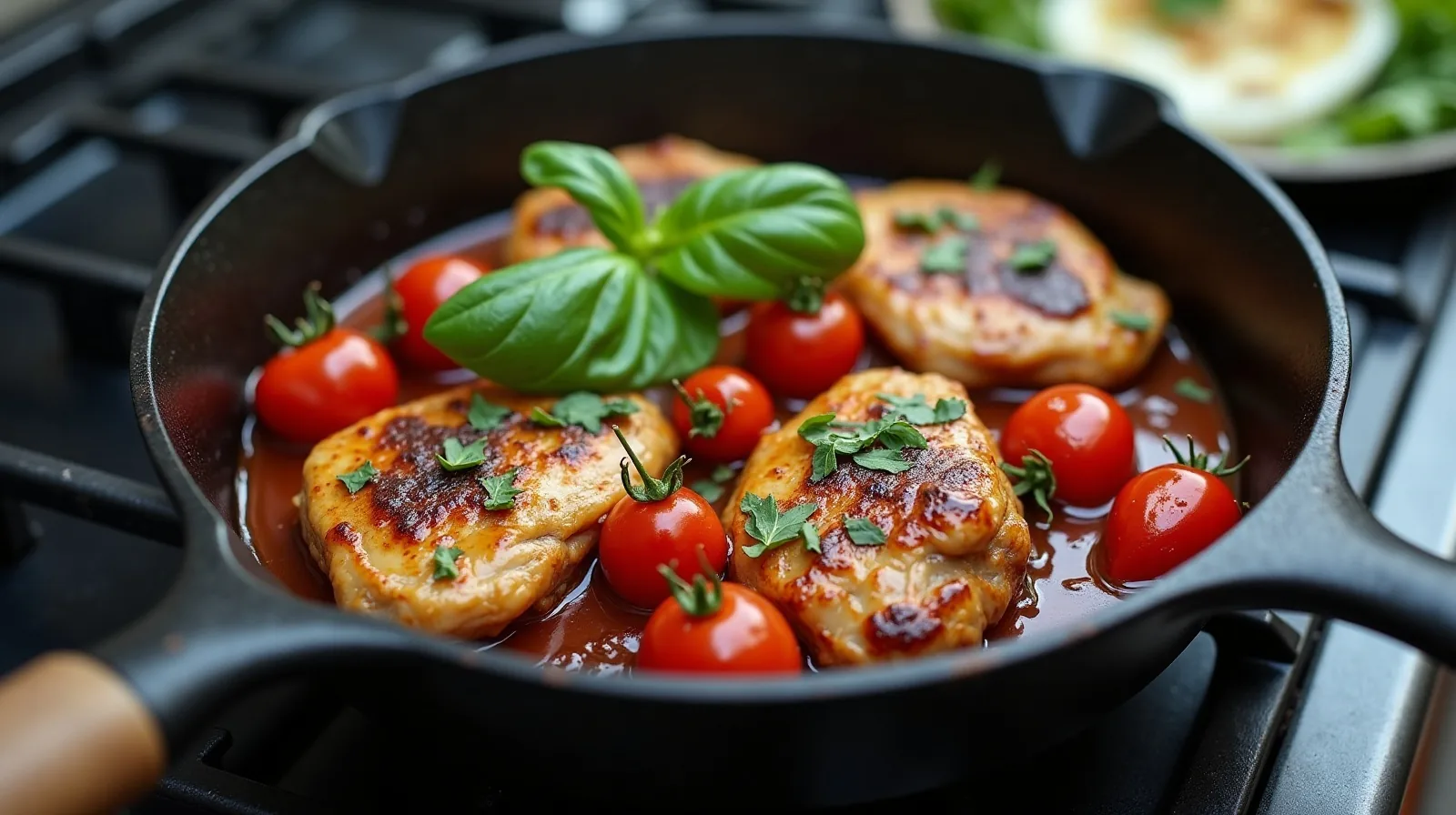
- Skillet chicken with cherry tomatoes and basil. Chicken thighs, cherry tomatoes, garlic, basil, and crusty bread or pasta. Sear the chicken, blister the tomatoes into a sauce in the same pan, tear the basil over at the end.
- Sausage, peppers, and rice. Browned sausage seasons everything it touches — add peppers, an onion, and rice, and the pan does the rest of the work.
- Lemon-butter fish with green beans. Any white fish, green beans, a lemon, and rice or small potatoes; the butter from the staples shelf becomes the sauce.
- Pesto pasta with white beans and spinach. A jar of pesto is an entire herb garden in one slot; the beans turn a side dish into dinner.
- Tortilla-and-egg skillet. Eggs, tortillas, salsa, cheese, and an avocado — breakfast-for-dinner economics: cheap, ready in minutes, and nobody complains.
Shop the Pattern, Not the Recipe
After a few rounds, the structure becomes visible — protein, vegetable, starch, flavor anchor — and the store trip changes with it: you stop hunting for specific recipe items and start picking one thing from each column based on what looks good and what’s on sale. That’s the quiet payoff of the cap. Keep the free-rider shelf stocked — oil, salt, a few spices, a lemon or a vinegar, something with a little heat — and almost any five reasonable ingredients can land as dinner. The list stays short even when the week isn’t.
Lower the Bar, Keep the Standard
Five ingredients also fixes the weeknight quality trap — the belief that a fast dinner must be a lesser one. Doubling any of these takes minutes and hands you tomorrow’s lunch; most cook in a single pan, so the cleanup matches the ingredient list; and because every component is doing visible work, the food reads as cooked on purpose rather than assembled in defeat. Save the long, lovely recipes for weekends, when they’re a pleasure instead of a hurdle. Tuesday night deserves a dinner designed for Tuesday night.