Most people never see the inside of your house. What they see is the twenty seconds between the sidewalk and the front step: a door, a set of numbers, whatever is growing in the bed under the window. For most homes that view was assembled by accident over a decade — a mailbox that came with the place, a porch light somebody else picked, mulch that went gray two summers ago. The encouraging part is how much of it can be reset in a single weekend, mostly with tools already sitting in the garage.
Wash Before You Buy Anything
The biggest single change a front yard usually needs costs water and an afternoon. Siding, concrete, painted railings, and the glass in the storm door all hold a film of pollen, mildew, and road grit that flattens every color behind it. A rented pressure washer will do a driveway and walkway in a few hours; keep the nozzle moving, stay well back from siding seams, window frames, and paint, and remember that a tight fan held close strips finish and drives water where it should never go. For gentler surfaces, warm water, dish soap, and a stiff brush get you most of the way with none of the risk. Wash first, then look again. Half the projects on your list will quietly fall off it.
The Front Door Carries the Whole Impression
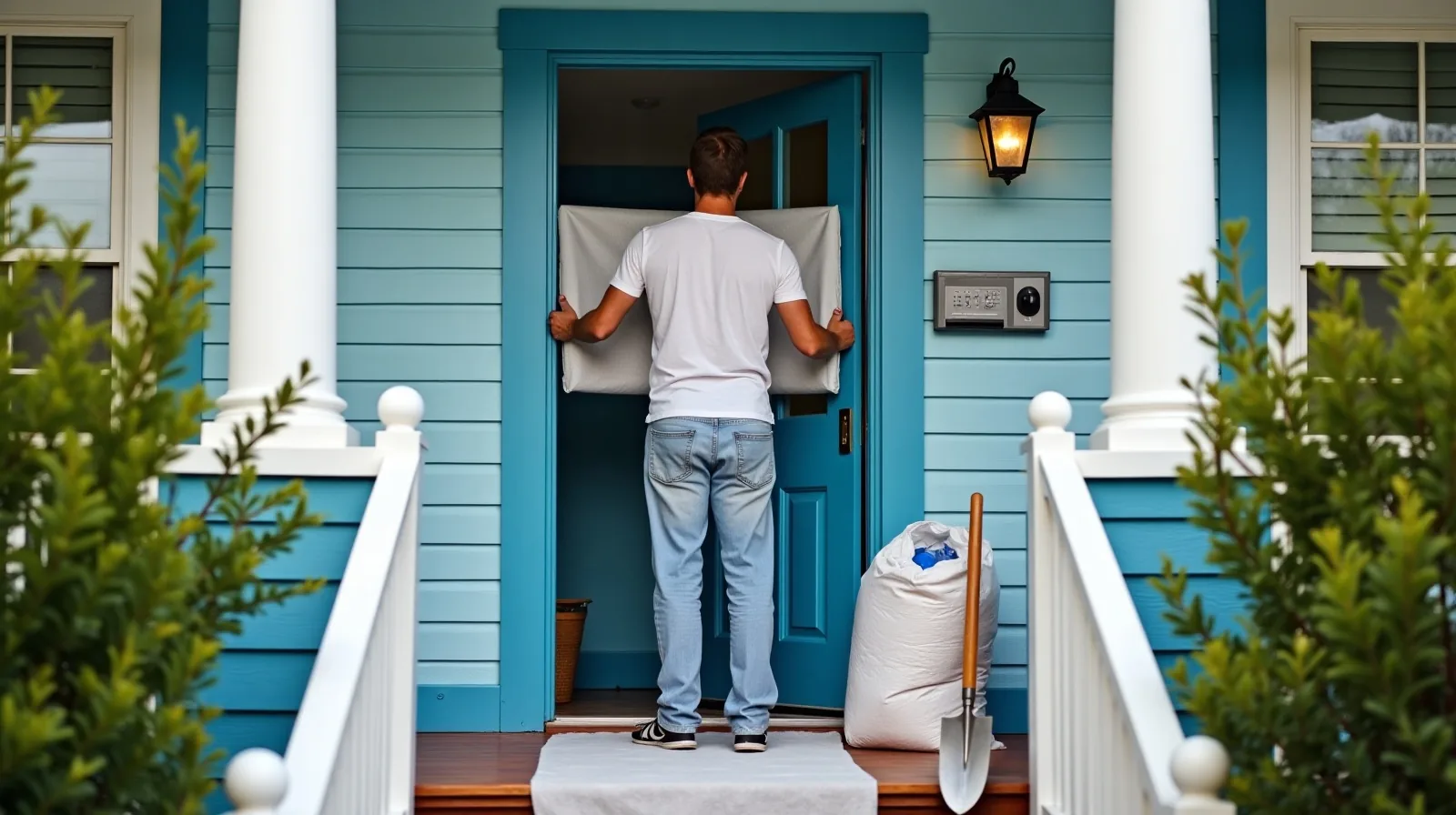
Nothing else changes a facade as fast as paint on the door. A quart is enough, and the color can have some conviction. A deep green, a navy, an ink blue, or a soft black all work, as long as the choice doesn’t fight the roof or the trim. Clean the surface, scuff-sand anything glossy, wipe the dust off, and lay on two thin coats instead of one thick one, working out of direct sun so the paint has time to level. While the tape is up, replace the handset and deadbolt. Entry hardware is jewelry: a matte black or brushed set costs less than dinner out and instantly dates the door forward. If the porch light is still the builder-grade dome, swap that too, and put a warm bulb in it rather than the blue-white one.
Small Parts That Punch Above Their Price
- House numbers. Oversized modern numerals mounted on a board or straight into the siding read from the street and look deliberate. Use a level and a paper template so the spacing is honest.
- The mailbox. A leaning post with a faded flag undoes everything else. Reset the post plumb, or replace box and post together for the price of a takeout order.
- The doormat. A thick coir mat sized to the door, not the little scrap that came free, makes the entry look finished and keeps grit out of the house.
- The bed edge. A clean spade-cut trench between lawn and planting bed is free, takes an hour, and does more visually than new plants.
- Path lighting. Low solar or line-voltage fixtures spaced evenly along the walk turn an invisible approach into a welcome after dark.
Mulch, Edging, and the Approach at Night
Fresh mulch is the closest thing landscaping has to a fresh coat of paint. Pull the weeds, cut the edge, then lay two to three inches of a single material across the whole bed, keeping it pulled back a few inches from stems and siding so nothing sits wet. One color throughout looks intentional; three leftover bags look like a supply closet. Finish with light. Space path fixtures generously and stagger them slightly rather than lining them up like a runway — the aim is a lit path, not a landing strip. Stand at the curb when you’re done, in daylight and again after dark, and see whether your eye lands on the door. If it does, the weekend worked.