A washing machine spends its life in warm water and soap, which sounds self-cleaning. In practice, the opposite happens: detergent film, lint, and damp pockets collect in places the water never fully flushes. The first sign is usually a faint musty smell on towels that just came out clean. The fix takes about fifteen minutes a month and almost no special supplies.
Why Washers Start to Smell
Odor comes from a mix of leftover soap, skin oils, and fabric fibers sitting in moisture. Front-loaders are especially prone to it because the rubber door seal traps a ring of water, and a tightly closed door keeps the drum humid. Cool-water cycles and generous doses of detergent make it worse, since less residue dissolves and rinses away. Top-loaders are not immune: the underside of the agitator and the space behind the drum quietly collect the same film.
The Four Spots That Hold Residue
A thorough clean is mostly a matter of visiting the same four places in order. Knowing them turns a vague chore into a checklist:
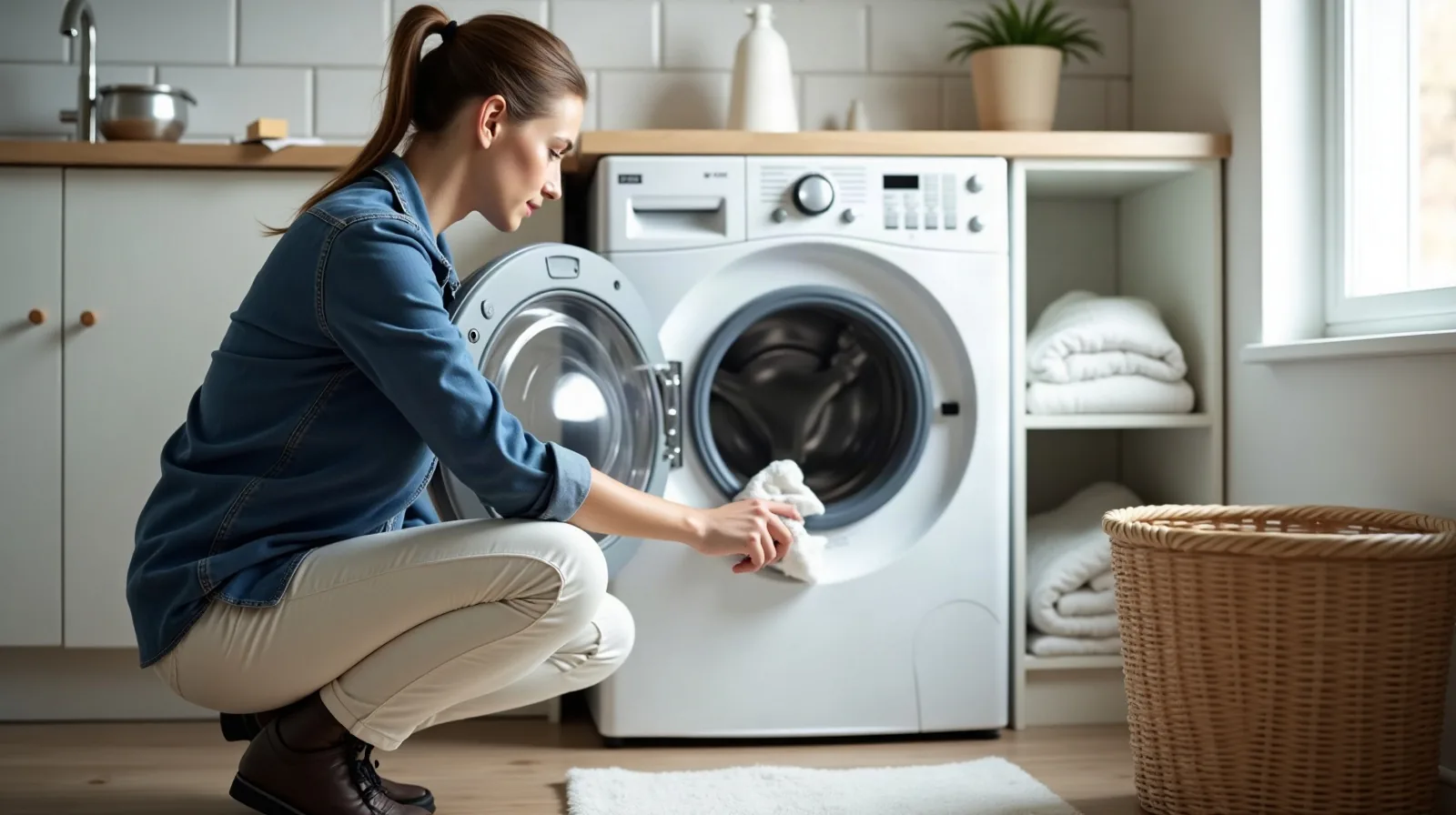
- The door seal. Pull back the folds of the rubber gasket and wipe the whole ring with a cloth and a little diluted white vinegar or mild dish soap. Look for dark spots, coins, and stray socks.
- The detergent drawer. Most slide out. Rinse the tray under warm water and scrub the empty slot with a small brush to remove the gummy buildup.
- The drum. Wipe the inside, then run a hot, empty cycle with a washer-safe cleaner or the cleaning cycle if the machine has one.
- The drain filter. Usually behind a small panel at the bottom front. Place a shallow tray and a towel underneath, unscrew it slowly, and clear out lint and debris.
A Fifteen-Minute Monthly Routine
Start with the parts that need hands: wipe the seal, rinse the drawer, and clear the filter. Then close everything up and run the empty hot cycle with the cleaner. While it runs, wipe the outside and the control panel. Afterward, leave the door and drawer ajar so the interior can dry fully. Skip mixing cleaning products, since combining vinegar with bleach or similar chemicals can release harmful fumes. Wear gloves if the filter holds anything unpleasant, and keep a small container handy, because a little standing water usually drains out when the cap comes off. Check the manual for what the machine tolerates, because some manufacturers advise against certain cleaners on seals and tubs.
Habits That Keep the Smell Away
Most of the benefit comes from small daily choices. Use the amount of detergent the label suggests for the load size; more soap rarely means cleaner clothes and often leaves film behind. Take wet laundry out promptly rather than letting it sit. Leave the door open after the last load, and wipe the seal quickly if it looks wet. Wiping the rubber ring with a dry cloth takes ten seconds and removes the moisture that mildew needs. Run an occasional hot wash for towels and bedding, if the fabric labels allow it, so heat can break up buildup between deep cleans.
If the odor survives a full clean, or water pools in the drum, a hidden clog or failing part may be the cause. At that point, a qualified appliance technician is a better call than another round of scrubbing, especially for anything involving electrical parts or the water supply.