
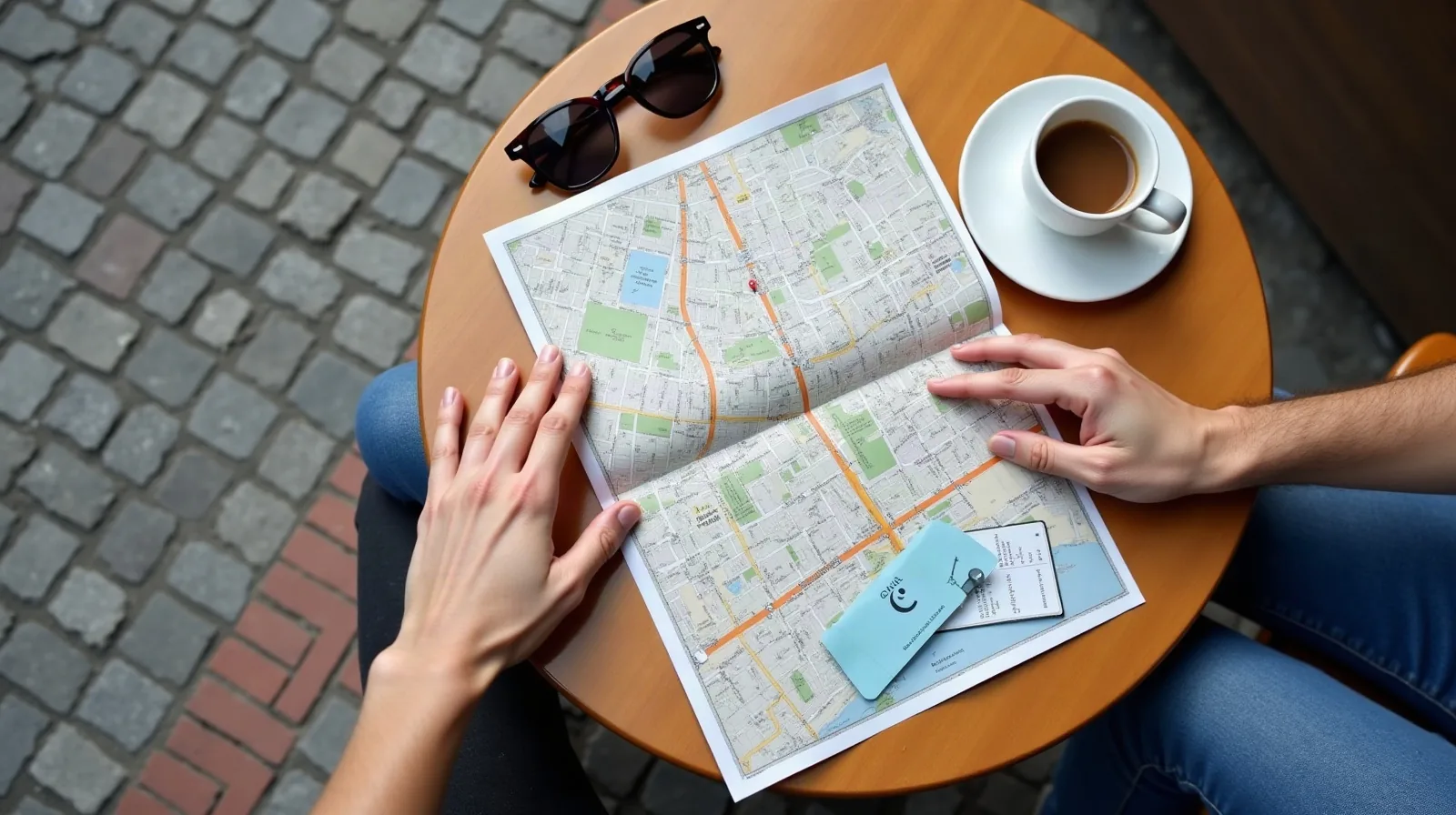
A great room in the wrong location can quietly tax a whole trip. Every errand becomes a ride, every forgotten charger becomes an expedition, and the early start planned for a landmark turns into a long commute. Choosing the neighborhood first and the room second tends to fix all of that, and it takes about twenty minutes of looking.
Start With What a Normal Day Needs
Before comparing lodging, decide what the days will actually look like. A trip built around museums and restaurants wants a walkable center. A trip built around hiking or the coast may do better with a quieter base near the trailhead or the water. Travelers with young children or a slower pace usually value a pharmacy, a grocery store and a park close by more than a famous address.
Write down three things the base must do well, such as “near a train line,” “quiet at night,” or “food within a short walk.” Those three lines become the filter for everything that follows, and they keep a flashy photo from steering the decision.
Test the Walk Before Booking
Open a map and look at the area as a person on foot would. Drop a pin on the lodging and check how far it is to the places that matter: a transit stop, a grocery store, a handful of cafes, and the main sights. A simple rule of thumb is that daily needs should sit inside a ten-minute walk, with the headline attractions a short ride away rather than a long one.
Then use street view to look at the route itself. Wide sidewalks, steady foot traffic and open shops in the evening are good signs. A long stretch of highway, empty lots or shuttered storefronts is worth knowing about before arrival, especially for anyone walking home after dark or pulling a suitcase.
Check the Late-Night Basics
Reviews are most useful when read for patterns instead of ratings. Look for repeated mentions of noise from bars, construction or traffic, and note whether the room faces the street or a courtyard. Scan recent comments on arrival after dark, since a hotel that feels fine at noon can feel different at eleven. Official travel advisories and local tourism offices are better sources than rumor for judging safety, and they rarely call for more than ordinary city habits.
- Transit — a stop or station within a short walk, with service that runs late enough for your plans.
- Groceries — a small market for water, snacks and breakfast saves money and time.
- Pharmacy — handy for the small emergencies every trip seems to produce.
- Noise — a quiet side street or courtyard-facing room if sleep is a priority.
- Arrival route — an easy path from the airport or station, ideally without a long transfer.
Weigh the Bargain Honestly
A cheaper room far from the center can still be a good deal, but only if the savings survive the math. Add the daily cost of rides, the time spent commuting, and the meals bought out of convenience. A lower rate that adds forty minutes each way can erase itself within a day or two, and it eats the hours that made the trip worth taking.
The reverse is also true. The most central address is not automatically the best, because the busiest blocks can be loud and pricey. Often a neighborhood one or two stops away from the tourist core offers calmer streets, better local food and a fair price, with the sights still a quick ride off.