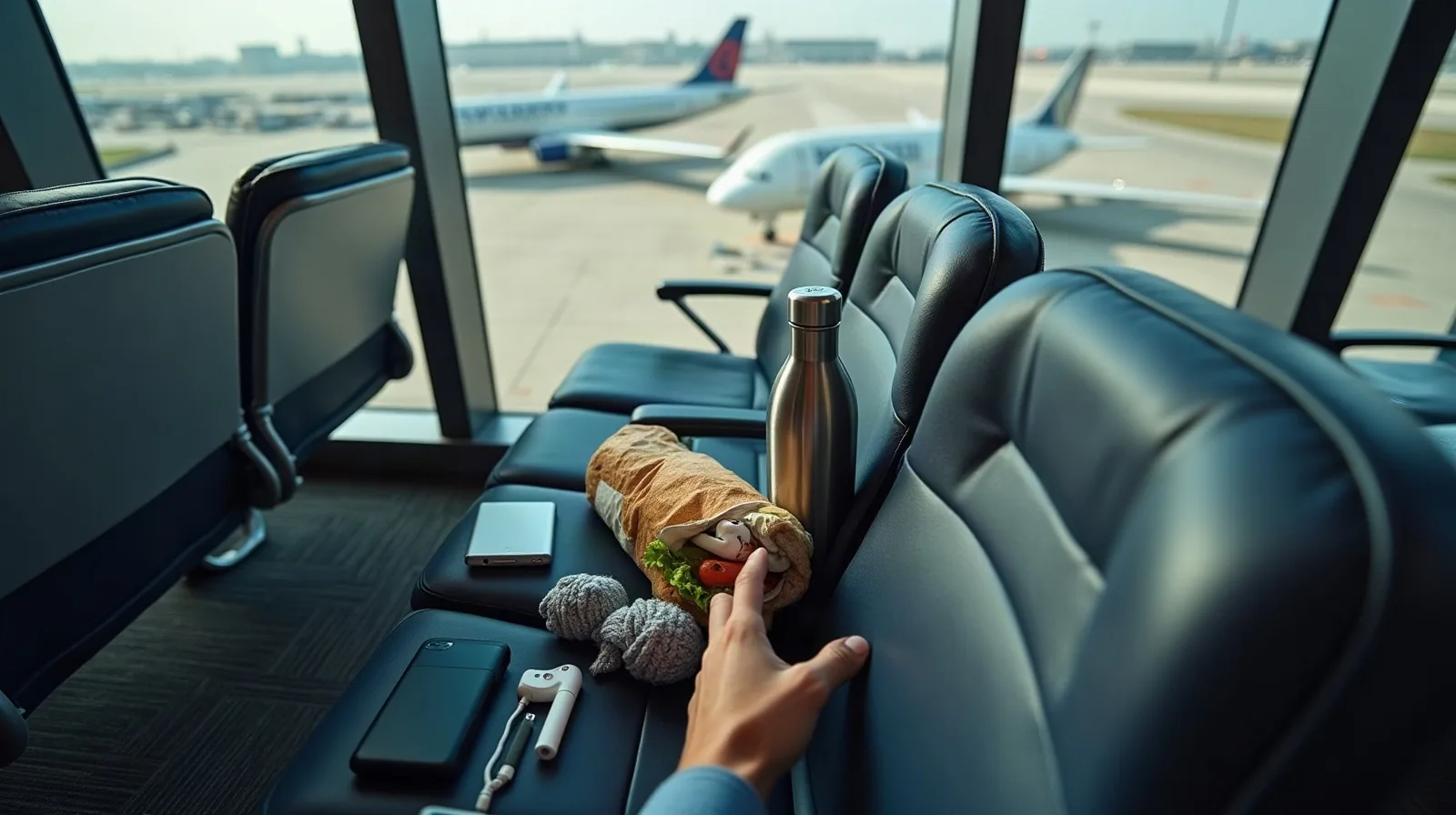

A delay board that flips from green to red is one of travel’s least welcome surprises. The first few minutes matter most, because a handful of travelers will be rebooked quickly and everyone else will join a queue. Knowing the order of moves, and which rights usually apply, turns a stressful announcement into a short to-do list.
Start Three Lines at Once
When a cancellation is announced, resist the urge to pick a single path. The airline app, the customer service phone line, and the desk at the gate all draw on the same pool of seats, and each moves at its own speed. Opening the app to look for rebooking options takes seconds, so it comes first. Calling while standing in the desk line costs nothing extra, and whichever channel answers first is the one to use. Many travelers are surprised to find the app has already offered a new itinerary before an agent has said a word.
Before committing to a replacement flight, scan the options for the shape of the trip rather than only the departure time. A flight that leaves sooner but connects through a tight layover may be worse than one that leaves a few hours later with a comfortable gap.
Know What Usually Applies
Rules differ by country and airline, so the contract of carriage and the official transportation regulator for the relevant region are the sources to trust. In general terms, though, a canceled flight within the airline’s control often brings the option of a refund if the traveler chooses not to travel, and many carriers will rebook on their own flights at no charge. Meals, hotel rooms, and ground transport are sometimes offered after long disruptions, but policies vary and weather events are frequently treated differently from mechanical problems.
- Rebooking — usually free on the same carrier when the airline cancels or significantly changes the flight.
- Refund — often available in place of travel if the disruption is long enough, even on a nonrefundable fare.
- Meals and lodging — sometimes provided for lengthy delays, depending on the cause and the carrier’s rules.
- Checked bags — normally follow the new itinerary, but confirm the tag shows the right destination.
- Compensation — certain regions have set amounts for qualifying delays, which is worth checking after the trip.
Keep a Paper Trail
Screenshots cost nothing and settle disputes later. Capture the original itinerary, the cancellation notice, and the new confirmation. Keep receipts for meals, a hotel, and rides if the airline did not provide them, since some carriers and travel insurance policies reimburse reasonable expenses with proof. If the trip was booked through a third-party site, note that the agency and the airline may each point to the other, so write down the names of agents and the time of each call.
Plan Around the Fallout
A late arrival ripples outward. Message the hotel so a room is not released, tell anyone waiting at the other end, and look at pickup times for rental cars, since counters often close overnight. Moving a ground transfer is usually easier by message than by phone. For anyone traveling with medication, a few extra days of supply in the carry-on is a practical cushion, and a pharmacist or doctor can say how to handle a schedule that slips by a day. Packing a charger, a snack, and a change of clothes in the carry-on makes a night in the terminal, or a surprise hotel stay, far more comfortable.