
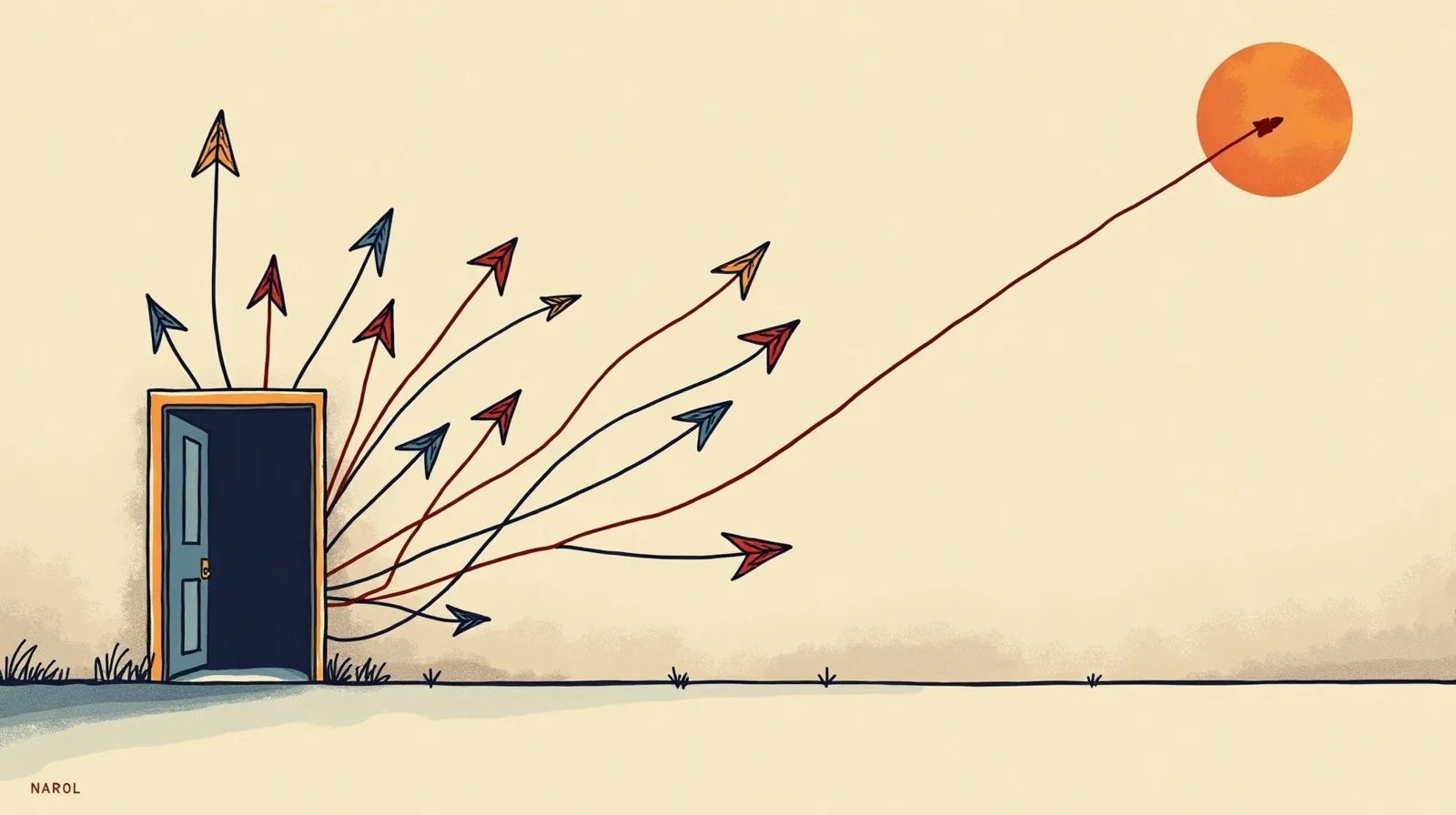
The frantic weekday morning has a reputation as a time problem — solve it by waking earlier, the advice goes. But people who wake earlier mostly report scrambling earlier. Watch a chaotic morning closely and the real culprit shows itself: it’s a decision problem. What to wear, what to eat, where the keys went, which task to start with, whether there’s time for coffee — each one is trivial alone, but stacked on a deadline before you’re fully awake, they generate the particular frazzle that follows you out the door. A calm morning isn’t a slow one. It’s one where almost nothing needs deciding.
Make the Decisions the Night Before
Every choice moved to the evening is a choice your morning self — the groggiest, most time-pressed version of you — never has to make. This isn’t a whole second routine, just a five-minute sweep before bed: tomorrow’s clothes over a chair, the bag packed and parked by the door, one glance at the calendar so nothing ambushes you, and the first work task written down so the day opens with an answer instead of a question. The evening version of you has spare processing power; the morning version doesn’t. The whole trick is doing the thinking while thinking is cheap.
Run the Same Sequence Every Day
The second half of calm is order. A fixed sequence — the same steps, same order, every weekday — turns the morning from a chain of choices into a single groove:
- Keep one wake time. Roughly the same alarm every weekday, set generously enough that the routine fits without sprinting. Consistency, not earliness, is what buys the calm.
- Fix the order of operations. Shower, dress, coffee, breakfast, out — whatever your chain is, keep it identical. When the order never changes, momentum replaces willpower.
- Default the breakfast. A standing weekday breakfast — two or three options on rotation — deletes a daily decision and most of the “no time to eat” mornings with it.
- Give everything a launch pad. Keys, wallet, badge, headphones live in one spot by the door. The hunt for small objects is the most preventable stress in the whole routine.
- Build in a ten-minute buffer. Aim to be ready ten minutes before you need to leave. The buffer absorbs the spill, the lost glove, the surprise email — whatever would otherwise detonate the schedule.
Keep the Phone Out of the First Half
Nothing shreds a sequence faster than the wake-up scroll. The feed and the inbox pull you into reaction mode before your feet hit the floor, and the ten minutes they borrow are exactly the ten your buffer was holding. The workable rule isn’t “no phone” — it’s phone after: after you’re dressed, after breakfast, at whichever checkpoint you pick. Anchoring it to a step in the sequence works where vague restraint fails, because the sequence does the enforcing for you.
Boring Is the Feature
A routine like this can sound joyless — same wake time, same breakfast, same steps — but the sameness is the point, and the payoff isn’t rigidity, it’s spare attention. When the mechanics run themselves, the morning gets quieter inside your head, and whatever you actually care about — a real breakfast, a few unhurried minutes, arriving somewhere level instead of scattered — fits comfortably inside it. Novelty belongs to evenings and weekends. Weekday mornings run best on rails.