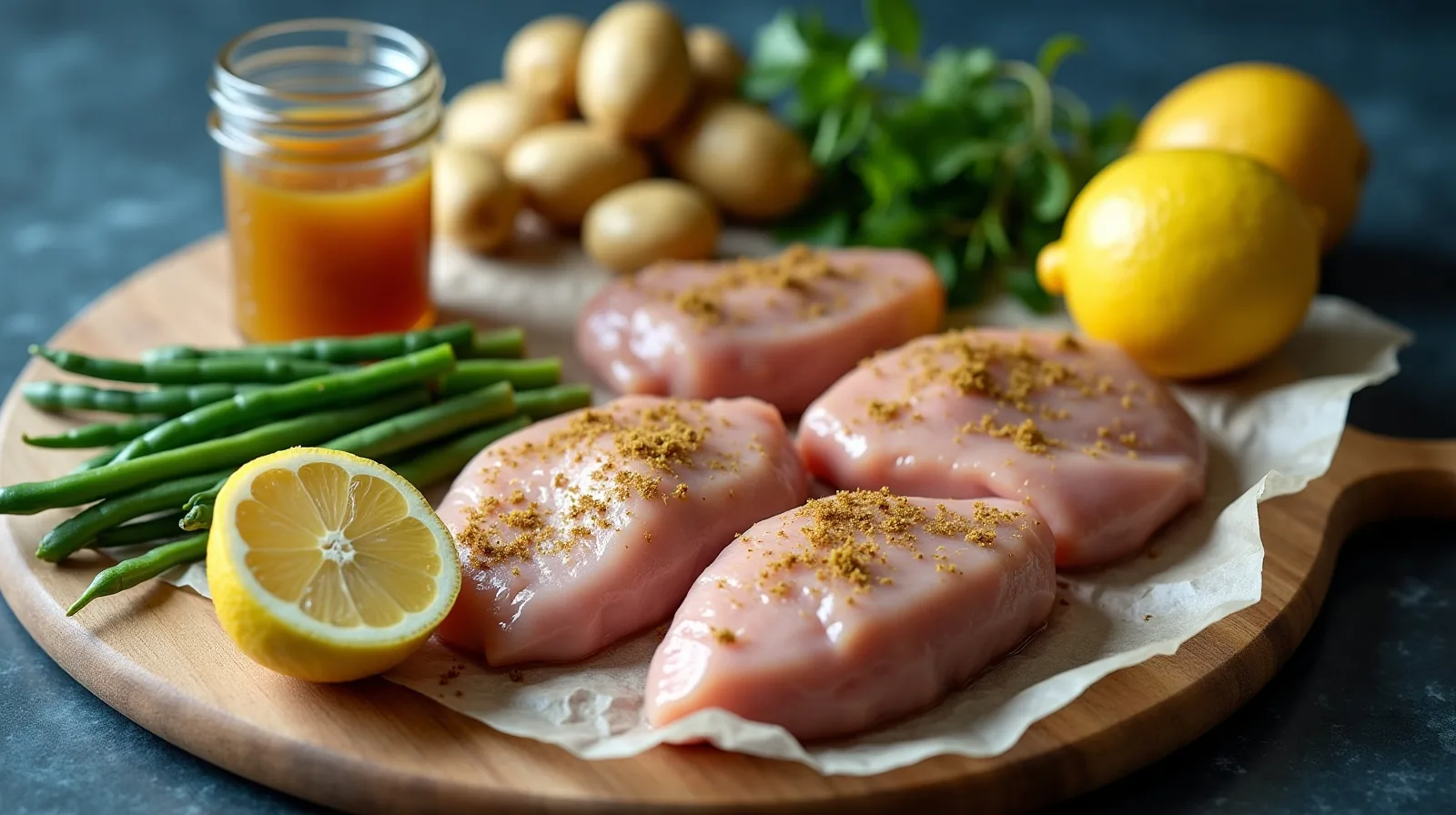
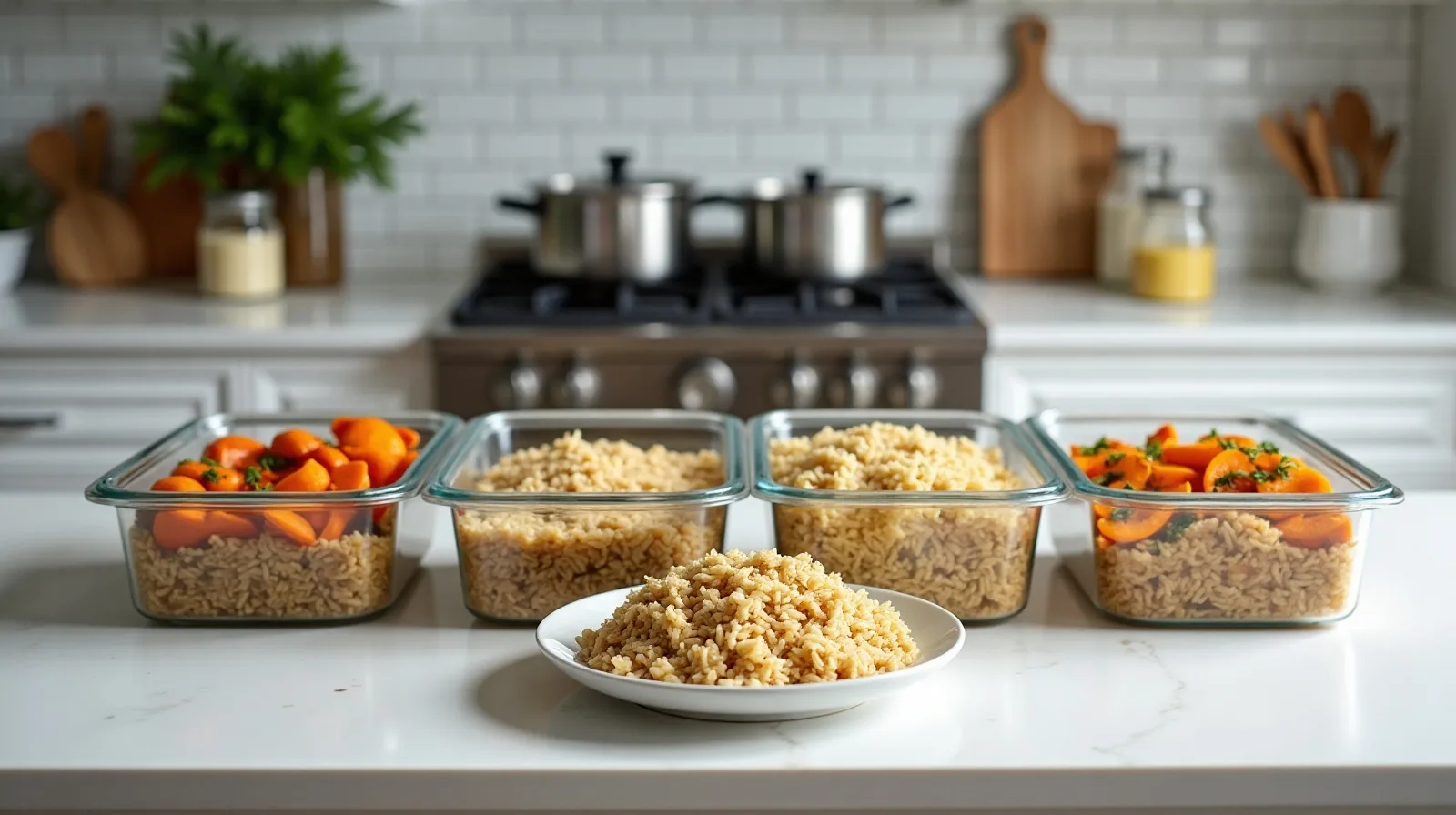
Most batch cooking collapses for the same reason. Someone spends a Sunday afternoon making five identical containers of one casserole, eats it twice, and looks at the other three with quiet resentment by Wednesday. The fix is not more discipline or better containers. It is cooking parts instead of finished meals: a grain, a protein, a tray of vegetables, a sauce. Dinner on any given night becomes an assembly job that takes ten minutes and does not taste like a rerun.
Cook Components, Not Finished Meals
A component is anything that can go into more than one dinner without changing character. Cooked rice belongs in a burrito bowl on Monday and under a stir-fry on Thursday. Shredded chicken can top a salad, fill a wrap, or get folded into soup. A tray of roasted vegetables works as a side, a grain-bowl base, or the whole filling for a quesadilla.
The important discipline is seasoning. Season components lightly and neutrally with salt, pepper, olive oil, maybe garlic, and save the assertive flavors for the night you eat them. A chicken breast cooked with heavy cumin can only ever be one kind of dinner. The same chicken cooked plain becomes five, because the sauce or spice you add at the last minute decides what it is.
A Two-Hour Session That Runs on Timers
The session works because the oven and stove do most of the labor unattended. Start the oven heating and put a pot of water on before anything else. In the first twenty minutes, get two sheet pans of vegetables into the oven and a grain simmering. While those run, cook the protein on the stovetop and make one sauce or dressing in a jar. The last half hour is turning trays, cooling things properly, and packing.
Cooling matters more than people expect. Food packed hot steams itself in the container and turns soft and watery by Tuesday. Spread things on a tray or leave lids off until steam stops rising, then seal and refrigerate.
Six Components That Carry a Week
- A big pot of grain. Rice, farro, or quinoa cooked plain. It is the fastest base for bowls, and leftover cold grain fries better than fresh.
- Two sheet pans of roasted vegetables. One sturdy tray of root vegetables and one quicker tray of broccoli, peppers, or zucchini, all cut to a similar size so nothing burns while something else stays raw.
- A plain cooked protein. Shredded chicken, a pot of lentils, seasoned ground meat, or baked tofu — whatever gets eaten in your house, cooked without a dominant flavor.
- One jar of sauce. A lemon vinaigrette, a peanut sauce, or a yogurt-herb dressing. This is the component that makes identical ingredients taste like different dinners.
- Something crunchy or acidic. Quick-pickled onions, toasted seeds, or a shredded cabbage slaw. Texture and brightness are what soft leftovers are always missing.
- Hard-cooked eggs or a can of beans, rinsed. The zero-effort protein that saves a night when the main one runs out early.
How Long Each Thing Actually Keeps
Cooked grains, roasted vegetables, and cooked proteins are generally treated as three to four days of refrigerated life, and food safety guidance points at the same window for most cooked leftovers. Dressings without dairy stretch longer; anything with fresh dairy or raw egg does not. Plan the week accordingly: eat the cooked protein and the softer vegetables in the first half, and freeze half the grain and half the protein on cooking day if the week looks uncertain. Label containers with the date, because memory is confident and wrong.
Assembling Different Dinners
With those components in the refrigerator, dinner is a choice of format rather than a recipe. Grain plus protein plus vegetables plus sauce is a bowl. The same three in a tortilla with cheese is a quesadilla. Warmed in broth with the vegetables, it is soup. Piled on greens with the crunchy thing, it is a salad that eats like a meal. Change the sauce and the format and no two nights repeat, even though the cooking happened once.