Every parent knows the paradox: a house full of toys and a child announcing there’s nothing to do. The instinct is to buy something new, and it works — for about a day and a half. The better fix isn’t more stuff. It’s a simple system that makes the things you already own feel new, gives play an obvious place to happen, and slowly builds the one skill that rescues every long indoor afternoon: a kid who can entertain themselves.
Rotate the Toys You Already Own
Novelty, not quantity, is what grabs a child’s attention — and rotation manufactures novelty for free. Box up roughly two-thirds of the toys and stash them out of sight, leaving a small, visible selection on low shelves. Every couple of weeks, swap sets. Returning toys get greeted like new arrivals, the floor stays manageable, and cleanup shrinks because there’s simply less out. There’s a quieter benefit too: with fewer options in view, kids tend to play deeper — sticking with one thing longer instead of grazing across everything and settling on nothing.
Set Up Stations, Not Piles
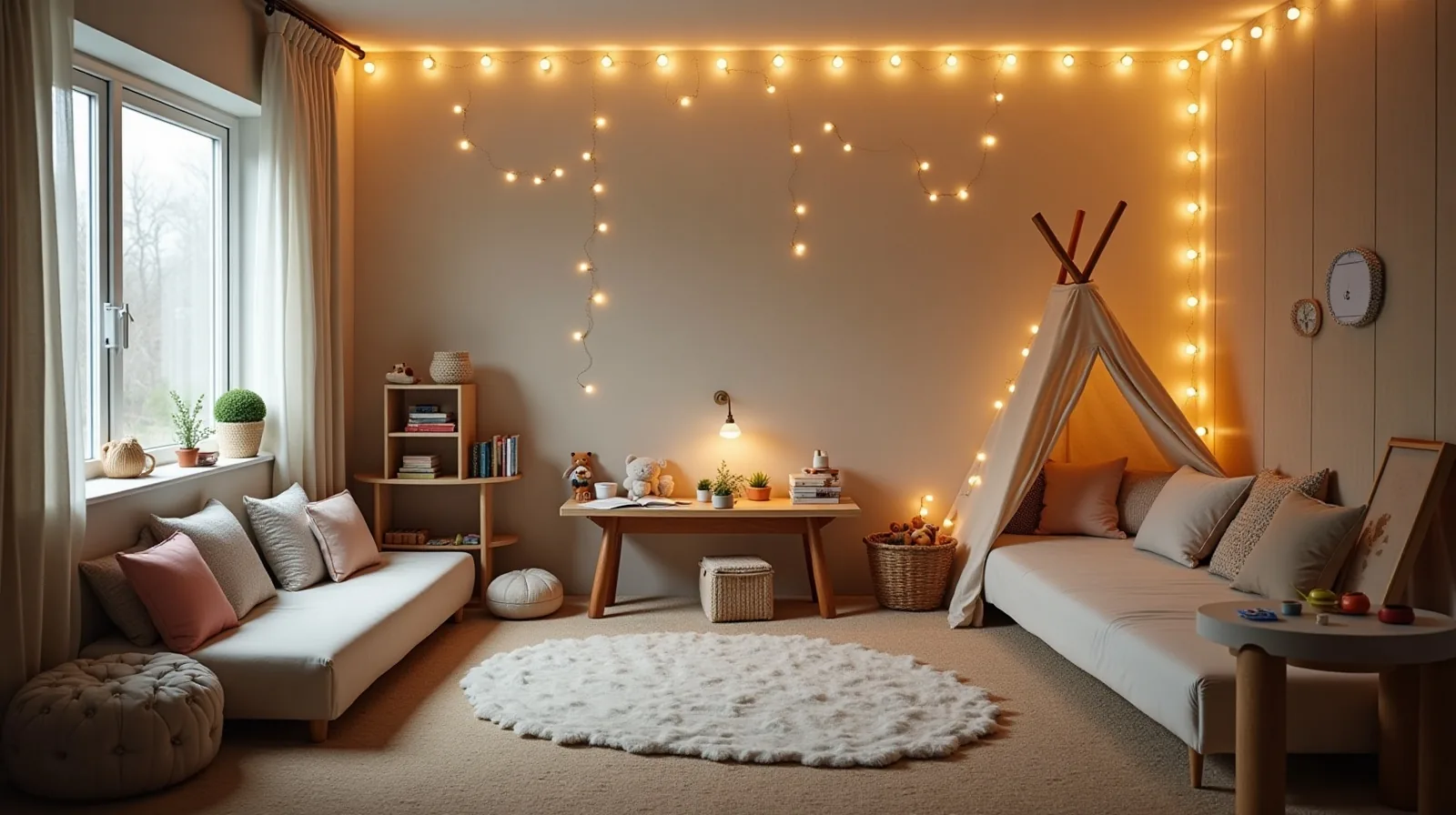
A heap of toys says “mess”; a station says “here’s what happens here.” Carve the space into a few small zones — a building corner with blocks, an art spot with paper and crayons at a low table, a reading nook with a cushion and a basket of books, a pretend-play bin with dress-up odds and ends. None needs more than a few square feet or anything you don’t already own. Stations work because they lower the start-up cost of play: a child wandering past a ready invitation will often sit down and begin, while the same child facing a toy heap just keeps wandering.
Stock the Free-Materials Shelf
The best indoor-play supplies are things the recycling bin and junk drawer were about to eat:
- Cardboard boxes. The all-time champion. Save a range of sizes — they become garages, rocket ships, dollhouses, and drums.
- Painter’s tape. Roads on the floor, hopscotch down the hallway, targets on a wall — and it peels off clean.
- A fort kit. Old sheets, a handful of clothespins or binder clips, and a string of fairy lights kept together in one bin. A fort fills an afternoon, and the lights make it a destination for days after.
- Kitchen extras. Plastic containers, wooden spoons, a big bowl of dry rice with cups for scooping — with supervision for the youngest.
- Paper everything. Junk mail, old magazines, envelopes, and stickers — a pretend office or mail service runs for days on it.
Let Boredom Do Some of the Work
The system’s quiet goal is independent play, and that muscle only grows when a stretch of nothing is allowed to be a little boring first. Resist solving every “I’m bored” instantly: offer a ten-minute setup — open a station, tape a road, drape the fort — then step back and let them run it. Keep a short boredom list on the fridge, written with the kids, of things they can start without help. The first protests are loud. The afternoon two weeks later, when they disappear into a cardboard spaceship without you, is the payoff.