Most weeknight cooking time disappears into prep, and most of that prep is cutting. A few core habits make chopping faster, steadier and safer than any gadget can, and they apply to every vegetable in the kitchen. Learn them once on an onion and the rest of the produce drawer gets easier.
Start With a Stable Board and a Sharp Knife
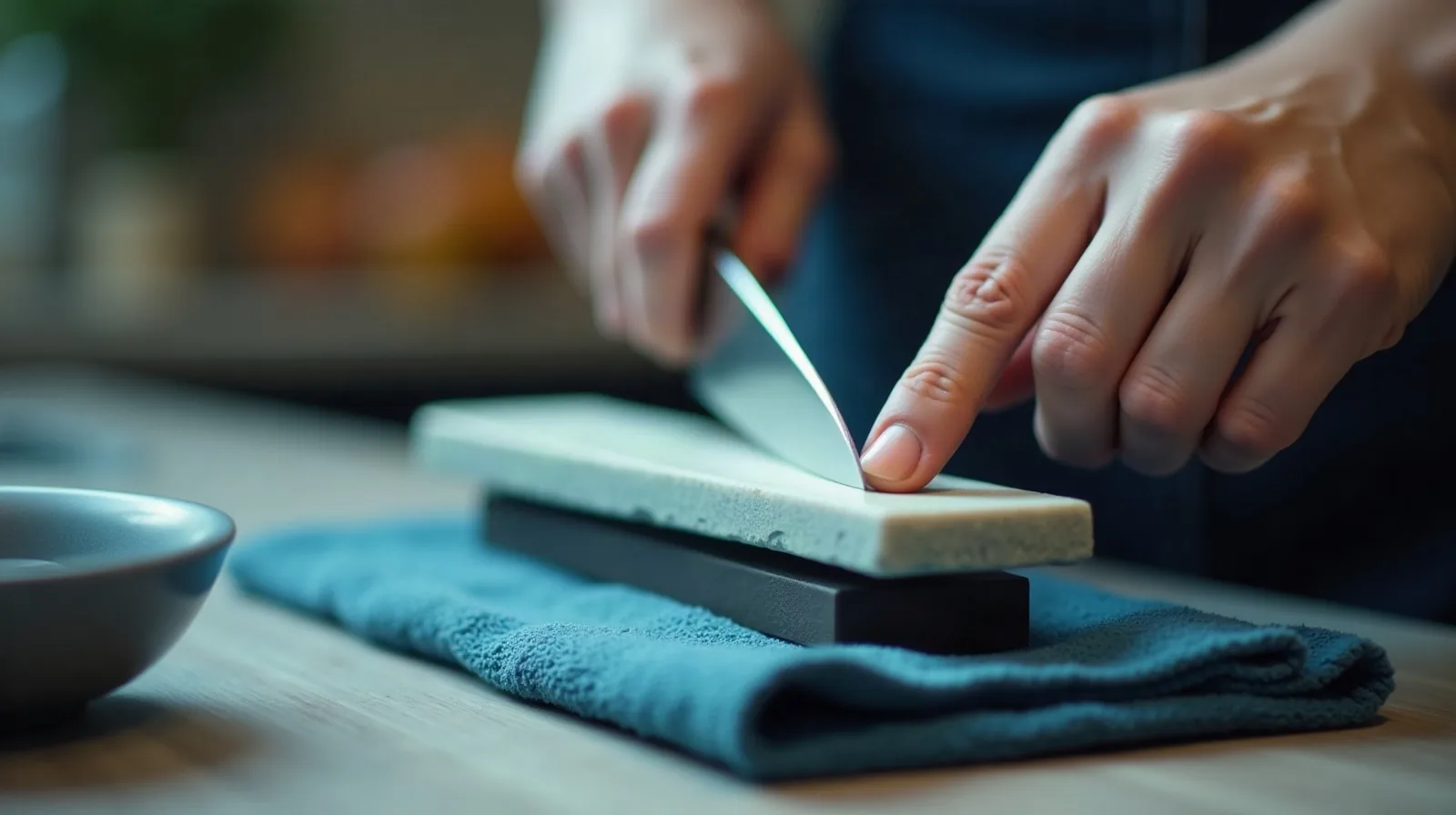
A sharp knife is the safer knife. Dull blades need extra pressure, and pressure is what makes a blade skid off a tomato skin or an onion and into a finger. One good all-purpose chef’s knife with an eight-inch blade handles nearly everything, and a small paring knife covers the delicate jobs.
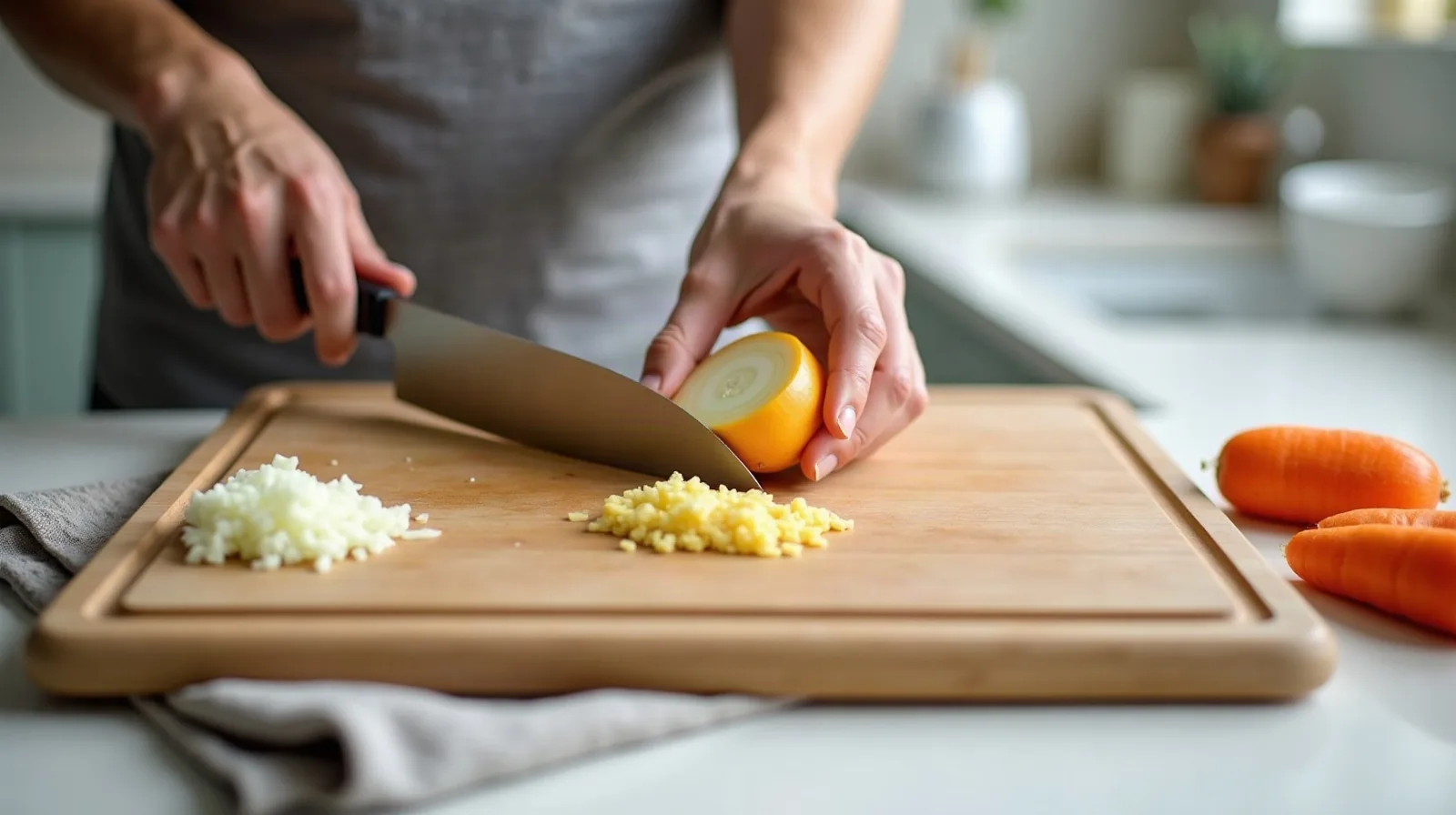
Give the knife a steady stage. Set a large board on the counter and slide a damp paper towel or thin cloth underneath so it cannot creep. Clear the space around it, keep a bowl nearby for scraps, and stand square to the board with your feet a little apart. Rushing is the enemy here, so slow, even cuts beat fast, ragged ones every time.
Use the Pinch Grip and the Claw
Hold the knife by pinching the base of the blade between your thumb and the side of your index finger, then wrap the remaining fingers around the handle. This puts your hand near the balance point and gives far more control than gripping the handle alone.
Your other hand is the guide. Curl the fingertips under, like a loose claw, and rest the flat of the blade against your knuckles as you cut. The knuckles act as a fence, the fingertips stay tucked out of the way, and the food slides toward the blade in small steps. Keep the tip of the knife on the board and rock the blade through the food rather than lifting it high. Flat pieces slip, so slice a thin piece off one side of round vegetables like potatoes and carrots and turn that cut side down to make a stable base.
Cut an Onion Without the Tangle
Onions are the best practice vegetable because they make you hold and guide the food well. Trim off the top, leave the root end in place, halve the onion through the root and peel away the skin. The root holds the layers together while you cut.
Lay a half flat-side down. Make two or three horizontal cuts toward the root without slicing all the way through, then make lengthwise cuts from top to root, and finally slice across. Out drop even cubes. A sharp blade and a chilled onion both reduce the stinging, since a clean cut crushes fewer cells and releases less of the irritating vapor.
Match the Cut to the Dish
Pieces of the same size cook at the same speed, so consistency matters more than perfection. Large, rough chunks suit soups, stews and roasting, while small dice melt into sauces and fillings. Thin slices work for quick sautés and salads.
A short checklist keeps the habits in one place:
- Stabilize the board — a damp towel underneath stops sliding.
- Keep the blade sharp — hone it often and sharpen it when it struggles with a tomato.
- Curl the fingertips — knuckles guide the blade, tips stay tucked.
- Create a flat side — trim rounded foods so they cannot roll.
- Never catch a falling knife — step back and let it drop.
Clean the knife by hand right away and dry it, rather than leaving it in a sink where it can hide under suds. Store it in a block, on a magnetic strip or in a sheath instead of loose in a drawer. If a cut is deep, will not stop bleeding or looks serious, get it checked by a medical professional.