
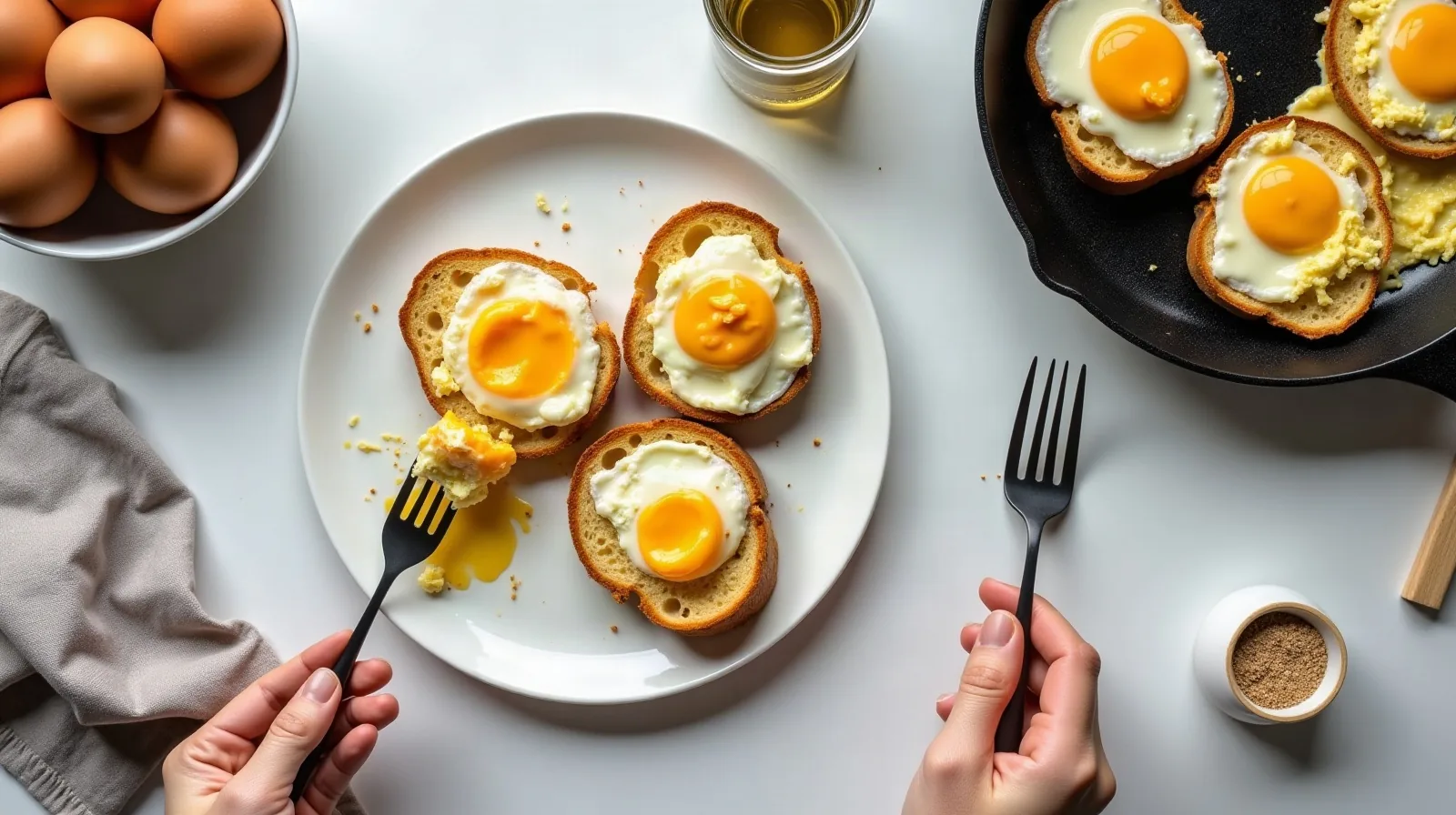
Eggs are cheap, fast and endlessly useful, yet they are also easy to overcook into rubber. The difference between a creamy scramble and a dry one is often thirty seconds. Every style below comes down to the same idea: gentle, controlled heat and a willingness to take the pan off the burner a little early, since eggs keep cooking from their own heat.
Boiled Eggs: Let the Timer Pick the Yolk
For boiled eggs, the clock matters more than any trick. Lower cold-from-the-fridge eggs into water that is already at a steady boil, set a timer, and move them straight into a bowl of ice water when it rings. The cold bath stops the cooking, which keeps yolks from turning chalky and makes the shells easier to peel.
As a rough guide, about six minutes gives a soft, runny yolk, seven gives a jammy center that holds its shape, and ten to eleven gives a fully set yolk for salads and sandwiches. Older eggs tend to peel more cleanly than very fresh ones, so a carton that has been in the fridge for a week or so is a good pick. Keep boiled eggs in their shells in the refrigerator and eat them within about a week.
Scrambled Eggs: Low Heat and Patience
Great scrambled eggs ask for the opposite of a hot, hurried pan. Whisk the eggs well with a pinch of salt, then pour them into a nonstick skillet over low to medium-low heat with a little butter or oil. Stir slowly, pushing the curds from the edges to the center, and pull the pan off the heat while the eggs still look slightly glossy and wet.
Fried and Poached: Two Small Fixes
Fried eggs need a pan that is warm, not smoking. Crack the egg into a small bowl first, slide it into a lightly oiled pan over medium heat, and cover for a minute for set whites with a tender yolk. For crisp, lacy edges, use a bit more oil and spoon it over the whites as they cook.
Poaching looks fussy but rests on two habits. Use the freshest eggs available, because their whites hold together better, and keep the water at a bare simmer rather than a rolling boil. A splash of vinegar helps the whites set, and a slotted spoon drains the egg before it hits the plate.
A Few Habits That Cover Every Style
Whatever the method, these small moves keep eggs reliable and safe:
- Start from the fridge — keep eggs refrigerated until cooking time and use them well before the date on the carton.
- Salt with the right timing — season scrambled eggs just before or during cooking, and fried or poached eggs once they are on the plate.
- Use the right pan — a nonstick skillet forgives almost every mistake.
- Cook until the whites are fully set when serving young children, older adults, pregnant people or anyone with a weakened immune system, and ask a doctor or dietitian if unsure how runny yolks fit their situation.
Eggs are also a fast route to dinner. A scramble over toast, a jammy egg on rice or a poached egg on sauteed greens turns a few pantry odds and ends into a real meal in under ten minutes, which is why a dozen eggs is one of the most useful things a kitchen can hold.