The container has been in the fridge for a while. Nobody wrote a date on it, it looks fine, it smells fine, and now there is a decision to make with almost no information. Most people settle it by sniffing, which feels scientific and mostly is not. Food safety runs on time and temperature, both knowable, and the guesswork shrinks once the rough numbers live in your head. What follows is the general shape of mainstream food-safety guidance, not a ruling on any particular container.
The Clock Starts When the Food Leaves the Heat
Bacteria multiply fastest in the range between refrigeration and hot serving temperature — the span food-safety agencies commonly call the danger zone, usually described as roughly 40°F to 140°F, or 4°C to 60°C. What matters is total accumulated time inside that window, not time since the container went into the fridge. A pot of chili left on the stove for three hours has already spent most of its allowance before the lid ever went on, and chilling it afterward stops further growth without undoing it. General guidance points toward getting cooked food into the refrigerator within about two hours, and within an hour when the room is hot.
Rough Keeping Times, by Food Type
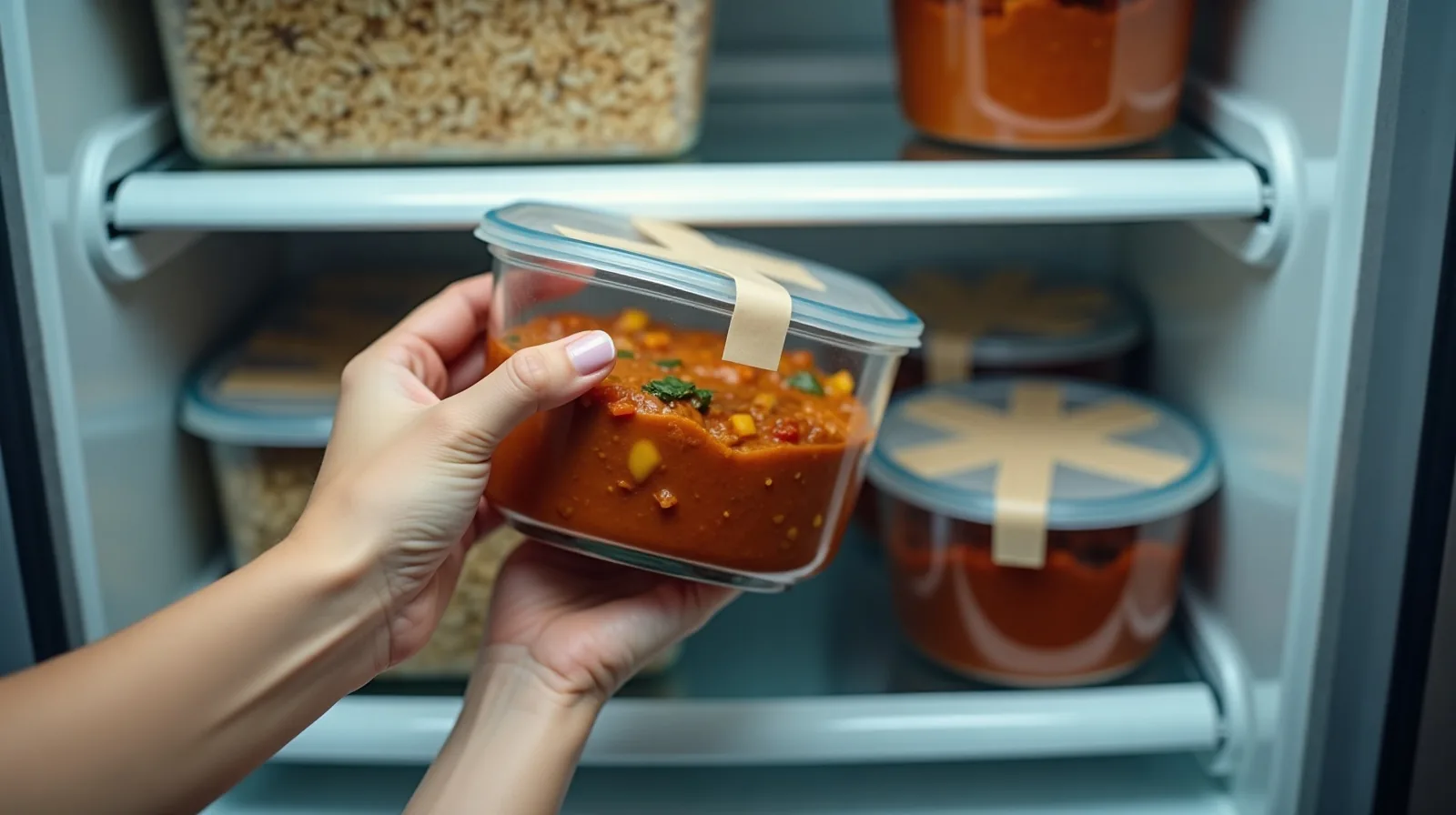
Refrigerated keeping times are shorter than most kitchens assume, and they vary with what the food is made of. Treat the ranges below as general shape rather than guarantees, and date the lid with a strip of tape so the question stops coming up.
- Cooked meat, poultry, and fish. Commonly cited as three to four days, with fish at the short end and ground meat shorter still.
- Soups, stews, and cooked grains. Also around three to four days, provided they were cooled quickly rather than left on the counter to come down slowly.
- Cooked vegetables and pasta. Roughly three to five days, though texture usually gives up well before safety becomes the question.
- Rice. Worth handling more carefully than most leftovers: cool it fast, refrigerate promptly, and use it within a couple of days, since the spores it can carry survive cooking.
- Deli meats and prepared salads. Often three to five days once opened, and dressed salads are unforgiving of time out of the fridge.
Freezing pauses that clock rather than resetting it, so food frozen on day three is still day-three food when it thaws. Label with the date it was cooked, not the date it went into the freezer.
Cooling and Reheating Without Guesswork
A deep pot of hot soup can hold a warm center for hours even inside a cold refrigerator, which is why cooling technique matters more than most people expect. Divide big batches into shallow containers no more than two inches deep, leave them uncovered until the steam stops, then cover and refrigerate. An ice bath under the pot speeds that up dramatically. On the way back, reheat until the food is steaming hot all the way through rather than warm at the edges; guidance generally points to about 165°F, or 74°C, and an inexpensive instant-read thermometer settles it in seconds. Stir halfway through microwaving, since microwaves leave cold pockets. Reheat only the portion being eaten, because every trip through that temperature window spends more of the same allowance.
Why Smell and Sight Are Not a Safety Test
The organisms that cause food-borne illness generally do not announce themselves. Spoilage bacteria, the ones responsible for off smells, slime, and sour flavors, are a different group entirely, so food can carry a meaningful dose of the dangerous kind while looking and smelling completely normal. The nose is useful in one direction only: something that smells wrong is wrong, but something that smells fine has not been proven safe. Reheating does not settle it either, since some toxins survive the heat that kills the organisms producing them. When the time and temperature history is unknown, throwing it out is the sensible move — and that goes double for anyone pregnant, very young, older, or living with a weakened immune system, where the margin is thinner and a doctor can say which extra precautions make sense.