
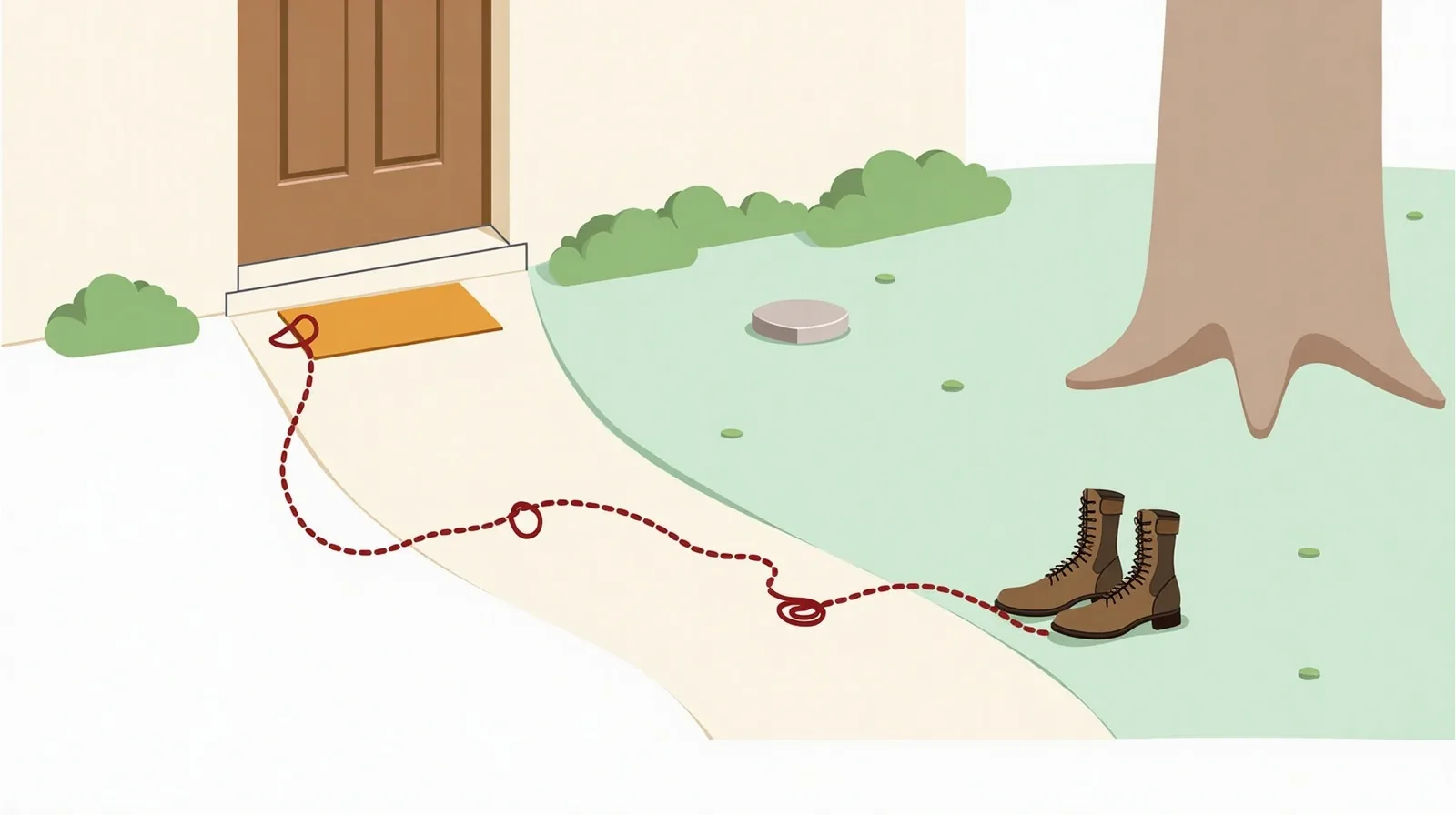
The hard part of a daily walk isn’t the walking. Almost everyone can manage twenty minutes on their feet — the first week proves that. The hard part is day nine, when the novelty has worn off, the weather has turned, and the walk quietly loses its slot to everything louder. Walking plans rarely fail on effort; they fail on logistics. Which is good news, because logistics can be engineered. A walk that happens automatically isn’t a personality trait — it’s a set of small design choices, made once.
Give the Walk a Trigger, Not a Time Slot
“Walk at 7 a.m.” is a fragile plan, because clocks don’t nudge you — events do. Habits stick when they’re attached to something that already happens every day without fail: the walk starts after the first coffee, after the school drop-off, after the laptop closes. The existing routine becomes the reminder, so nothing has to be remembered. It’s the reason dog owners walk in the rain without a shred of discipline involved: the dog is a trigger with eyes, and it does not accept rescheduling. If you have one, you already own the world’s most effective habit app. If you don’t, pick the most reliable event in your day and bolt the walk to the back of it.
Remove Every Ounce of Friction
Every small obstacle between you and the sidewalk is a place the habit can die. The fix is to make starting so easy it would feel silly not to:
- Stage the gear. Shoes, socks, jacket, and the leash by the front door the night before — the walk should begin with zero searching.
- Pre-decide the route. One default loop from your door. Choosing a route each day is a decision, and decisions are where momentum goes to stall.
- Kill the weather veto. A rain shell and a cap hanging with the shoes means drizzle becomes a wardrobe question, not a yes-or-no question.
- Shrink the minimum. The commitment is ten minutes out the door. Most days you’ll do more — but ten counts, and knowing that gets you outside.
- Attach a treat. A podcast or playlist you only allow yourself on walks gives the habit its own small gravitational pull.
Build a Streak That Bends Instead of Breaks
Marking an X on a calendar is genuinely motivating — right up until the first blank square, when a lot of people quietly declare the whole project ruined. So build forgiveness into the rules from the start. Count weeks with four or more walks, not perfect days. Adopt the “never miss twice” rule: one missed day is life, two is a trend worth interrupting. And let the bare-minimum version — ten slow minutes around the block in yesterday’s clothes — count fully. Streaks exist to keep you coming back, not to grade you.
Keep It Gentle, and Check In First If You Need To
Notice what this article hasn’t mentioned: pace, heart rate, distance. That’s deliberate. In the habit-building phase, the only metric that matters is showing up, because a comfortable walk you repeat beats an impressive workout you abandon. Public health guidance generally points toward regular, moderate movement as one of the most reliable things you can do for long-term health — and an ordinary daily walk fits that shape without any upgrades. If you’ve been mostly sedentary, are managing a health condition, or feel pain beyond ordinary muscle grumbling when you walk, check in with your doctor before ramping things up — a quick conversation beats guessing. Once the habit is boringly automatic, you can always layer ambition on top. First, make it automatic.