Nobody decides to waste food. It happens in increments — half a bunch of cilantro bought for one recipe, the leftovers that got pushed out of sight, the bread that went stale on day four. Add it up and the numbers are startling: by most estimates, a meaningful share of the groceries households buy never gets eaten, which means a slice of every grocery bill goes straight into the trash. The fix isn’t guilt, and it isn’t heroic meal planning. Food waste is mostly a systems problem, and small, boring habits are what fix systems.
Buy for the Week You Actually Live
Most wasted food was doomed in the store. The optimistic cart — seven dinners’ worth of ingredients for a week that realistically holds four cooked meals — guarantees something gets tossed. So plan for the week you actually live: count the nights that genuinely end in cooking, buy for those, and let the other nights be leftovers or eggs. Two smaller habits help at the margins. Shop from a rough list built around meals, not moods, so every fragile ingredient arrives with a job and a date. And cook the delicate stuff first — fish, greens, and fresh herbs early in the week; sturdy roots, cabbage, and frozen vegetables at the end, when the fresh supply is running low.
Give Scraps a Second Job
A surprising amount of what gets scraped into the trash is ingredients wearing a disguise. Keep a scrap bowl on the counter while you cook and sort as you go:
- Start a stock bag. Onion skins, carrot ends, celery leaves, mushroom stems, and herb stems go into a bag in the freezer; when it fills, simmer the lot into broth and start again.
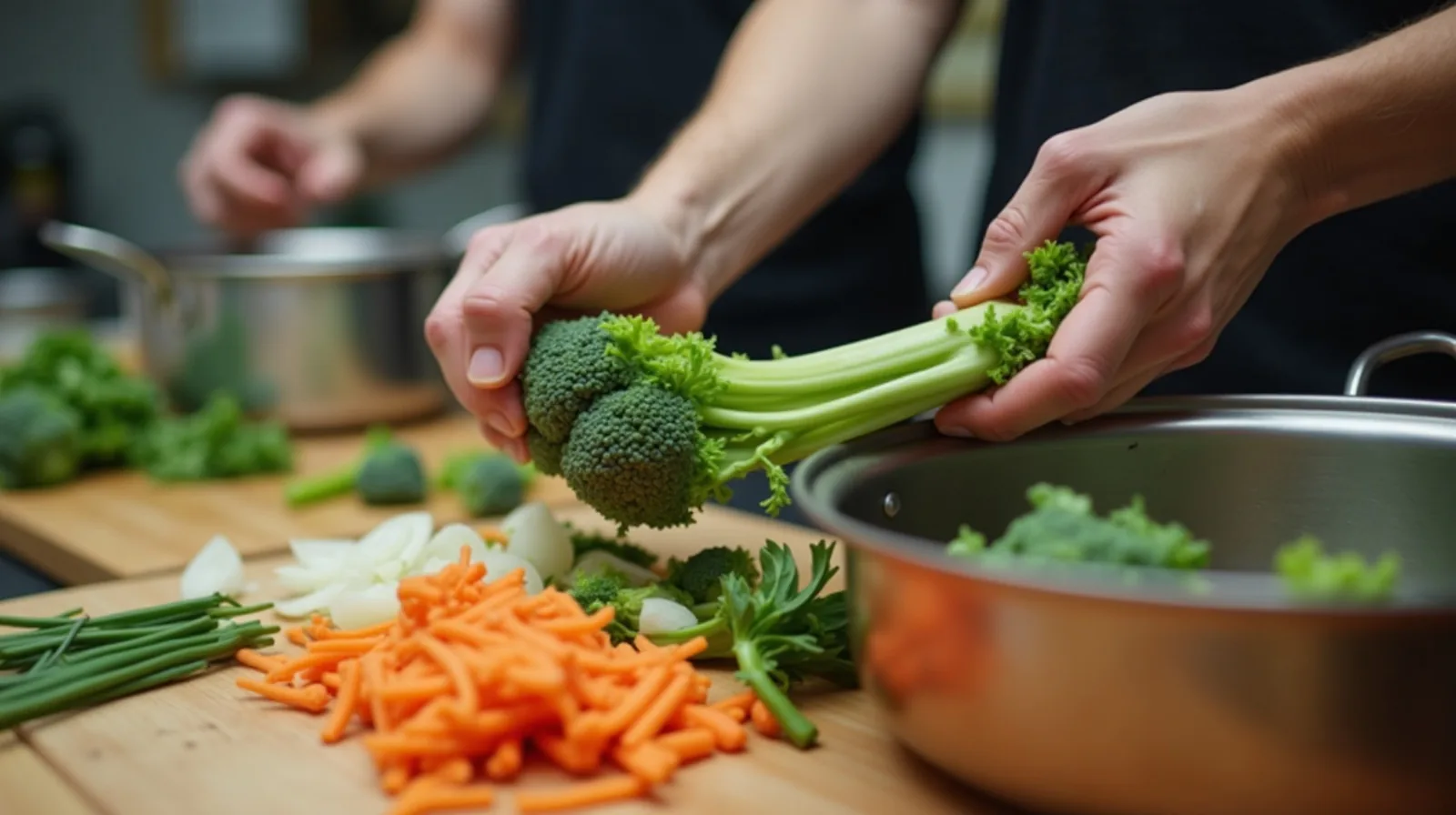
- Eat more of the vegetable. Broccoli stems peel and roast beautifully, chard stems cook like celery, and beet greens wilt down like spinach. The “waste” is often just the part recipes ignore.
- Rescue tired produce with heat. Wilting spinach disappears into eggs and pasta, soft tomatoes become sauce, and bendy carrots and celery were born for soup. Heat forgives almost everything crispness can’t.
- Treat stale bread as an ingredient. Croutons, breadcrumbs, French toast, bread salads — stale is a texture, not a verdict.
- Simmer the rinds. Hard cheese rinds dropped into a pot of soup or beans add the kind of savory depth recipes usually charge a whole ingredient for.
Make Leftovers a Plan, Not an Accident
Leftovers get wasted when they’re an afterthought — containers stacked out of sight until they become science projects. Give them structure instead. Name a leftovers night so everything saved has a scheduled destiny, and store containers front and center at eye level in the fridge, where they get chosen instead of forgotten. Reinvention helps anyone allergic to repeats: roast chicken becomes tacos or soup, last night’s rice becomes fried rice, roasted vegetables land on a grain bowl with a fried egg. And portion honestly at serving time — smaller helpings with seconds available beat scraping half-eaten plates into the trash, the one kind of waste nothing downstream can rescue.
The Freezer Is a Pause Button; Compost Is the Backstop
When food is about to cross the line and the week has other plans, freeze it — the freezer stops the clock on nearly everything. Bread freezes sliced and toasts straight from frozen, overripe bananas and berries hold for smoothies and baking, cooked grains and soups keep for months, and even leftover stock or wine can freeze in cubes for future pans. Label everything with a name and date so the pause button doesn’t become a memory hole. For what’s genuinely inedible — peels, eggshells, coffee grounds — a small counter pail feeding a backyard bin, a tumbler, or a municipal drop-off keeps scraps out of the landfill and turns them into soil. Composting isn’t admitting defeat; it’s the graceful exit for the trimmings that never had a second job.