
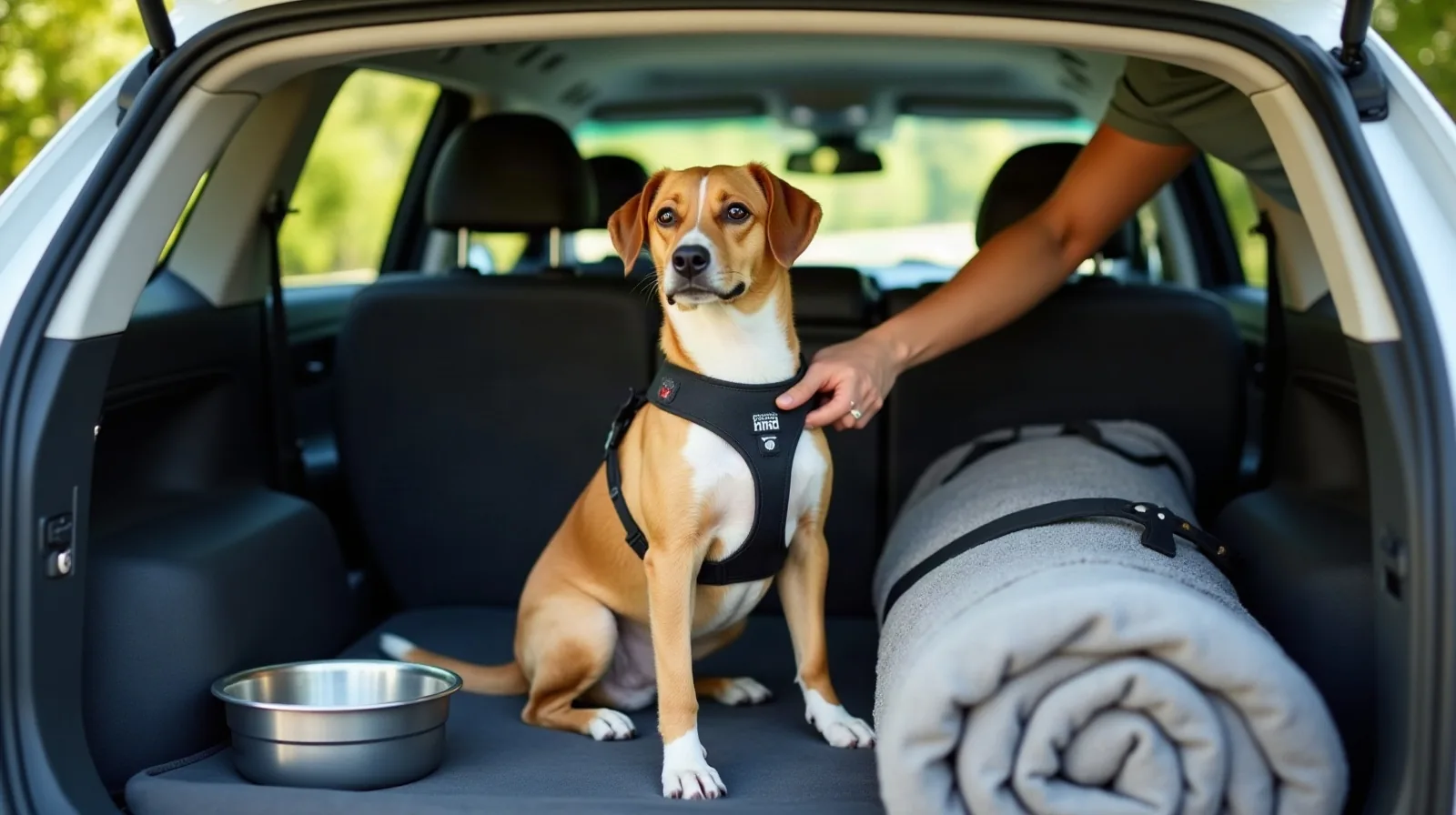
A pet adds a layer of planning that a suitcase alone never requires — a health check, a comfortable way to travel, and a plan for the first shaky hour in an unfamiliar place. None of it is complicated, but each piece works better handled a week or two ahead of departure than pieced together the morning of. Trips that go smoothly with a dog or cat almost always come down to the same short list of decisions, made early and calmly instead of rushed at the last minute.
Decide How the Pet Is Actually Going to Travel
Car and plane ask for different preparation, and the choice usually comes down to the animal’s temperament and the length of the trip rather than pure convenience. In a car, a crash-tested harness or a secured carrier keeps a pet from becoming a projectile during sudden braking and from climbing into a driver’s lap at the worst possible moment. On a plane, airline pet policies vary and cap how many animals travel in the cabin per flight, so booking a pet’s spot when the ticket is bought — not the week before — avoids finding the flight already full. A carrier that fits comfortably under the seat, with room to stand and turn around, is worth confirming against that airline’s dimensions before buying one.
Get the Health Paperwork Sorted Early
A visit to a veterinarian one to two weeks before departure covers most of what a trip requires: confirming vaccinations are current, requesting a signed health certificate if the itinerary crosses state or country lines, and refilling any ongoing medication with a few extra days of buffer. It is also the right moment to ask about options for a pet that gets carsick or anxious in transit, since that conversation goes better a week ahead than at the last minute. A microchip check and a current ID tag matter more while traveling than at home, since an unfamiliar place is exactly where a startled pet is most likely to bolt.
Pack a Travel Bag That Covers a Bad Day
A separate bag for the pet, packed the way a diaper bag gets packed for a baby, covers the trip even if the schedule slips by a few hours. It should stay within reach in the cabin or the back seat, not buried in checked luggage or the trunk.
- Food and water for the full travel day, plus a collapsible bowl that packs flat.
- A backup leash or harness and a spare ID tag with current contact information.
- Waste bags for a dog, or a small travel litter box and a scoop of litter for a cat.
- A blanket or toy that already smells like home, to settle a pet in a new space.
- Any medication, plus a copy of vaccination records and the signed health certificate.
- A recent photo of the pet saved on a phone, in case a description is ever needed fast.
Help a Pet Settle In Once You Arrive
The first hour in a new place sets the tone for the rest of the trip. Keeping meal and walk times close to the pet’s normal schedule, even on arrival day, does more to calm a stressed animal than anything else on this list. Before letting a dog or cat off leash or out of a carrier, a quick safety sweep of the new space — closed windows, a secured balcony door, no gaps under a fence — catches the kind of escape route a pet finds faster than a person does. Setting up one small area with familiar bedding gives a nervous animal a home base to retreat to, and it is worth resisting the urge to introduce a pet to a full house of new people or a busy new environment before that base feels safe.