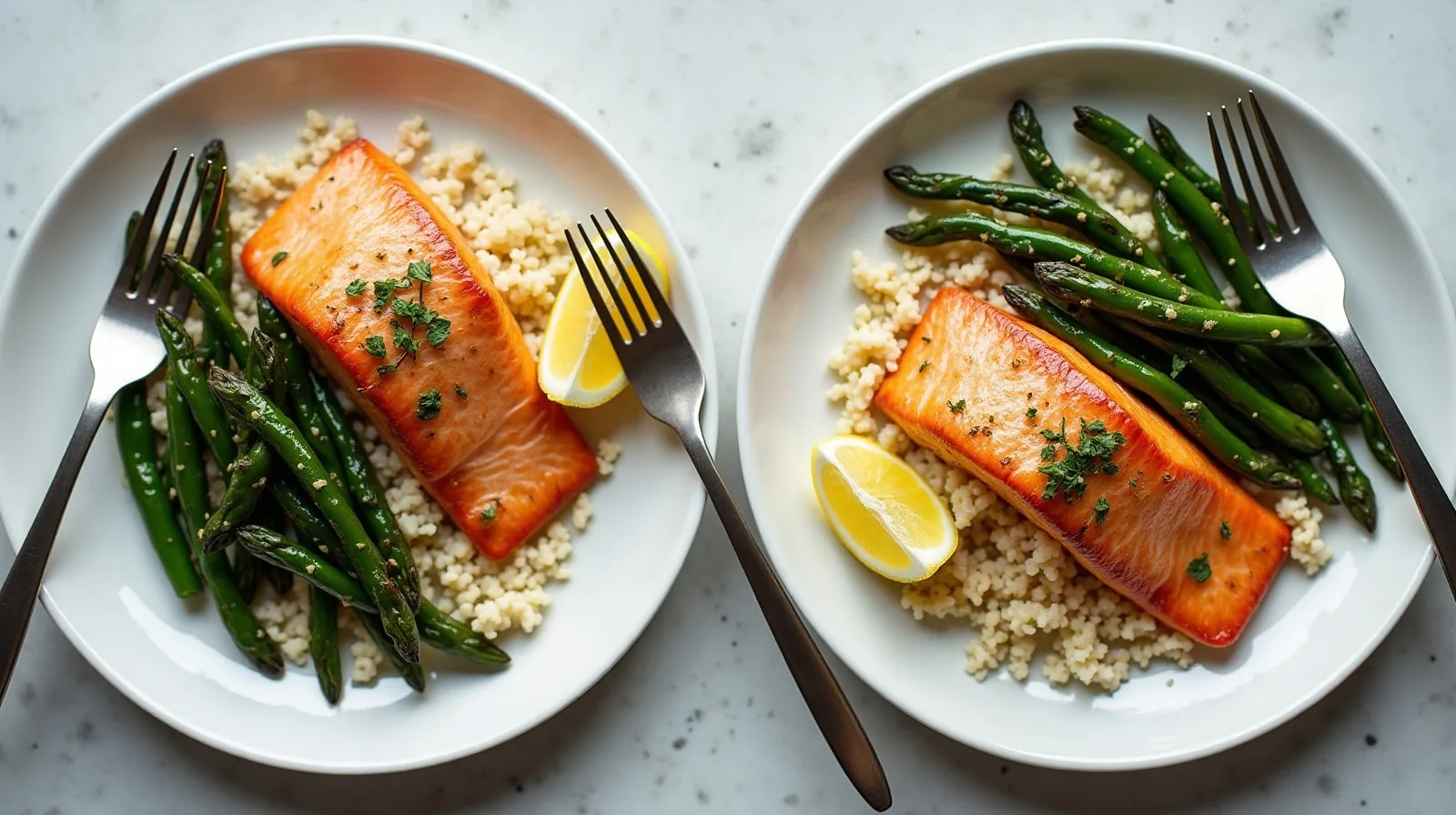
Cooking for two is its own skill, and almost nobody teaches it. Recipes default to four or six servings, produce comes bundled for families, and a “quick weeknight dinner” often leaves a two-person household eating the same thing until Thursday — or scraping half of it into the trash the following week. The answer isn’t cooking less ambitiously; it’s scaling deliberately. With a couple of shopping habits, a short roster of fast-cooking proteins, and a two-pan rhythm, dinner for exactly two people lands in about thirty minutes — with a clean fridge at the end of the week instead of a graveyard of containers.
Scale the Shopping, Not Just the Recipe
Halving starts at the store, because a halved recipe made from family-sized packages just moves the waste upstream. Use the counters: a butcher or fish counter will happily sell two chicken thighs, one salmon fillet cut in half, or a half-pound of ground meat — no one is judging the small order. Buy loose produce instead of bagged, and treat the salad bar as a portion tool when you need a single cup of chopped peppers. When bulk genuinely is the better buy, divide it the day it comes home: freeze proteins flat in two-serving packs so they thaw in minutes, and split the giant spinach box with a plan — salad tonight, wilted into eggs this weekend.
Keep Quick Proteins on Deck
Thirty-minute cooking is mostly a protein decision, because the protein is usually the slow part. Thin and small cook fast: chicken thighs, cutlets pounded thin, shrimp, fish fillets, eggs, and firm tofu all go from raw to done in under fifteen minutes, which leaves the other fifteen for everything else. Keep two or three of these in the freezer in those flat two-person packs and the “what’s for dinner” question shrinks to picking a flavor direction. From there, a handful of formats does the heavy rotation:
- Stir-fry bowls. One pan, highest heat, protein then vegetables then sauce, over rice. The format that forgives whatever the crisper offers.
- Seared fillet, skillet side. Fish or a cutlet seared while green beans or zucchini blister in a second pan — done in the time the rice takes.
- A frittata. Six eggs, one oven-safe skillet, any cooked vegetable or cheese that needs using. Dinner for two with one wedge left for lunch, on purpose.
- Pan sauce over something quick. Sear the protein, then loosen the browned bits with broth, a knob of butter, and a squeeze of lemon while couscous steams in five minutes.
- Tacos for two. A half-pound of ground meat or crumbled tofu, seasoned in one skillet — six tacos, zero leftovers.
Run the Two-Pan Strategy
The thirty-minute clock is really a sequencing problem: start the slowest thing first and let the stove run in parallel. Water or the oven goes on before anything is chopped; the grain starts next; the protein — the fastest mover — goes last, in a second pan, so everything finishes together instead of in a relay. Two pans is the sweet spot for two people: enough to cook protein and side simultaneously, few enough that cleanup stays trivial. Size the pans down, too — two servings in a large skillet steam and slump where a medium one browns, and a quarter sheet pan roasts two portions better than a half sheet ever will.
Halve Without Waste: Pair Your Meals
The last piece is what to do with the halves that won’t divide — the rest of the cabbage, the open can of beans, the half bunch of cilantro. Plan dinners in loose pairs that share an ingredient in different costumes: stir-fry Monday uses half the cabbage, tacos Wednesday take the rest as slaw; the beans that topped tonight’s bowls get mashed into quesadillas Thursday. It’s one minute of thought at the store, not a meal-prep regime — and it’s the difference between cooking for two and shopping for four while feeding two.